Quick access to main page (top) Direct access to main contents Quick access to main page (bottom)

Samsung’s Mega Union: Will Internal Conflicts Lead to Another Strike in 2026?

Daniel Kim Views  

Translation result.

지난달
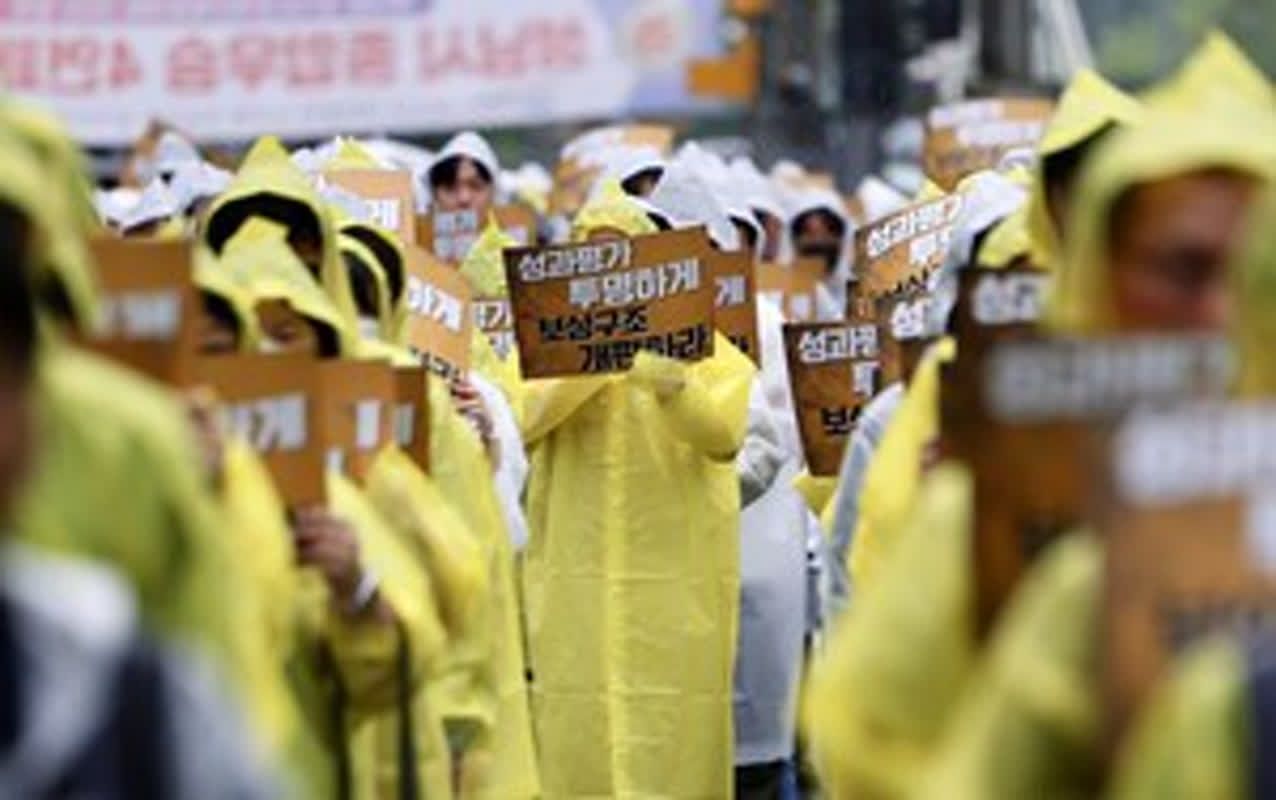
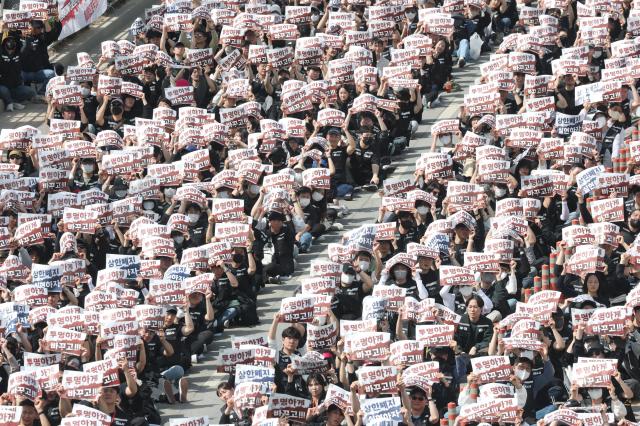
A rally by Samsung Electronics’ labor union Joint Struggle Headquarters in front of the company’s Pyeongtaek campus on the 23rd of last month. [Photo=Samsung Electronics]

Controversy over Samsung Electronics’ cross-company union has become a material risk that could determine the company’s future competitiveness in semiconductors. The union has grown into a large organization with roughly 70,000 members, yet decision-making authority remains concentrated in a small executive group, prompting concerns about the possibility of a second major strike.

Industry sources said on the 19th that union members have repeatedly raised questions about how dues are being spent, the union’s negotiating direction, and its strategy for industrial action. Observers argue the deeper problem is structural: a small executive leadership can pressure management without adequately confirming the broader membership’s will.

A strike by Samsung’s union would not be a routine internal labor dispute; it could inflict serious damage to the national economy. Officials worry about production disruptions, harm to suppliers, and weakened export competitiveness. When bargaining demands and strike decisions are driven by a narrow leadership circle, the consequences can be harmful not only to the company but to the union membership as a whole.

The cross-company union is leveraging its majority-union status at Samsung to press management for bargaining. That role requires robust procedures to solicit member input and reconcile internal dissent. If representative structures do not function effectively, the union’s claim to represent its members can be undermined.

Industry observers view the current strike phase as a forewarning of future labor-management conflicts. If an opaque, executive-driven operating model persists, the union could repeatedly issue extreme demands and resort to strikes during wage and bonus negotiations. There is even concern that the union could become a source of internal division rather than an instrument to protect employees’ interests.

The drawbacks of concentrated authority have already surfaced in controversy over position allowances. In March, the cross-company union reportedly amended its bylaws to permit part of membership dues to be allocated as executive position allowances. Industry critics say it is improper for executives, including Chairman Choi Seung-ho, to receive company-paid salaries under the work-hour exemption system while also drawing dues-funded allowances.

Members say the bigger issue is procedural. Critics contend the bylaw amendment on position allowances was effectively bundled with the vote on whether to strike, and that members were not given adequate explanation. There are suspicions that leadership used the momentum for hardline action to advance proposals that served their own interests.

Calls for delayed accounting disclosures and demands for transparency on dues spending reflect the same concerns. Some members have requested documentation showing position-allowance payments and related evidence. When dues, strike authority, and bargaining power are concentrated in a small leadership group and financial flows lack transparency, trust inevitably erodes.

Legal experts say that as a union grows, internal democratic procedures—such as general assemblies, delegate councils, and approval of budgets and settlements—become increasingly important. They argue that in a large union within a major corporation, bargaining demands and strike strategies should be based on the clear will of the majority, not on the judgment of a few executives.

A business official warned, “To exercise strong bargaining power against a company, the union must first secure internal representation. If leaders keep repeating hardline tactics while procedures to confirm member views remain weak, the union risks member defections and intensified union-on-union conflict.”

The cross-company union defended its position regarding the delegate council, saying organizational constraints made its approach unavoidable. Speaking off the record and clarifying that this was not an official statement, a union official said, “Isn’t a delegate council optional rather than mandatory? More urgent issues kept arising, and we only began full activities April last year after receiving work-hour exemptions, so it’s been less than a year. We had shortcomings.”

Daniel Kim
content@tenbizt.com

Comments0

300

Comments0

[Social] Latest Stories

  • Starbucks Korea CEO Fired Over Controversial ‘Tank Day’ Promotion
    Starbucks Korea CEO Fired Over Controversial 'Tank Day' Promotion
  • 25,000 Robots vs. Human Workers: The High-Stakes Battle at Hyundai
    25,000 Robots vs. Human Workers: The High-Stakes Battle at Hyundai
  • Hotel Hygiene Scandal: Cleaner Caught Using Guest Towels to Wipe Toilets
    Hotel Hygiene Scandal: Cleaner Caught Using Guest Towels to Wipe Toilets
  • South Korea’s Tech Giant Kakao Faces First Major Strike in 20 Years
    South Korea's Tech Giant Kakao Faces First Major Strike in 20 Years
  • South Korea’s Aging Crisis: How One Leader Is Redefining ‘Well-Dying’
    South Korea’s Aging Crisis: How One Leader Is Redefining 'Well-Dying'
  • Stop Calling Them ‘Hey You’: South Korea’s New Push for Worker Respect
    Stop Calling Them 'Hey You': South Korea's New Push for Worker Respect

Weekly Best Articles

  • Choi Dong-seok’s Family Bond: How a Simple Engraving Reveals Deep Love for His Children
  • Kwak Sun-hee’s Stunning Wedding Photos: A Celebration of Love and Courage
  • Is ‘I Am a Natural Person’ Just a Big Lie? Comedian Yoon-taek Reveals Shocking Secrets!
  • Health Scare: Why Fans Are Worried About Go Ji Yong’s Dramatic Weight Loss
  • Discover the Winter Gongju Chestnut Festival: A Taste of Korea at H-Mart in the USA!
  • 2026 Spring Wildfire Prevention: How Gyeryong City is Cutting Response Time to 30 Minutes!

You May Also Like

  • 1
    Ukraine’s EU Bid Surges as Hungary Drops Opposition Amid Russian Attacks

    Politics 

    Ukraine’s EU Bid Surges as Hungary Drops Opposition Amid Russian Attacks
  • 2
    Trump Backs Colombia's 'El Tigre' — What It Means for U.S. Relations

    Politics 

    Trump Backs Colombia’s ‘El Tigre’ — What It Means for U.S. Relations
  • 3
    Trump Backs Colombia's Far-Right Outsider—What's at Stake?

    Politics 

    Trump Backs Colombia’s Far-Right Outsider—What’s at Stake?
  • 4
    12.5% Tariff Hit: South Korea Faces New U.S. Trade Penalties

    Politics 

    12.5% Tariff Hit: South Korea Faces New U.S. Trade Penalties
  • 5
    12.5% Tariff Alert: Why the U.S. Is Targeting South Korean Imports

    Politics 

    12.5% Tariff Alert: Why the U.S. Is Targeting South Korean Imports

Popular Now

  • 1
    Marta Kostyuk Makes History at French Open Amid Ukraine Crisis

    Politics 

  • 2
    37 Years in Exile: The Tiananmen Leader Who Just Wants to Go Home

    Politics 

  • 3
    South Korea's Cheongju Airport Faces Crisis as Passenger Numbers Explode

    Politics 

  • 4
    Nuclear Submarine Race: South Korea's High-Stakes Bid for U.S. Fuel

    Politics 

  • 5
    France Finally Admits Complicity in the 1994 Rwandan Genocide

    Politics 

Weekly Best Articles

  • Choi Dong-seok’s Family Bond: How a Simple Engraving Reveals Deep Love for His Children
  • Kwak Sun-hee’s Stunning Wedding Photos: A Celebration of Love and Courage
  • Is ‘I Am a Natural Person’ Just a Big Lie? Comedian Yoon-taek Reveals Shocking Secrets!
  • Health Scare: Why Fans Are Worried About Go Ji Yong’s Dramatic Weight Loss
  • Discover the Winter Gongju Chestnut Festival: A Taste of Korea at H-Mart in the USA!
  • 2026 Spring Wildfire Prevention: How Gyeryong City is Cutting Response Time to 30 Minutes!

Must-Reads

  • 1
    Ukraine’s EU Bid Surges as Hungary Drops Opposition Amid Russian Attacks

    Politics 

    Ukraine’s EU Bid Surges as Hungary Drops Opposition Amid Russian Attacks
  • 2
    Trump Backs Colombia's 'El Tigre' — What It Means for U.S. Relations

    Politics 

    Trump Backs Colombia’s ‘El Tigre’ — What It Means for U.S. Relations
  • 3
    Trump Backs Colombia's Far-Right Outsider—What's at Stake?

    Politics 

    Trump Backs Colombia’s Far-Right Outsider—What’s at Stake?
  • 4
    12.5% Tariff Hit: South Korea Faces New U.S. Trade Penalties

    Politics 

    12.5% Tariff Hit: South Korea Faces New U.S. Trade Penalties
  • 5
    12.5% Tariff Alert: Why the U.S. Is Targeting South Korean Imports

    Politics 

    12.5% Tariff Alert: Why the U.S. Is Targeting South Korean Imports

Popular Now

  • 1
    Marta Kostyuk Makes History at French Open Amid Ukraine Crisis

    Politics 

  • 2
    37 Years in Exile: The Tiananmen Leader Who Just Wants to Go Home

    Politics 

  • 3
    South Korea's Cheongju Airport Faces Crisis as Passenger Numbers Explode

    Politics 

  • 4
    Nuclear Submarine Race: South Korea's High-Stakes Bid for U.S. Fuel

    Politics 

  • 5
    France Finally Admits Complicity in the 1994 Rwandan Genocide

    Politics 

Share it on...