
Translation result.
[Choice Times=Poli Na, Political commentator]
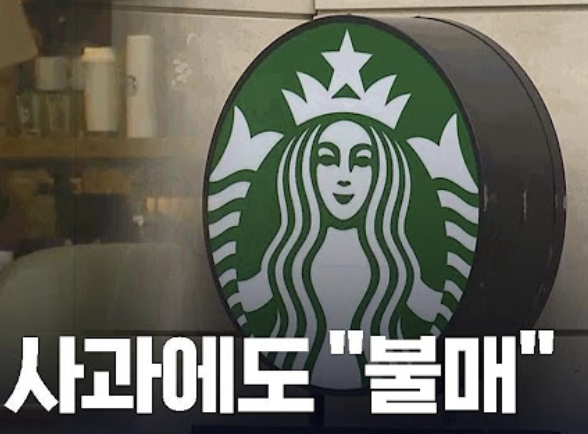
Starbucks Korea, an affiliate of Shinsegae Group, set off a national controversy with a promotional tumbler campaign. On May 18, the company promoted “Tank Day” with the slogan “Tap the Desk,” which immediately provoked an online uproar.
What the company meant as a lighthearted nod to American slang — comparing oversized tumblers to “water tanks” — collided with painful historical memories in South Korea and touched off intense public backlash.
The company’s failure to recognize those sensitivities was a serious lapse, and proportionate public criticism was understandable.
But the deeper problem lay in how the incident was handled. Rather than allowing the rule of law and due process to guide the response, collective condemnation and extra-legal political intervention took center stage.
In a functioning liberal democracy, controversies should trigger an orderly, evidence-based response: investigators examine the planning and internal review process; authorities determine whether malicious intent or administrative negligence was at fault; responsibility is assigned proportionally; appropriate discipline is applied; and reforms are implemented to prevent recurrence.
On social media, however, that deliberative filter never had a chance to operate. Moral stigmatization and public framing preempted procedural review.
This is not merely a case of online overheating; it illustrates a perennial risk to democracy. Alexis de Tocqueville warned of the “tyranny of the majority.” When deliberative procedures and reasoned debate vanish, collective emotion and social pressure can supplant them, crushing minorities outside the bounds of law. The Starbucks episode became a striking example.
As collective emotion fused with crowd psychology, the controversy escalated. Elias Canetti, in Crowds and Power, described a “hunting pack” dynamic — a crowd that forges unity and catharsis by selecting and relentlessly pursuing a target.
The digital crowd identified a clear target — a major corporation and its chairman — and focused collective anger on them. Due-process mechanisms meant to establish facts and causality were overwhelmed by this digital pursuit.
Outrage soon morphed into performative destruction. Social platforms filled with videos of people cutting Starbucks cards, smashing mugs, and attacking tumblers with hammers. This went beyond a consumer boycott; it resembled a ritualized display of collective hatred.
The real danger is the psychology that justifies such acts. Participants cast themselves as “judges of justice.” When conviction replaces reason, people grant themselves moral immunity for physical and psychological aggression. The democratic promise of legal procedure and mutual respect evaporates.
Worse, these emotions did not remain confined to the public square; they fused with state power and altered the incident’s character.
President Lee Jae-myung’s heated comments on social media accelerated the escalation. On his X account, before any formal investigation or judicial decision, he called the company “low-class merchants” engaging in “inhuman behavior” and raised the prospect of legal and political accountability.
His rhetoric went further: he revived a seven-year-old Musinsa ad controversy from 2019 — a matter that had been settled with public apologies — and urged citizens to “check for themselves” whether such behavior could come from “people wearing human faces.” By dredging up past incidents, the head of state effectively fueled a new digital witch hunt.
That pattern echoes Carl Schmitt’s concept of decisionist politics, where sovereign power bypasses institutional processes and divides society into friends and enemies. When the president acts as a public judge in the crowd, formal legal systems are undermined.
Under that pressure, corporate actors abandoned standard procedures. Shinsegae Chairman Chung Yong-jin dismissed Starbucks Korea CEO Son Jung-hyun the same day the controversy broke. Chung issued a public apology, bowed deeply, acknowledged the company’s lack of historical sensitivity, called the incident indefensible, and initiated disciplinary measures across the organization.
Ironically, the apology itself signaled a breakdown of process. In a reasoned system, investigation precedes punishment. Here, under state pressure and mob outrage, punishment preceded inquiry: an executive lost his job before the facts were fully established.
The fallout soon froze normal market functions. Starbucks Korea informed staff it would indefinitely postpone all summer campaigns, including its annual “Summer Frequency Promotion.” The disputed tumblers were removed from store displays. Ordinary business activity that should respond to consumer choice instead halted under political and social pressure, eroding the basic freedom to market in a capitalist economy.
Even minimal reconciliation mechanisms began to fail. Shinsegae offered to send an executive to apologize at the Gwangju May 18 Memorial Center, but advocates rejected the gesture as “too late.” Rather than seeking accountability through established procedures and accepting apologies where appropriate, public demands shifted toward total social ruin for those labeled guilty.
Legal overreach followed the emotional surge. Civic groups filed criminal complaints against Chung and former executives for defamation and insult. Survivors and relatives connected to the May 18 Democratic Movement accused Starbucks and Chung of violating the “May 18 Distortion Punishment Law.”
This slide into sweeping criminalization departs from rule-of-law principles; it resembles historical witch hunts and primitive impulses for symbolic destruction more than a modern legal order.
Academics and public intellectuals joined the public tribunal, lending scholarly credibility to the frenzy. Figures such as Kim Sang-wook, Baek Seung-jong, and Park No-ja denounced the promotion as “historical mockery” and “anti-social ideology,” with some making inflammatory comparisons. Rather than tempering the debate, these voices helped legitimize expanded punitive measures.
Collective condemnation did not stop at legal punishment; it began to penetrate everyday life. Political correctness morphed into the politicization of ordinary consumer choices.
When a cup of coffee becomes a test of ideological purity, personal freedom contracts. If the logic takes hold that “anyone drinking Starbucks right now is anti-democratic,” outrage shifts from corporations to neighbors, coworkers, and ordinary citizens.
That is the most dangerous stage: the normalization of enemies in daily life. Crowds intoxicated with moral superiority begin monitoring and denouncing those who refuse to join boycotts. Everyday coexistence devolves into mutual surveillance and denunciation. A society that polices ordinary behavior in the name of justice risks becoming totalitarian in democratic guise.
The regional newspaper Jeonnam Maeil exemplified this trend by visiting Starbucks stores, observing ordinary customers, and publishing pieces asking, “Even after mocking May 18, Starbucks stores remain crowded — where is the pride of the democratic holy land?” Simple scenes of people enjoying coffee were reframed as moral betrayal.
Subtler forms of internalized guilt followed. A representative from the May 18 Memorial Foundation publicly suggested that remaining comfortable patronizing a company accused of trivializing tragedy amounted to disregarding the sacred value of history. Citizens were pressured to feel culpable for not demonstrating sufficient moral sensitivity.
The chilling effect crept into cultural life. Organizers of the Seoul Jazz Festival abruptly canceled Starbucks sponsorship booths, apparently to avoid backlash. The brand was being purged even from ostensibly apolitical cultural events.
Taken together, these developments represent an extreme Korean variant of cancel culture. In Western contexts, cancel culture largely remains a reputational struggle within civil society. In Korea, however, it has become a more dangerous fusion of mob anger and political authority, with politicians weaponizing outrage and officials signaling the possibility of state-backed punishment.
Politicians amplified the hysteria. Progressive Party lawmaker Son Sol circulated videos of people cutting Starbucks cards, while Democratic Party lawmaker Bok Ki-wang theatrically tossed Starbucks cups outside his office and declared, “Starbucks is not welcome here.” Public officials openly legitimized symbolic acts of exclusion.
Reports said the ruling party instructed campaign staff to avoid Starbucks, and Justice Minister Chung Sung-ho announced a “zero tolerance” stance without rigorous legal review. The guardian of the legal system effectively aligned with mob sentiment, signaling the possibility of arbitrary state action.
Moral absolutism even reached public education. Education offices in Gwangju and Jeolla prepared guidelines to exclude Starbucks from cooperative programs. Public institutions abandoned due process in favor of collective stigmatization, implicitly teaching the next generation that “collective purging” equals justice.
At the frenzy’s peak, calls escalated to character assassination and ideological purification. Relatives of the late democracy activist Park Jong-cheol and several academics demanded the removal of Chung Yong-jin, calling for his total personal and managerial destruction.
This is cancel culture’s terminal logic: exclusion without forgiveness. In a civilized society, apologies and corrective reforms should open a path to reconciliation. Gripped by moral absolutism, crowds increasingly reject any outcome short of complete social annihilation of their target.
Citizens have every right to criticize Starbucks’ careless marketing — that is how market accountability functions. Yet the broader pattern — witch hunts without factual inquiry, presidential stigmatization beyond legal authority, and corporate capitulation to mob pressure — reveals something darker than ordinary democratic politics.
When rule-based procedures and the rule of law yield to emotion and raw power, society can slide rapidly toward barbarism. Political philosopher Hannah Arendt warned that when reasoned citizenship is replaced by emotionally fused mobs intent on destroying enemies, democracy collapses into mob rule.
The Starbucks “Tank Day” controversy exposed not just corporate carelessness or excessive public anger, but the fragility of South Korea’s democratic safeguards.
#CancelCulture
#FreedomOfSpeech
#RuleOfLaw
* This article has been translated by ChatGPT.











Most Commented