
Is Samsung Electronics’ Union on the Brink of Collapse? Inside the Controversial Leadership Structure
Daniel Kim Views
Translation result.
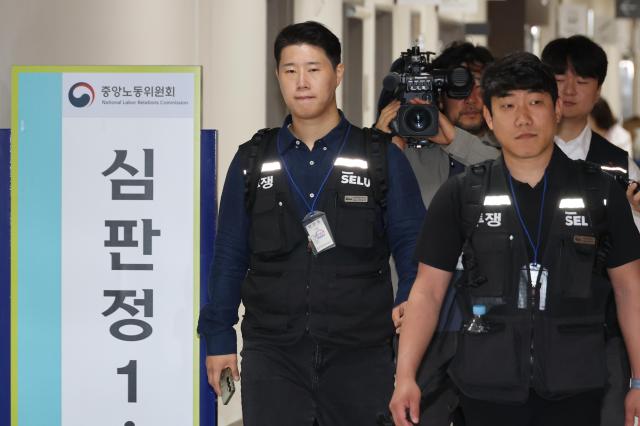
The opaque operations of the Samsung Electronics trans-company union, which announced a strike that raised public concern, have come under scrutiny. Analysts say unilateral decision-making by a small leadership group led by Chair Choi Seung-ho has produced a range of irregularities.
According to industry sources on the 19th, the Samsung Electronics trans-company union is a vast organization of roughly 70,000 members, but it lacks effective internal checks, concentrating authority in the executive.
Experts say ensuring democratic governance after a union’s formation matters more than the act of forming it. Neglecting representative structures is the union’s most serious flaw. A business official said, “Because representative oversight hasn’t worked properly and authority has concentrated in the executive, the organization resembles a private club.” Internal bulletin boards and anonymous online communities have been filled with posts asserting that “centralizing power in the chair is problematic.”
The union reportedly recognized early on the need to establish representative structures. In January 2024, it held a general assembly and amended its bylaws to include a launch statement for the integrated union, delegate allocations, and provisions aimed at reining in the executive. However, as membership swelled to tens of thousands and monthly dues reached about 700 million KRW (approximately $525,000), the delegates’ council has effectively not functioned.
Labor law does not mandate a delegates’ council. But in large unions, a member-elected representative body typically oversees core matters—budgets, bylaws, and bargaining strategy—and thus substitutes for a general assembly in practice. That distinction underpins critics’ argument that lawful registration is a different question from whether the union has operated with sufficient internal democracy.
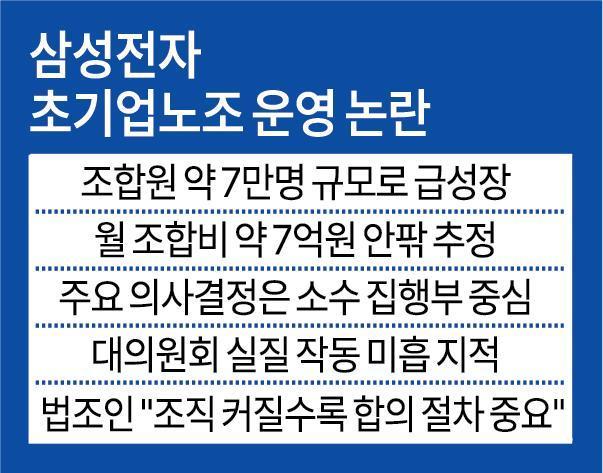
In November, critics alleged the union converted survey results into formal bargaining demands without a vote at a general assembly, raising questions about possible bylaw violations. In May, internal criticism emerged that the delegates’ council had not properly convened for years since the union’s founding.
Industry insiders say this procedural shortfall lies at the heart of the strike. If the union advances bargaining and industrial action in the name of the majority without clear procedures to verify members’ views, its claim to representativeness will inevitably be weakened.
Experts say that, regardless of whether the strike materializes, the Samsung Electronics trans-company union requires comprehensive reform.
A labor attorney at a major law firm said, “We need to review the union’s bylaws in detail. To operate democratically, each branch should establish decision-making bodies, specify which issues those bodies can decide, and act according to agreed positions.”
He added, “New organizations may struggle to build the governance systems of established unions, but as they grow, procedures for consolidating agreed opinions become increasingly important.”













Most Commented