
Translation result.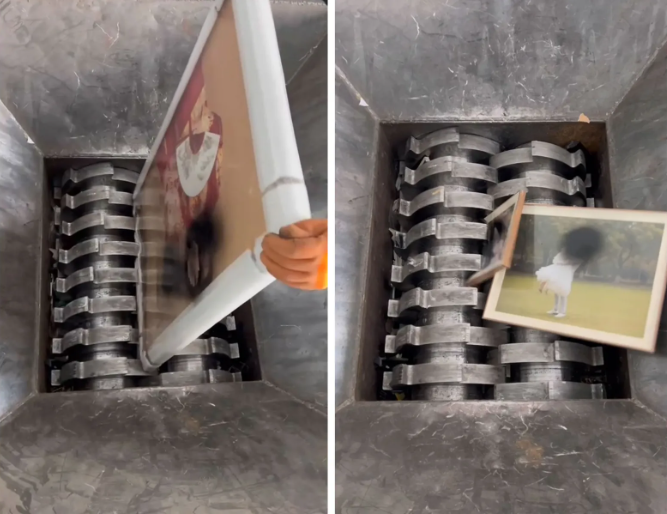 [Herald Economy = Reporter Jeong Mok-hee] Abi Gao, a wedding planner in Beijing, once staged ultra-luxury wedding processions featuring 58 Rolls-Royces and Lamborghinis. She filled venues with 35,000 roses and placed bottles of premium Maotai, each worth hundreds of dollars, on every banquet table.
Today, with wedding demand plunging, she can no longer survive on weddings alone and has added children’s birthday parties to her business.
“The market has completely collapsed,” Gao said. “Last year I had about 100 wedding clients; in 2012 I had nearly 2,000.” She added, “Young people today put their own happiness first, and that doesn’t necessarily mean marriage.”
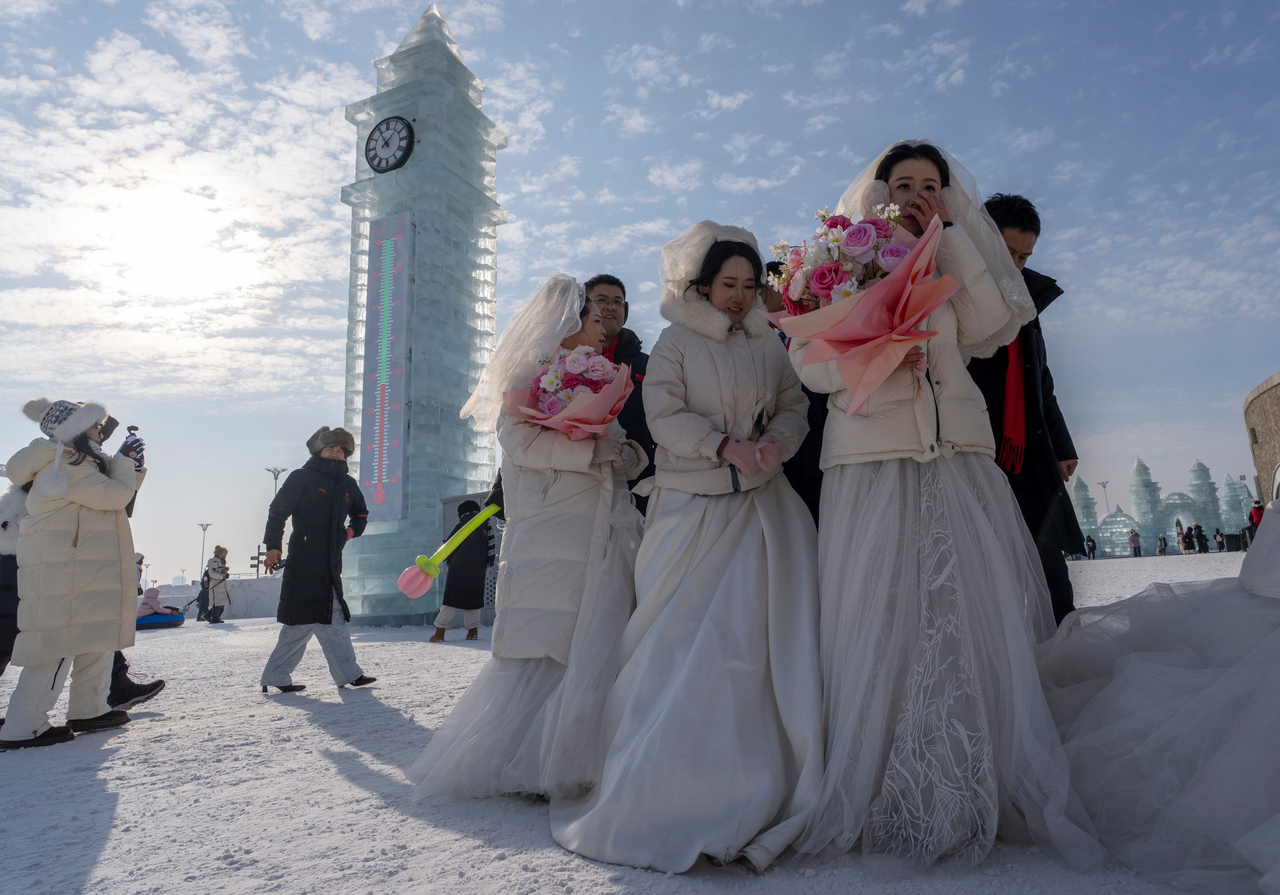 On the 15th (local time), Bloomberg reported that marriage registrations in China have been falling for the past decade. Last year they dropped roughly 21% from the previous year, hitting a record low. As a culture of avoiding marriage spreads, concerns about population decline are growing.
The wedding industry is contracting rapidly. Shanghai consulting firm Daxie Consulting estimates the wedding market has fallen from $524 billion in 2019 to under $400 billion today.
At the same time, a “divorce industry” has emerged.
Companies have begun offering services that professionally shred wedding photos, dresses and albums. “Divorce photo shoots,” in which separated couples tear up wedding photos or toss rings on camera, have also become popular.
Liu Wei, who runs one such business near Beijing, said, “At first we handled a few orders a month; now we get dozens a day.”
Clients typically observe a one-week reconsideration period before photos are shredded, in case they change their minds. To protect personal information, firms spray faces to obscure identities and then destroy the images with industrial shredders. They can send customers a video of the shredding on request.
“For some people it’s just disposal,” Liu said. “For others, it’s a ritual to close a chapter of life.”
![[123RF]](https://cdn-union.tenbizt.com/contents/crawler-dev/image/2026/05/CP-2023-0083/image-b9ecdbb3-9781-4d82-9a29-b2f782ae6f30.jpeg) The Chinese government has rolled out subsidies, tax breaks, childbearing incentives and proposals for divorce cooling-off periods, but those measures have not reversed the trend.
The Chinese government has rolled out subsidies, tax breaks, childbearing incentives and proposals for divorce cooling-off periods, but those measures have not reversed the trend.
China’s total fertility rate has not been officially published recently, but estimates suggest it fell below 1.0 last year. Bloomberg notes that while China’s rate is higher than South Korea’s record low of 0.73, it is facing population pressure comparable to Japan (1.22).
Among young Chinese, the “no marriage, no children” (不婚不育) mindset is spreading quickly.
Analysts point to the slowing economy, soaring wedding costs, the burden of buying a home and pressure to provide large betrothal gifts as key drivers pushing young people away from marriage.
Ada Li, an analyst at Bloomberg Intelligence, said, “This decline in marriage is not a temporary phenomenon; it is hardening into a structural shift. High costs, youth unemployment, economic weakness and skepticism about traditional family roles are leading more young people to forgo marriage.”
At the Temple of Heaven Park in Beijing, so-called matchmaking markets still operate. Parents meet there four times a week to seek spouses for their children.
Papers plastered across the park walls list singles’ ages, education, annual income, height and weight — and note whether they hold Beijing hukou or own a home or car. Preferences such as “good character and responsible” or “owns a home or can afford to buy one” are common.
Notably, ads seeking wives outnumber those seeking husbands, a scene foreign media say underscores the heavier social pressure on women to marry in their 20s.
In major cities like Beijing, the price per square meter for apartments in top school districts often exceeds the average annual salary. Combined with anxiety about future employment, many young people increasingly view marriage itself as a luxury. Currently, one in six Chinese youths aged 16 to 24 is unemployed.
Social and cultural shifts are also significant. Some Chinese women are openly rejecting expectations that they assume traditional caregiving roles. On social media, content featuring financially independent women explaining why they will not marry has resonated widely.
A female influencer on Xiaohongshu, China’s Instagram equivalent, said, “I don’t want to cook three meals a day for a family and pick up socks and toys off the floor. I wasn’t born to do men’s laundry and have children. I just want to live happily.”
Experts say the spread of feminism and rising female economic power have strongly influenced changing attitudes toward marriage in China.
Professor Pan Wang of the University of New South Wales in Sydney explained, “As women become economically and mentally independent, their dependence on men has declined, and so has the perceived need for marriage.”
Indeed, the “solo economy” is growing quickly in China. Appliances, travel packages and consumer services targeting single-person households are proliferating.
According to the Chinese government, last year’s 6.1 million marriage registrations were the fewest since records began in 1986 — less than half the 2013 peak. In 2023, about 30% of 30-year-olds were unmarried, up from roughly 15% a decade earlier.














Most Commented