
Incheon International Airport’s Subcontractor Labor Safety: A Game-Changer for Labor Relations in 2026?
Daniel Kim Views
Translation result.
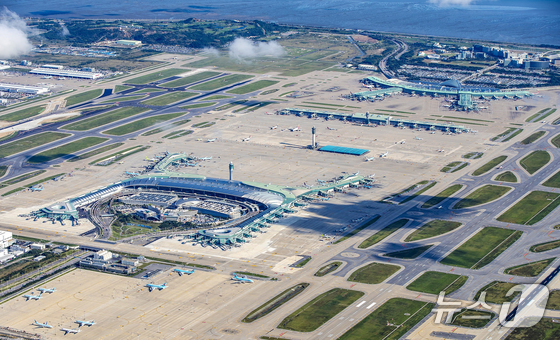
The Incheon Regional Labor Relations Commission has partially recognized the Incheon International Airport Corporation’s employer responsibility for industrial safety issues affecting subcontracted workers.
This is one of the most significant decisions from a public institution since the implementation of the so‑called “Yellow Envelope Law” (the amended Trade Union Act), and it could reshape the bargaining structure between prime contractors and subcontractors going forward.
On the 8th, the Incheon commission said it ruled that the airport corporation bears employer responsibility for industrial safety in a case involving the corporation and seven subcontractor unions that sought a split of bargaining units. The commission also ordered the bargaining units to be divided into three groups: unions affiliated with the Federation of Korean Trade Unions (FKTU), unions affiliated with the Korean Confederation of Trade Unions (KCTU), and other unions.
The commission said it reached the decision because the corporation controls key airport facilities and equipment, oversees the airport’s overall safety and health management system, and because both management and labor concurred on these points.
It added that, when deciding how to separate bargaining units, it considered similarities in union interests and the potential for inter-union conflict, ultimately splitting the subcontracted worker group into three bargaining units by union federation.
Min Gilsu, chair of the Incheon commission, said the Incheon International Airport Corporation is a flagship public institution in South Korea that employs many direct and subcontracted workers. He expressed hope that this subcontract bargaining‑unit split model will foster substantive dialogue between contractors and subcontractors, improve working conditions, and help deliver better public services.












Most Commented