
Gyeongsangnam-do’s Ambitious Space Industry Plan: How Will It Transform Jinju into Korea’s Aerospace Capital?
Daniel Kim Views
Translation result.
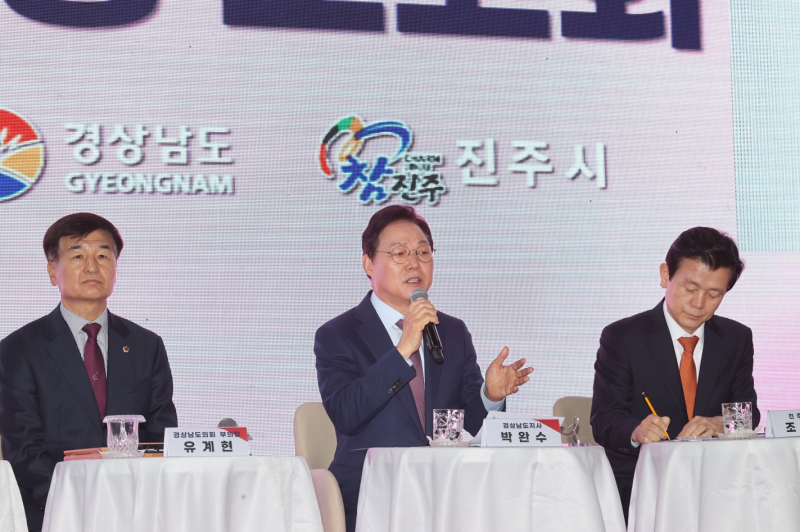
Gyeongsangnam Province has formalized a strategy to develop an aerospace industry centered on Jinju and to promote balanced development across western Gyeongnam.
On the 2nd, the provincial government held a provincial briefing with Jinju residents at the Jinju Indoor Gymnasium and outlined a regional development plan focused on establishing an aerospace cluster and relocating public agencies. About 600 people attended, including Governor Park Wan-soo, Jinju Mayor Cho Gyu-il, provincial and city councilors, and local residents.
Governor Park pledged, “We will make Jinju the undisputed aerospace capital of South Korea,” and laid out a comprehensive strategy addressing both industrial growth and living conditions. The plan envisions using the Aerospace Administration that Gyeongnam secured as a base for research and development, workforce training, and business clustering to develop western Gyeongnam into the nation’s aerospace hub.
To achieve this, the province plans to create an aerospace complex city, strengthen the foundation for attracting companies and research institutes, and develop an aviation MRO (maintenance, repair, and overhaul) industrial park. Officials also proposed expanding Sacheon Airport into an international airport and pursuing institutional support through a special law.
The meeting also placed the proposed administrative integration of Busan and Gyeongnam on the agenda.
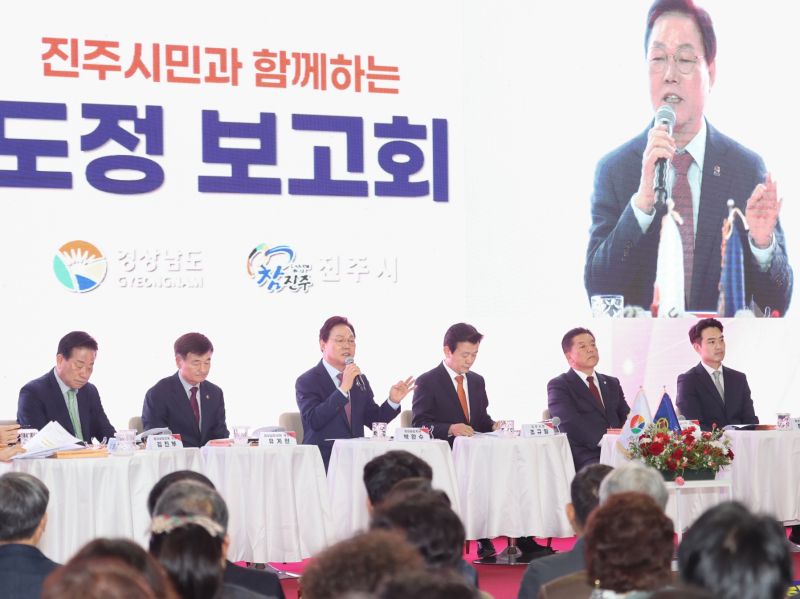
Governor Park said, “Administrative integration must proceed based on the will of residents,” adding, “We will pursue enactment of a special law after the local elections, following thorough public consultation such as referendums.” He emphasized, “We will achieve balanced development by strengthening fiscal authority and prioritizing investment in western Gyeongnam with secured funding.”
The province will also expedite construction of the Western Medical Center. Gyeongnam has completed building permits and is now working on detailed designs, with construction slated to begin in the second half of this year and a target opening in 2029. Governor Park said, “We will expand public healthcare and secure medical personnel to establish a stable medical service system.”
Officials addressed questions on local issues such as living subsidies and measures to counter low birthrates, and the province plans to incorporate the feedback into future policy-making.
◆Gyeongsangnam Province weighs introducing a “Disaster Special Activity Allowance” for i-tongjangs…Strengthening on-site response support
Gyeongnam Province will actively consider a “Disaster Special Activity Allowance” to support i-tongjangs (village and neighborhood leaders) who operate on the front lines of disaster response.
On the 2nd, the provincial government held a meeting in the main conference room at the provincial office with Governor Park and about 130 i-tongjangs from 18 cities and counties to discuss improving their working conditions and addressing local concerns.
Participants noted that the support system falls short compared with the role i-tongjangs play as first responders to wildfires, floods, and other disasters. They raised concerns that these leaders often cover disaster monitoring and response costs out of pocket, making the creation of a Disaster Special Activity Allowance a central agenda item.
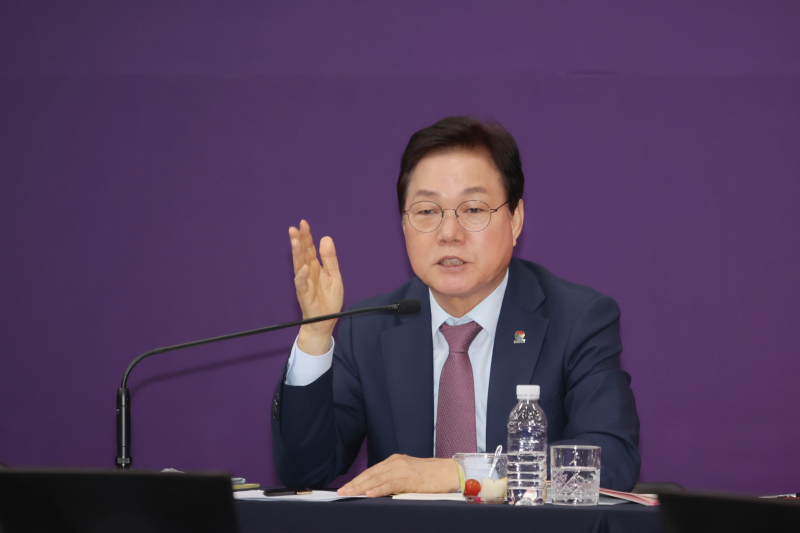
The province agreed and pledged to actively review introducing the allowance. Establishing a new benefit will require provincial and municipal ordinances, so officials said they will share costs based on fiscal conditions and consult closely with cities and counties before moving forward. They noted the need for such support became clear during last year’s wildfires in Sancheong and Hamyang.
Governor Park said, “I-tongjangs are the ones who first protect residents’ lives and property during disasters. We deeply appreciate their role in ensuring safety where government reach is limited.” He stressed, “The province and municipalities will strengthen support so they can carry out their duties without hardship.”
The meeting also covered long-standing local projects. Regarding the lifting of protected fishing resource zones, the province said it will begin priority reviews of municipal applications in June when related laws take effect. To address marine debris, officials plan to expand cleanup projects and collection systems centered on Geoje City and strengthen preventive measures such as installing river-blocking facilities.
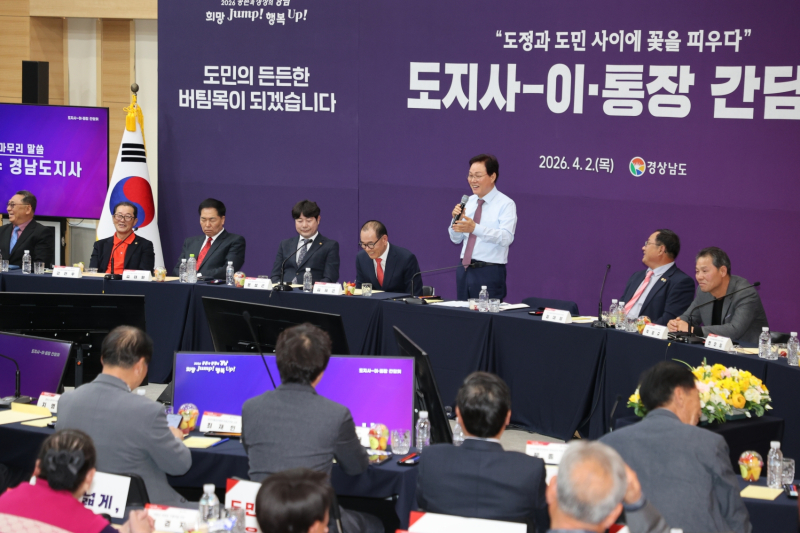
On a proposed Northeast Asia logistics platform raised in Gimhae, officials highlighted the need to develop a mixed-use city combining an international convention center, exhibition halls, and large distribution facilities in coordination with Gadeok New Airport and Jinhae New Port. The province plans to advance related projects based on lifting the greenbelt in Gimhae’s Hwamok district.
Other proposals included upgrading provincial roads to national status, supporting vacant-home remodeling for returning farmers and migrants, and expanding urban regeneration projects.
Gyeongnam Province said it will strengthen field-centered governance through regular communication and pursue policies residents can feel in their daily lives. Starting in the second half of this year, it will also hold an I-tongjang Unity Festival and bolster morale-boosting measures such as improved support for health screening fees.










Most Commented