
Kim Dong-yeon Proposes Major Overhaul of Welfare Policies in Gyeonggi Province: What to Expect in 2025?
Daniel Kim Views
Translation result
![Kim Dong-yeon (left) held a policy meeting with the Gyeonggi Social Welfare Coalition on March 30 and said, “If the ninth popularly elected local administration takes office, I will expand the current Welfare Bureau into a Welfare Office to strengthen welfare functions more systematically.” [Photo=Kim Dong-yeon campaign]](https://contents-cdn.viewus.co.kr/image/2026/03/CP-2023-0070/image-8b474f19-4c3d-4719-a03e-540a3d39c442.png)
Kim Dong-yeon, a Democratic Party candidate in the primary for Gyeonggi provincial governor, unveiled plans to expand the province’s welfare apparatus and overhaul its welfare policies, contingent on the launch of the ninth popularly elected local administration.
At a policy meeting with the Gyeonggi Social Welfare Coalition on March 30, Kim reiterated, “If the ninth popularly elected local administration takes office, I will expand the current Welfare Bureau into a Welfare Office to strengthen welfare functions more systematically.” He added that he would establish multiple department heads under an office director, broaden appointments of noncareer and professional staff, and shift the bureaucracy toward expertise-driven administration.
Kim emphasized that a bureaucratic, insider-only approach has limits in the welfare sector. He said that bringing in outside specialists and restructuring the organization are both necessary for policies to operate effectively at the local level.
On improving conditions for welfare workers, Kim said the administration would address urgent issues first and tackle other reforms in stages. Since 2016, Gyeonggi Province has fully funded wage-improvement subsidies for staff at social welfare facilities and service providers.
As of 2025, the program supports 3,377 facilities and 26,896 workers, providing 50,000 KRW per month per worker (about $37.50), under a total budget of 16.1 billion KRW (about $12.08 million). The province also implements measures such as special duty allowances, staff training programs, accident-insurance support, and substitute-worker assistance.
Kim said he would create a field advisory council to develop a four-year implementation plan and roll it out in three phases over the first three years. He stressed that reaching social consensus through consultation with front-line workers is essential.
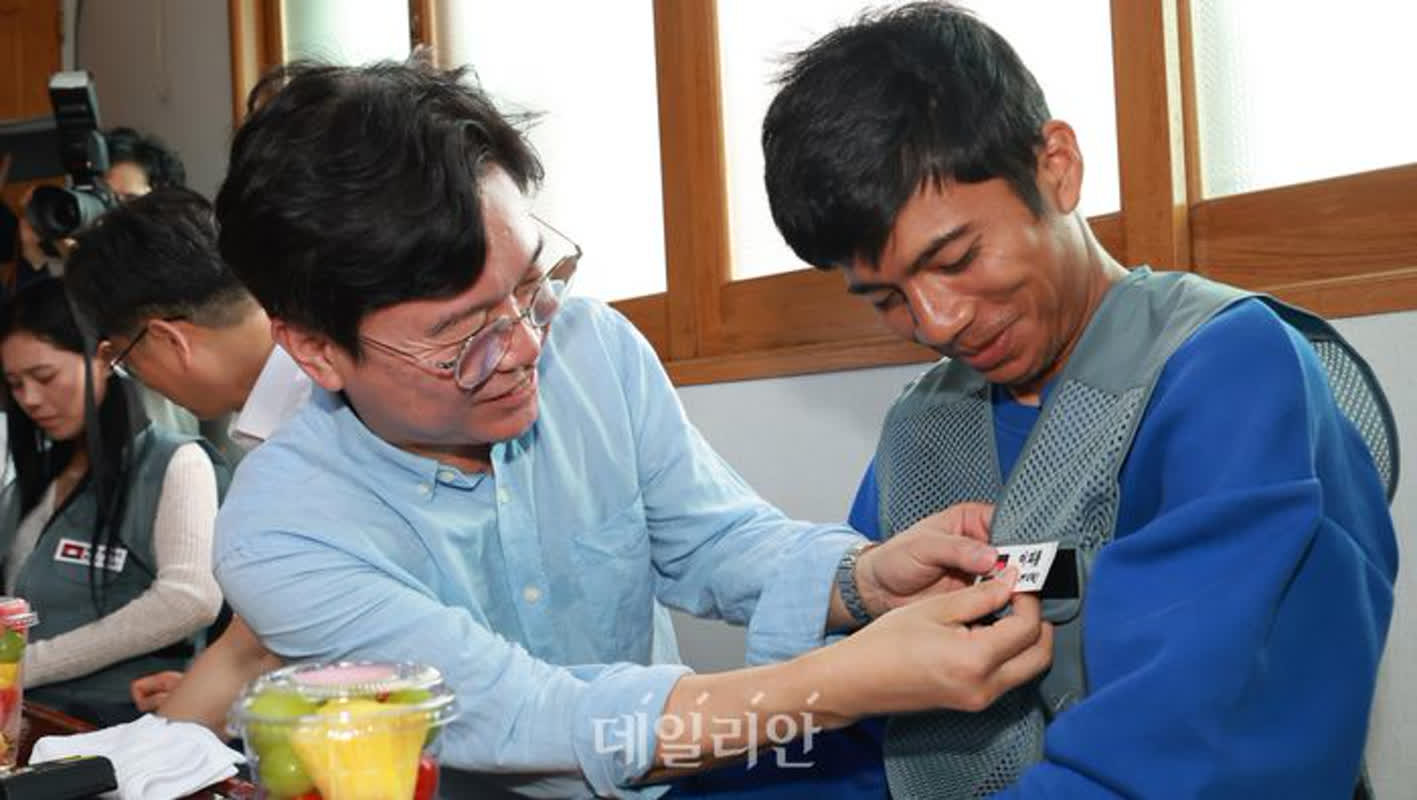
The meeting also drew attention when Kim’s personal donations were disclosed. Some attendees were representatives of welfare facilities that had received his support, and those connections were discussed during the session.
![[Photo=Kim Dong-yeon campaign]](https://contents-cdn.viewus.co.kr/image/2026/03/CP-2023-0070/image-42317ff5-817d-4319-9633-90b3d664cd54.png)
Meanwhile, Kim has reportedly donated 100,000 KRW per month (about $75.00) to one welfare facility in each of Gyeonggi Province’s 31 cities and counties for four years since his inauguration as governor. Recipients vary by locality and include facilities for people with disabilities, a disability orchestra, eldercare centers, and multicultural service organizations.
He has also reportedly donated 100,000 KRW per month for more than a decade to local children’s centers in Yangyang, Gangwon Province, among others. Including those donations, he has been contributing roughly 4,000,000 KRW per month (about $3,000) across approximately 40 welfare facilities.
“I grew up without a study room, so I have a strong attachment to local children’s centers,” Kim said. “Meeting the children through my donations has been meaningful, but I didn’t want to publicize it, so I kept it private.”
Those donations were also disclosed during Kim’s 2017 confirmation hearing for his appointment as deputy prime minister and finance minister in the Moon Jae-in administration. Documents submitted to the National Assembly showed that while serving as president of Ajou University, Kim donated about 88 million KRW (roughly $66,000) — nearly half — of his annual salary of about 186 million KRW (roughly $139,500) to local children’s centers.
Through the meeting, Kim outlined his vision to reorganize the welfare apparatus, pursue field-centered policies, and sustain investment in welfare resources to build a welfare system that residents can feel in their daily lives. Observers have raised questions about how the proposed organizational expansion and increased spending would translate into tangible policy outcomes and long-term fiscal sustainability.










Most Commented