
From Hellish Commutes to Connected Cities: Jeong Wang-ryong’s Vision for Gimpo’s Transportation Revolution
Daniel Kim Views
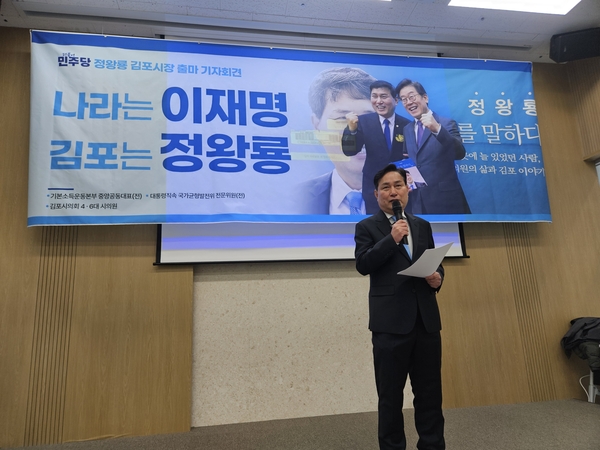
On February 10, Jeong Wang-ryong, Deputy Chairman of the Democratic Party’s Policy Committee, officially announced his bid for the Gimpo mayoral race.
At a press conference in the Gimpo City Council briefing room, Jeong stated, “A strong local government is the foundation of a strong nation, and Gimpo will be the starting point.” He expressed his commitment to shaping Gimpo’s future for the next decade.
Jeong highlighted solving the city’s most pressing issue – traffic congestion – as his top priority.
He declared, “Gimpo can no longer bear the stigma of being a ‘Hellish Subway City.’ Transportation isn’t just a convenience; it’s a fundamental right.” Jeong pledged to “urgently push for the extension of Subway Line 5 and Incheon Line 2,” adding, “If negotiations stall, I’ll take direct action. If funding is an issue, I’ll restructure. If procedures halt, I’ll negotiate tirelessly with the federal government.”
Furthermore, he promised to pursue underground construction for the urban section of the Gyeyang Expressway, stating, “We’ll transform Gimpo from a car-centric city to a people-focused one. Our goal is to change Gimpo from a city with hellish public transport to a connected, breathable urban center.”
Jeong also outlined strategies for future industries and international city development. He proposed “revitalizing Cinepolis as a hub for MICE, media, and tourism industries,” and “establishing a Global Taekwondo City by attracting the World Taekwondo Headquarters.” He aims to elevate Gimpo into an international network city through a global public exchange center. Jeong also plans to brand Aegibong and the Han River estuary as peace and ecological hubs.
His vision includes transforming Gimpo into a cultural and marine tourism destination. Jeong committed to redesigning the Rabeniče Golden Waterway as “Gimpo’s Cheonggyecheon” and developing Baengmado and Aramarina areas into vibrant spaces for youth culture and festivals.
Addressing the local economy, Jeong proposed establishing a Livelihood Economic Support Center to revitalize small businesses and strengthen the local economic cycle. He emphasized developing the Han River Compact City 2 and Daegot Environmental Regeneration Innovation Complex as self-sufficient industrial hubs.
“We’ll streamline various regional development projects to boost the local construction economy and create synergy,” Jeong said. He added, “We’ll bridge generational gaps through the Second Chapter of Life Support Center and the Career Interrupted Women’s Support Center.”
In closing, Jeong pledged, “I’ll make Gimpo a beacon of democracy and a key driver of the Lee Jae-myung administration’s success. We’ll kickstart Korea’s next great leap forward, beginning right here in Gimpo.”









Most Commented