
Translation result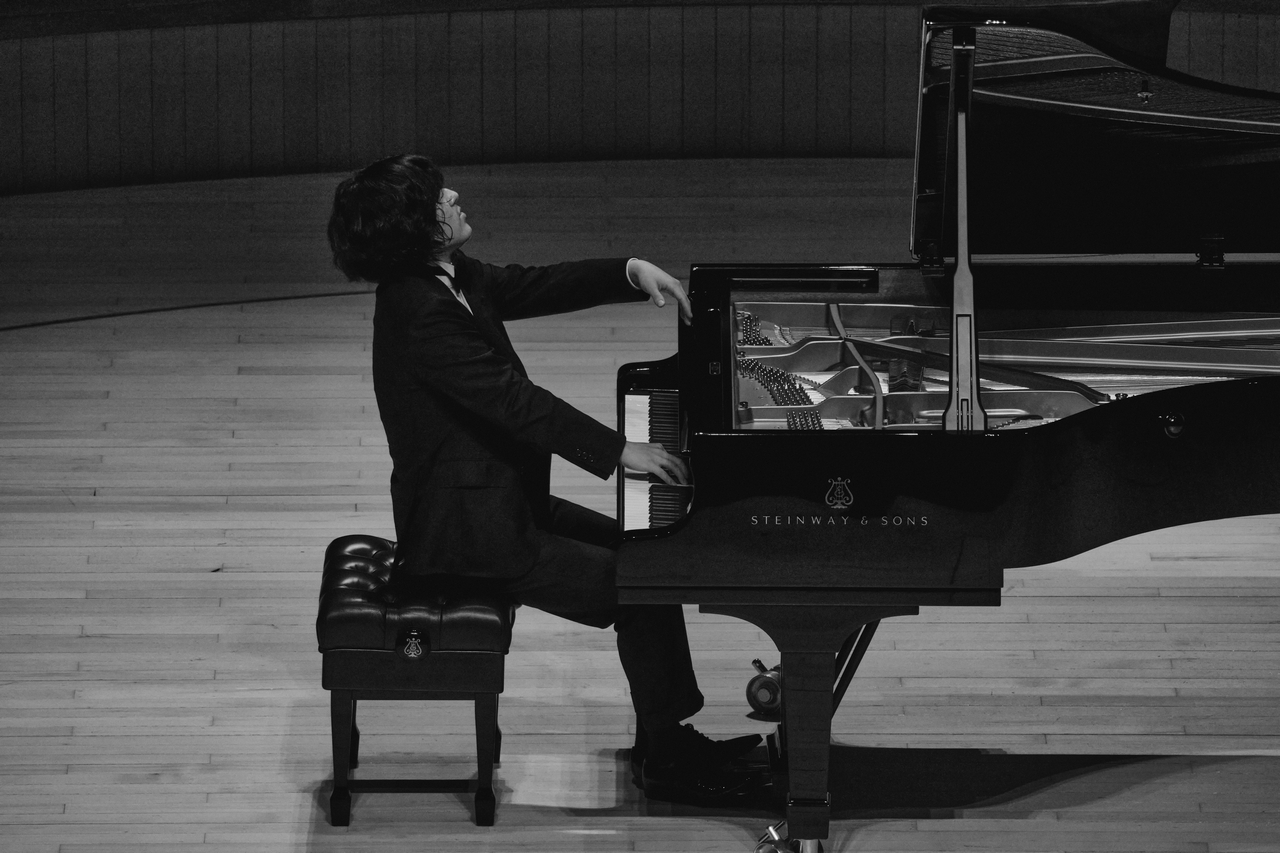 [Herald Economy=Reporter Go Seung-hee] 10 fingers traversed time, moving between two very different musical worlds. Franz Schubert, sensing death yet leaving behind a vast, luminous sonata; Alexander Scriabin, chasing ecstatic transcendence beyond the pull of ordinary gravity. Between those extremes, the pianist summoned a collapsing self and lifted it to the surface. He dove willingly and without fear into the deepest reaches of his interior life. To borrow a K-pop line:
“Fall deeper, it’s okay to die.” (Wooz, “Drowning”)
At 22, Yunchan Lim surrendered himself to the music. He gripped reason tightly enough to avoid drifting into empty illusion, yet offered himself as if already prepared to let those illusions go.
This recital was an act of reflection. Lim brought out Schubert and Scriabin and unpacked the musical and artistic ideas he had carried in his swelling chest. The tour began in Hong Kong in March, moved through 4 Japanese cities (Tokyo, Osaka, Nagoya, Kawasaki), and resumed at Lotte Concert Hall on the 6th.
The program itself changed shortly before the performances. Lim chose the pieces. “After a long period of silence and hesitation, I finally reached music that feels truly alive deep inside me,” he said. “I shed the obsessions, inertia, and habits that held me back and rebuilt the program around Schubert and Scriabin—composers I have loved for years and could never turn away from.” It was a candid reckoning by a pianist confronting his own interior.
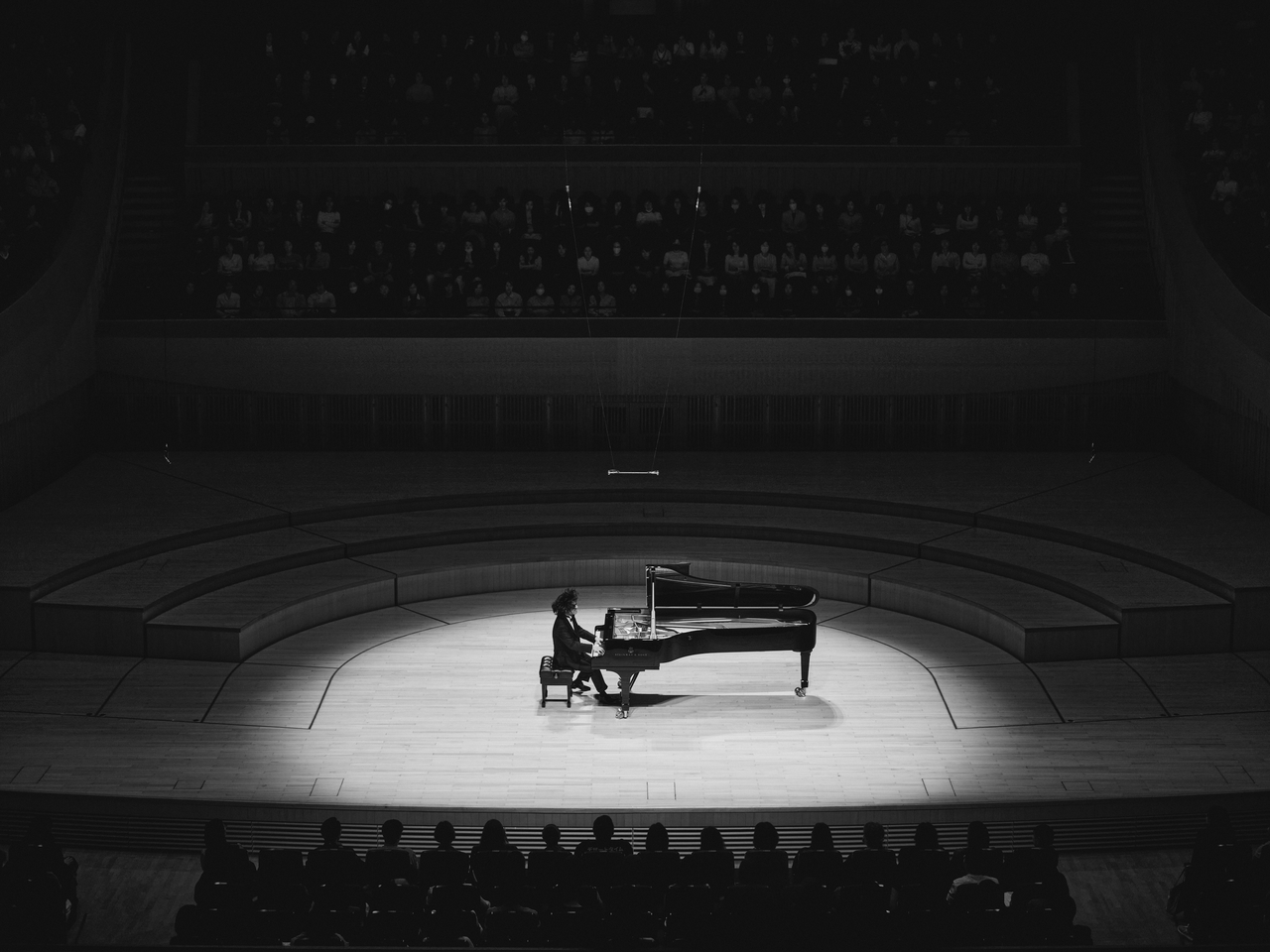 Lim is not a technician who simply reproduces notes. At each concert he rewrites the music in his own voice. This program mapped a journey across two distinct realms: Schubert’s sober lyricism and Scriabin’s late-Romantic mysticism turned inward.
Schubert’s Piano Sonata No. 17, the “Gasteiner,” and Scriabin’s Sonatas Nos. 2, 3 and 4 belong to different eras. Lim placed Schubert—standing on the boundary between Classical and Romantic—next to Scriabin, who moved from late Romanticism to a modern mysticism. On that trajectory, his hands reached beyond the ordinary abyss of feeling.
Though the pieces came from different periods, the music wove into a single, expansive current. The first movement of Schubert’s Sonata No. 17 was unusually bright and fast. Lim unleashed concentrated energy the moment he sat at the piano and never lost the driving 2/2 pulse. His rhythmic leaps and the elastic rubato that bridged them are trademarks. Small, punctuated bounces between left and right hands added vivid life to the texture.
When the second movement unfolded, the mood shifted. A sacred flow in A major calmed the audience like a consoling spell. Melodies traced the map of the soul, rising and falling; the push-and-pull phrasing translated sound into images—memory fragments chiming like distant bells. Unlike the near-symphonic sweep of the first movement, Lim sang the second like an art song, murmuring the melody. The tender solace barely subsided before the music rushed into a scherzo, playful hemiolas skipping with mischievous energy. Schubert’s rhythmic compulsion returned in the third movement, and Lim seized every moment without retreat.
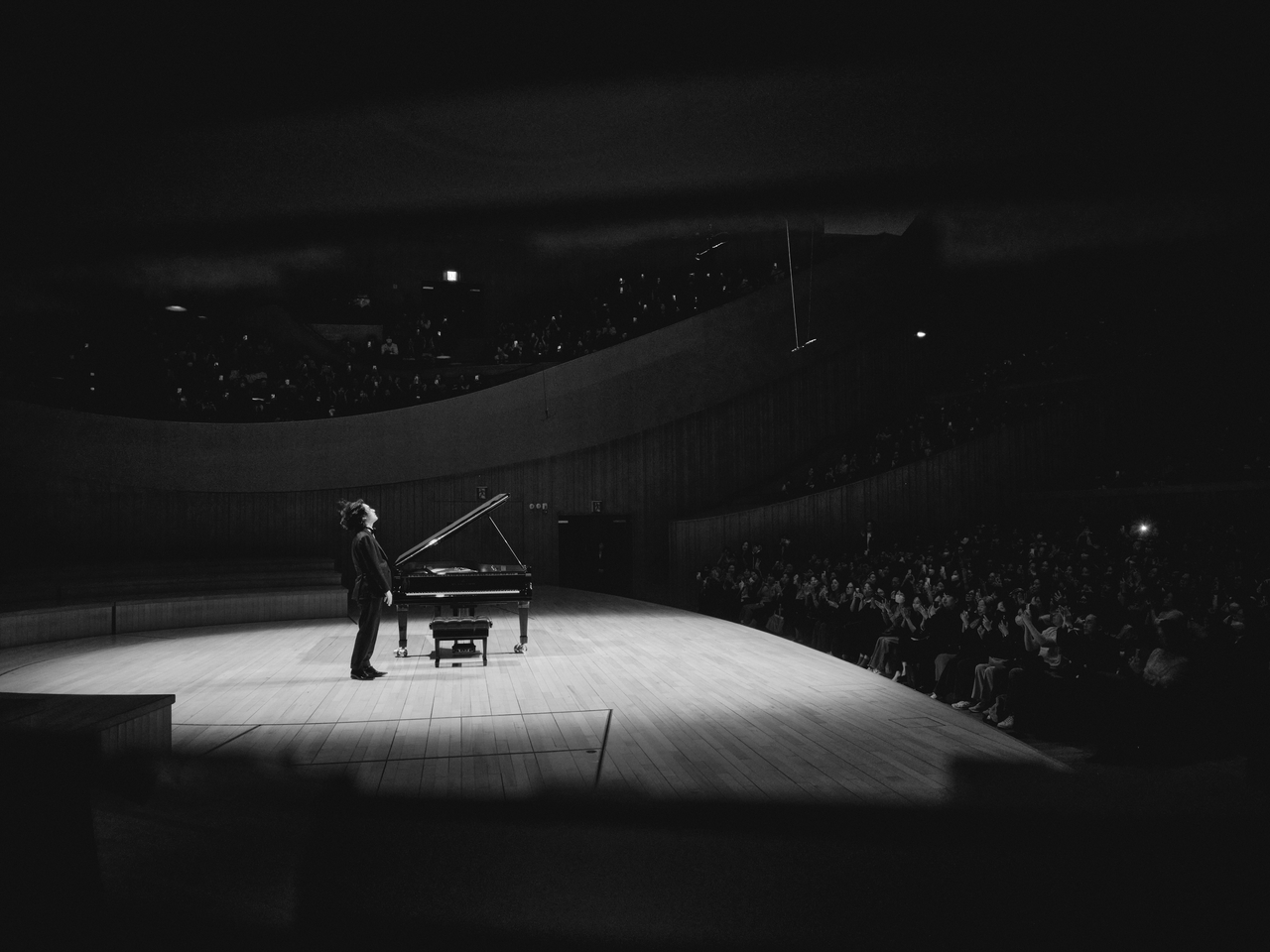 Repeated triplets that might have staggered became gestures of life under his fingertips. In the fourth movement, clear, transparent tones and precise touch skated across the keys. Then, gripping the sorrow of collapse hidden inside that vitality, he completed the sonata’s narrative.
Beneath the sonata’s classical surface lay a wild, narrative freedom. Lim’s performance was beautiful but carried a menacing melancholy. By accentuating obsessive, repeating figures, he turned Schubert’s formal elegance into something bordering on compulsion—even hallucination.
Lim’s Scriabin shed ambiguity and took on a striking clarity. Playing Sonatas 2, 3 and 4 in sequence, he turned them into a single, vast arc.
His handling of Scriabin’s indeterminacy was especially compelling. Scriabin’s harmonies slide away; tonal centers wobble; melody and accompaniment blur. Where one might expect foggy, dreamlike textures, Lim imposed firm architecture and fought like a revolutionary. He presented Scriabin not as coloristic vignettes but as grand, unfolding drama.
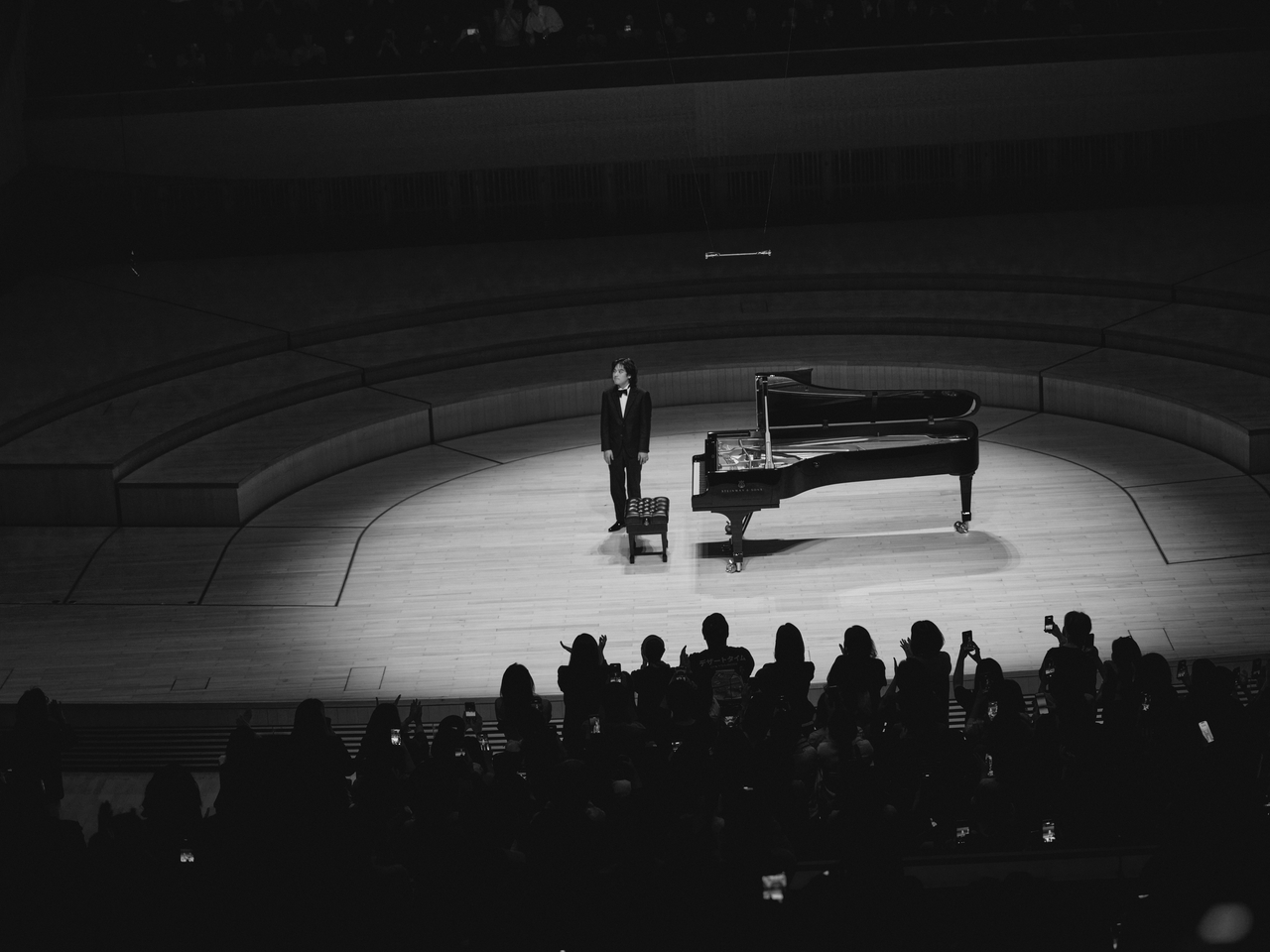 The sonatas did not stand apart. The oceanic motion that begins in No. 2 sinks inward in No. 3, and in No. 4 it breaks free of material bounds and ascends into light and rapture. The music breathed as one long phrase.
Sonata No. 2 represents the apex of an “impressionistic romanticism,” fusing Chopinesque nocturnes with images of sea and moonlight. Lim refused to prettify the notes. His right hand’s high registers fragmented like particles of light, while the left-hand triplets rolled like currents under a deep sea. The sound remained transparent, but an inexorable force seemed to push it toward some distant shore.
In Sonata No. 3 the color changed again. Scriabin called this piece “the struggle of the abyss.” Restless harmonies exposed an unstable self—slipping, colliding, failing to find center. Lim treated that instability as drama. He did not smooth over the moments when harmony fractured; instead, he laid bare tonal fissures and uneasy motion.
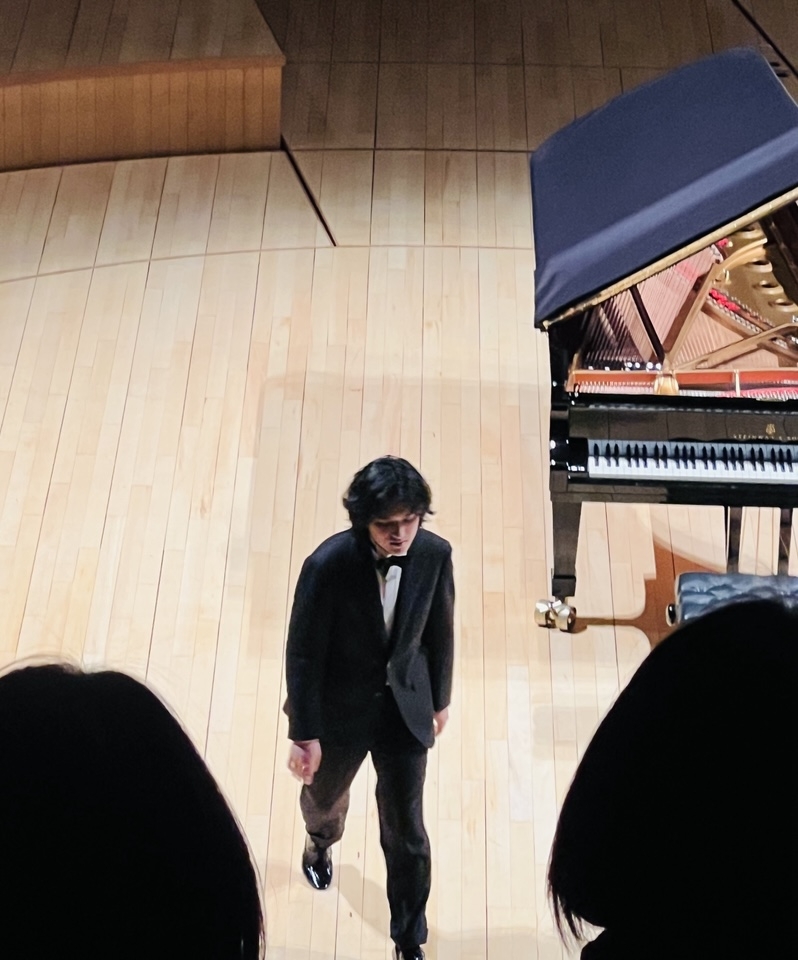 Lim chose living music born of fissures and tremors over impeccably sealed performances. The waves that swept his interior spilled into desire, madness, and self-erosion. He embraced extreme dynamics, relentless tempi, and the danger of burning through energy to the brink of collapse. It was another signal: no safe, predictable readings of this repertoire. He was willing to risk breakdown to bring his musical language fully into the world. And yet, he held together.
Scriabin’s Fourth Sonata is music of starlight and ascent. Lim touched notes as if brushing them into being rather than striking them. The piano seemed to draw sound from the air. As figures brightened and accelerated, they converged toward a single, luminous center.
The recital was a narrative of transformation. Schubert’s human anxiety and vitality passed through Scriabin and moved toward inner abyss and ecstatic revelation. Lim’s language of conviction felt audacious and dangerous. His playing moved beyond virtuosity into structure, from structure into thought, and from thought into a world that dismantled the boundaries of music—and, perhaps, of the self.












Most Commented