
Translation result

“Shot through the heart! And you’re to blame” (a bullet that pierces the heart)
One shout. A crowd of 100,000 completes the next line in an instant and, as if spellbound, sings along.
“Darling, you give love a bad name”(My darling, you stain my love)
Game over. Stage and audience merge.
This is the power of Bon Jovi.
[Herald Economy = Reporter Kim Juri] A handsome frontman. A musician who sold 1.76 million tickets in a single year and earned hundreds of hundred million KRW (tens of millions of USD). A wildly popular artist.
Mass appeal is often underrated. Because it sounds immediate, because so many people like it, because it prompts an instant response, it is sometimes dismissed as lightweight—less worthy than music that invites deep reflection or carries layered meanings. Critics have long equated musical value with complexity, novelty, experimentation, darkness or danger. By those measures, music that can turn an arena into a single chorus—music like Bon Jovi’s—can be undervalued.
But mass appeal is not the same as shallowness. It is not simply a byword for high sales, easy melodies or less effortful production. Mass appeal is the capacity of a song to reach tens of millions of listeners from diverse backgrounds at once, to make their bodies respond, to lodge in memory and then reemerge on everyone’s lips. That is mass appeal.
This kind of irresistible mass appeal is, paradoxically, one of the hardest skills in pop music. Translating emotions—love, anger, despair, hope, resilience—into sound is technically demanding. Too much complexity pushes audiences away; too much simplification becomes saccharine. The challenge is to preserve the emotional core while rendering it immediately accessible.
Bon Jovi mastered that craft like few others. They avoided baffling structures and avant-garde textures. Instead they designed openings that signal a song in seconds, melodies that lodge instantly, and choruses you must sing. Bon Jovi’s music forces a reaction before inviting interpretation: the body knows the song on first hearing, the voice follows on the second, and by the third, the whole venue is singing.
So Bon Jovi’s mass appeal cannot be dismissed as mere simplicity. Many songs sound simple; few become everyone’s anthem. Bon Jovi succeeded not by dumbing music down but by engineering songs to land intuitively. Mass appeal is not the erasure of depth; it is structural precision that allows music to reach many people at once.
It doesn’t make a difference if we make it or not
We’ve got each other and that’s a lot for love
We’ll give it a shot”
(She said, “We have to hold on—whether we make it or not doesn’t matter. We have each other, and that’s enough for love. Let’s give it a try.”)
– From Bon Jovi’s ‘Livin’ on a Prayer’ –

That point appears most clearly in two of Bon Jovi’s signature tracks. Livin’ on a Prayer and You Give Love a Bad Name are not accidental earworms. They read like precise blueprints of pop songwriting, engineered to capture listeners’ responses almost immediately.
You Give Love a Bad Name detonates from the first line. It skips the conventional quiet-build-to-chorus arc and instead launches the lead vocal’s energy into the silence. The shout “Shot through the heart! And you’re to blame” functions like a flare. Listeners feel the impact physically; before they can process it, a searing guitar intro locks their attention. There is no time for explanation—people move reflexively to the next line.
The song’s genius lies in producing that reflex. Vocals strike short and hard; guitar and drums lift the line instantly. The melody is not intricate, but the rhythmic and phrasal placement is so clear the tune etches itself on first hearing. In that instant, the music stops being an object of study and becomes an act of participation.
Livin’ on a Prayer is even more meticulously constructed. Though the chorus—“Whoa, we’re halfway there, Whoa oh, livin’ on a prayer”—is the song’s flagship, the track doesn’t rely on a single hook. Almost every section carries a hook. The talk-box intro stamps the song’s identity in seconds; the verses push the narrative upward; the pre-chorus ratchets emotion toward the chorus, and the chorus bursts like a stadium chant.
Crucially, no section is left slack. Each part grips the listener and funnels them forward. There is no lapse in focus. What sounds effortless is actually a compositional strategy designed to maximize immersion.
Another of Bon Jovi’s strengths is how they avoid parsing emotions in microscopic or overly poetic terms. They strip feelings down and compress them into forms most people can respond to immediately. The rage of betrayed love becomes a raw cry; life’s anxieties and endurance map onto the modest lives of Tommy and Gina. Their craft is to simplify without cheapening—and that tightrope is where their power lies.
So these two signature songs do more than offer catchy choruses. The entire songs are organized around memory and bodily response. Bon Jovi excised awkward complexity and left razor-sharp clarity. That clarity makes the songs cling. Mass appeal works where many people instantly understand, respond together, and raise a collective voice. Bon Jovi perfected that architecture in the idiom of 1980s rock.
Like the roses want the rain
Like a poet needs the pain
And I would give anything
My blood, my love, my life
If you were in these arms tonight
(I want you—like roses want rain, like a poet needs pain. I’d give everything—my blood, my love, my life—if I could hold you tonight)
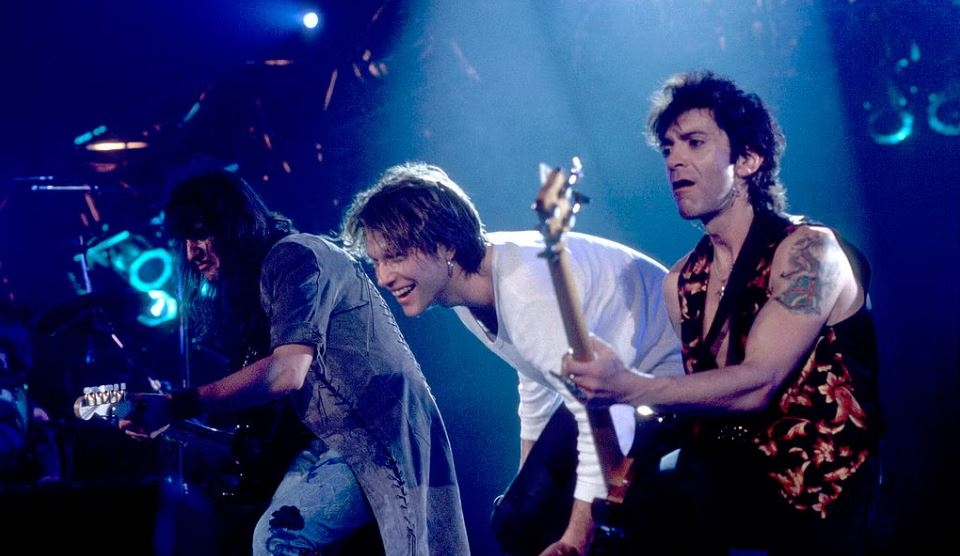
What’s striking is that Bon Jovi never hid the mechanics of their reach. They did not assume the inscrutable artist pose or seek authority by distancing themselves from listeners. They did not take pride in making music that’s hard to decipher. Instead they chose the opposite: music that connects quickly and directly. And they were unapologetic about it.
That posture was double-edged for years. A charismatic frontman, an MTV-ready image, polished choruses and stadium shows propelled Bon Jovi to massive success—but critics used those same qualities to keep them outside the circle of “serious” rock. If rock must be deep, dark and defiant, Bon Jovi looked too transparent, too likable and too commercially successful.
Yet that very transparency became the band’s motor and identity. Bon Jovi retained rock’s aggression but scaled its energy into a size and shape the public could accept. Guitars stayed gritty, drums pushed like arena engines, and the vocals reached out to the crowd throughout. Every element was arranged to draw listeners in. They showed rock’s rougher face while helping people love rock safely—and that accomplishment mattered.
In that sense, Bon Jovi didn’t need to defend their popularity; they wielded it as a central tool. The band’s biggest hits came from a deliberate songwriting approach: John Bon Jovi (vocals), Richie Sambora (guitar at their peak) and hitmaker Desmond Child collaborated on many of those songs. Their success was not random inspiration but the result of people who understood how hits function.
That’s not to say the music was merely calculated. Their cunning lay in making craft sound natural. Bon Jovi didn’t write songs that only pretended to be easy; they polished tracks to reach listeners as directly as possible.
So Bon Jovi wasn’t lightweight because they refused an artist’s mask. They were powerful because they didn’t hide their mass appeal and pursued it openly. Rather than complicating their music to claim artistic authority, they perfected songs anyone could sing—and in doing so they elevated accessibility into an achievement.
It’s now or never
I ain’t gonna live forever
I just want to live while I’m alive
(This is my life—it’s now or never. I won’t live forever; I want to live while I’m alive)
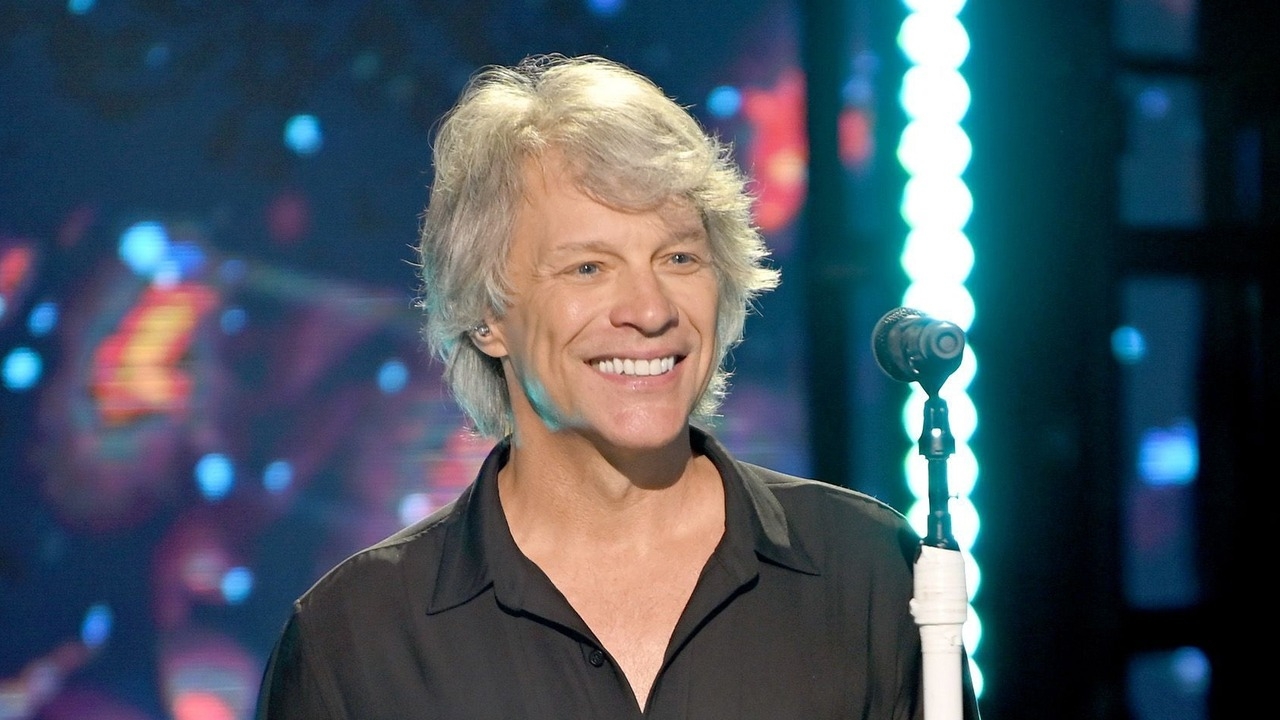 The music of Led Zeppelin and Pink Floyd achieved greatness in another register: complex arrangements, sweeping narratives, experimental sounds and album-length worlds showed how far rock could go artistically. But pop music’s power doesn’t reside only in obscurity or experiment. Some songs provoke thought; some overwhelm; some move both memory and body.
Irving Berlin, the Russia-born American composer often cited as the epitome of American songwriting, once said you can break grammar or rhyme—but you cannot ignore the rules of pop-song structure and expect success. Mass appeal is a matter of structure, not mere taste. The simpler a song sounds, the more precise the underlying calculations and placement must be.
Bon Jovi proves that point. They didn’t make rock deliberately difficult. They showed how far rock could spread through countless voices. Many songs sound simple; few become everyone’s song. Bon Jovi’s mass appeal was not evidence of lightness but the musical skill of lifting millions onto the same chorus.
Mass appeal is not compromise — it is another form of precision that lets art reach millions.















Most Commented