
Translation result
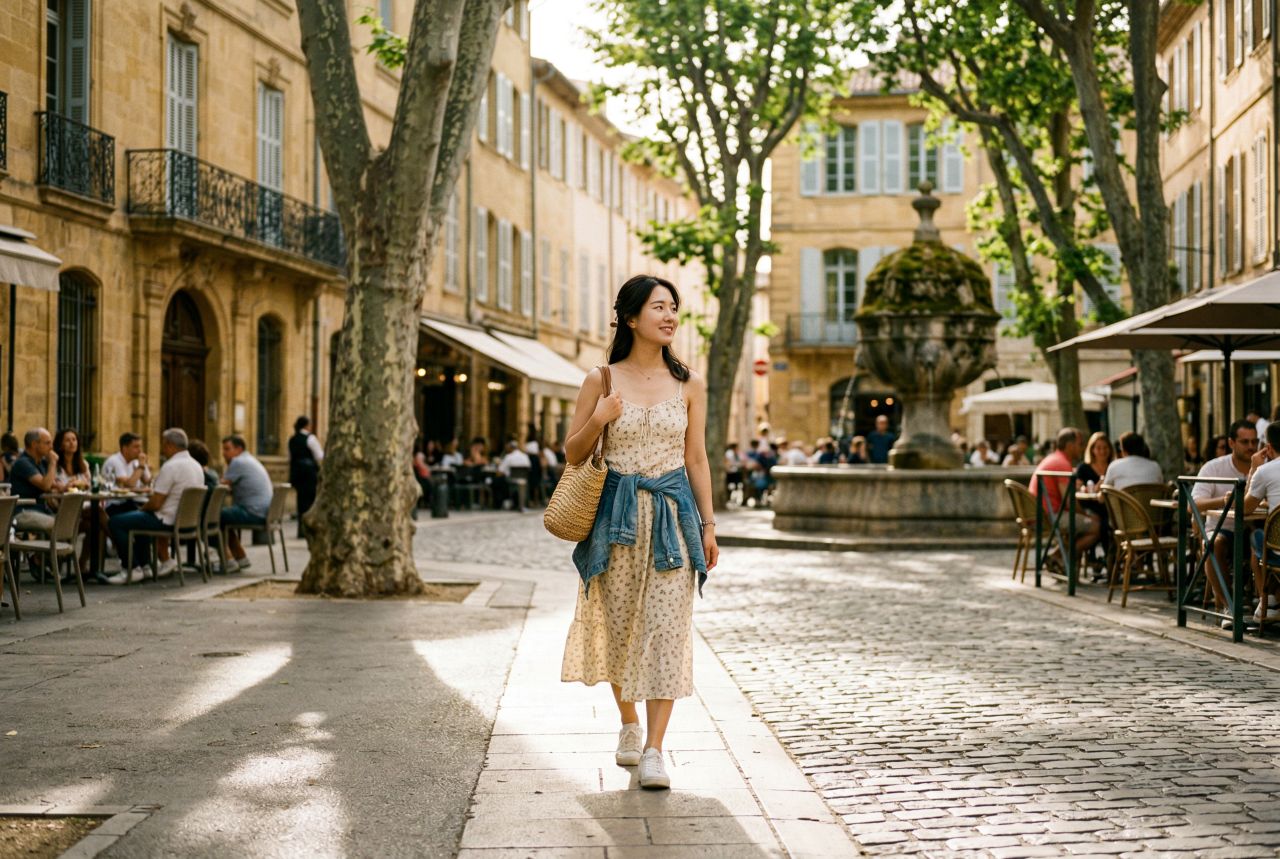
Painter Paul Cézanne adored Aix-en-Provence and painted it again and again. The city feels like one vast, elegant gallery—orderly, sun-drenched, and impossibly chic. Everywhere you go, the soft chatter of fountains and the warm glow of honey-colored stone explain, in an instant, why generations of artists were utterly captivated.
Today we’re diving into Aix-en-Provence—the cultural hub of southern France and a true shrine to art—to uncover what makes it irresistible.
What kind of place is Aix-en-Provence?
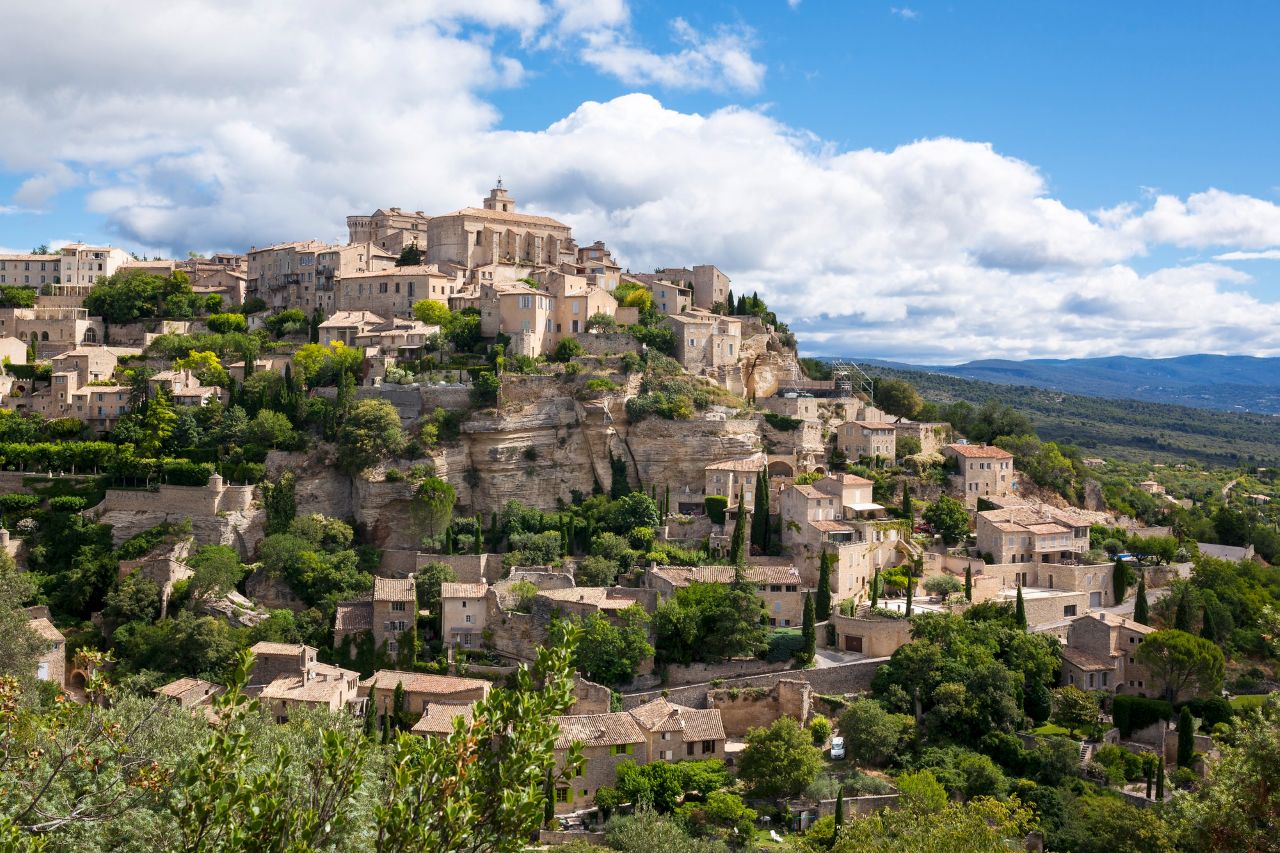
Aix-en-Provence sits in France’s Provence-Alpes-Côte d’Azur region in the south. It’s about 18.6 miles (30 km) north of Marseille, the region’s largest port, so getting here is a breeze. Hop on the TGV and you can be here from Paris in roughly three hours—making Aix the perfect gateway to the South.
The city’s signature? Water. Famous for its thermal springs since Roman times, Aix now boasts more than 1,000 fountains scattered across its streets. It’s also a lively university town, so historic gravitas blends effortlessly with a youthful, creative energy.
Wandering the old town—where 17th- and 18th-century aristocratic mansions remain intact—feels a bit like stepping back into Europe’s past, but with every modern comfort at hand.
The city’s character
▲ Paul Cézanne
This is Cézanne’s hometown—often called the father of modern art. His birthplace, his studio, and Mont Sainte-Victoire, which he painted hundreds of times, are the must-see high points of any art-centered trip.
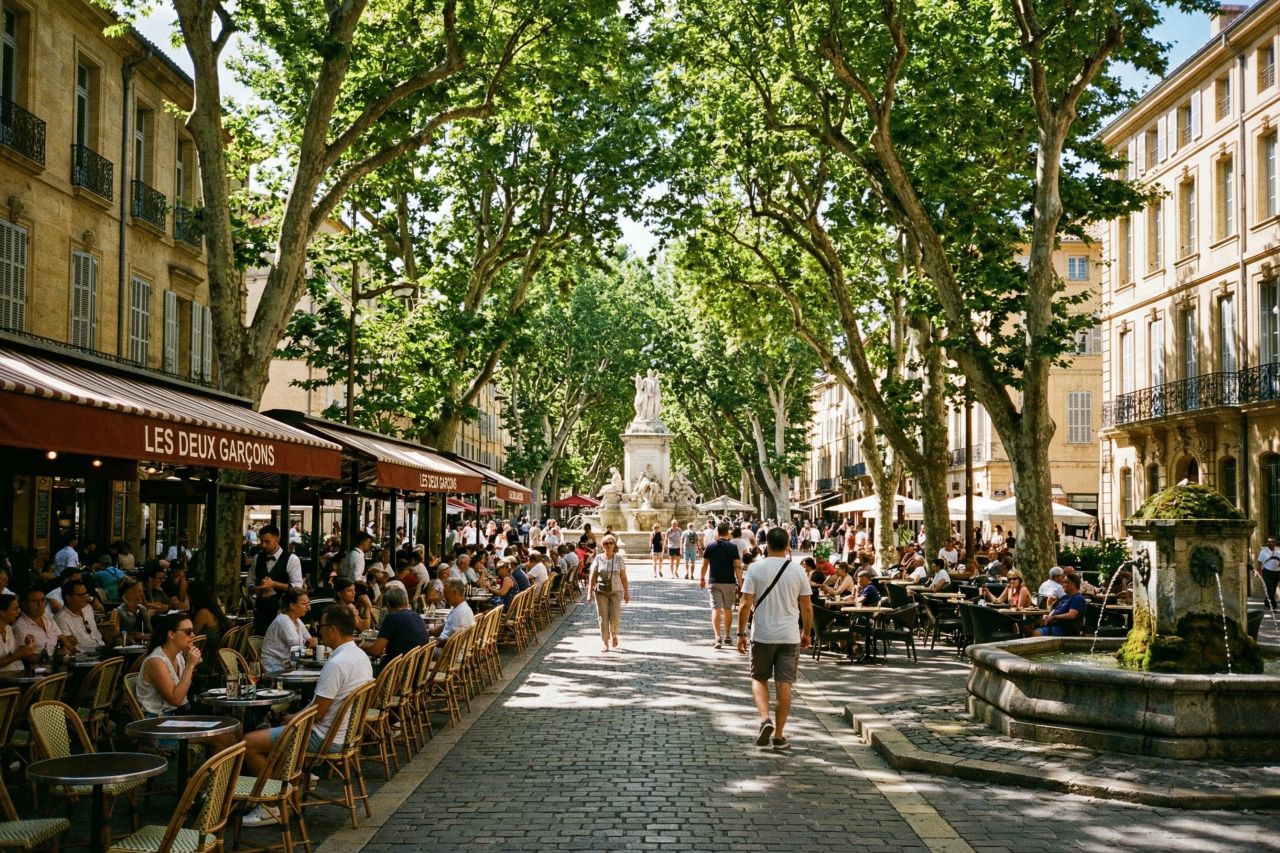
▲ Cours Mirabeau
The city’s main artery and one of Europe’s most beautiful boulevards. Beneath the grand plane-tree canopy, outdoor cafés like Les Deux Garçons—haunts of Cézanne and Émile Zola—invite you to linger with a coffee and people-watch.
▲ Calisson
The city’s classic confection: a blend of ground almonds and candied fruit. With its balanced sweetness and chewy texture, calisson is the perfect gift from one of the town’s pretty packaged shops.
Places to visit in Aix-en-Provence
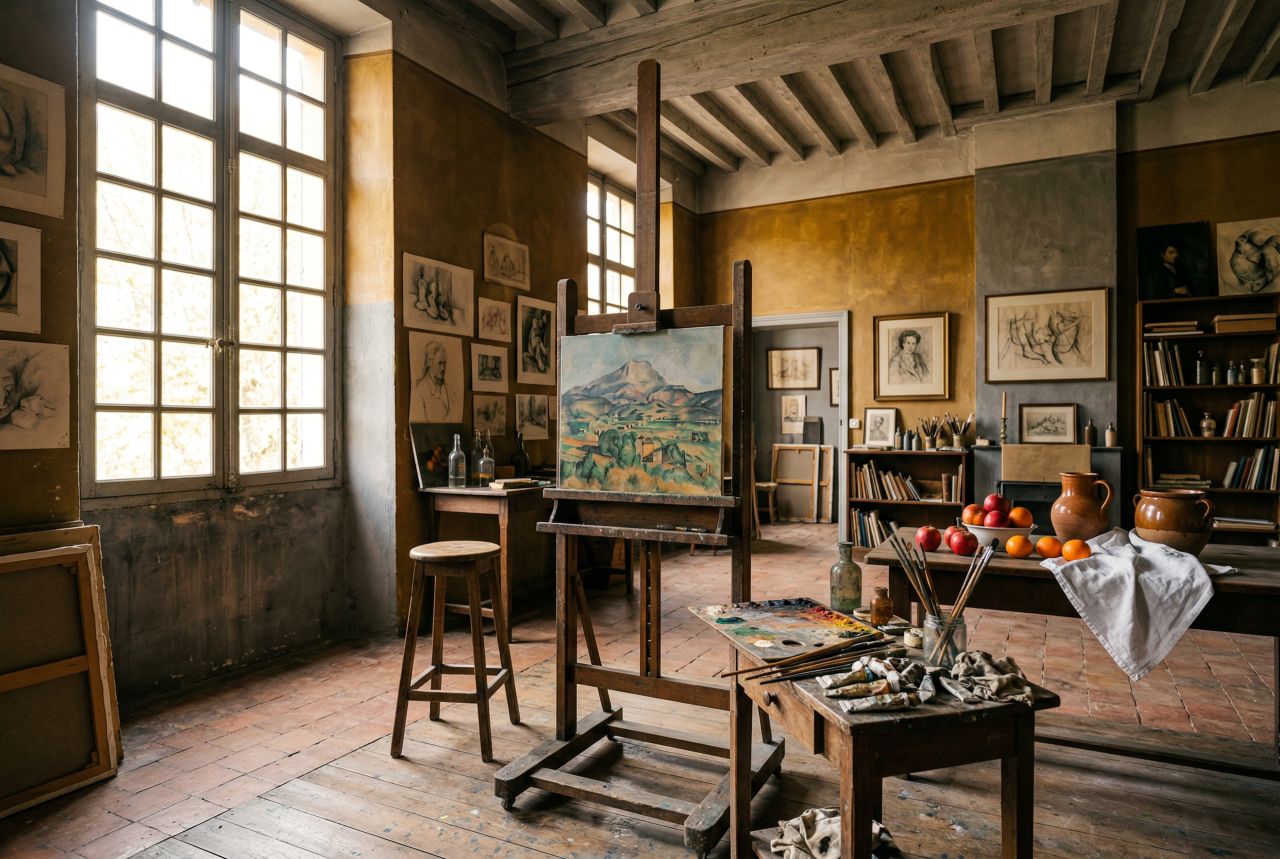
▲ Cézanne’s Studio
The place where Cézanne worked until the end of his life. His easels and the objects from his still lifes remain on display, giving visitors an intimate sense of his world. The quiet garden is a meditative spot that still sparks creativity.
▲ Saint-Sauveur Cathedral
A unique cathedral that combines architectural styles from the 5th to the 17th centuries. Built atop Roman remains, it carries deep historical significance—its intricate sculptures and serene cloister are not to be missed.
▲ Musée Granet
Home to Cézanne’s works alongside pieces by masters like Picasso and Giacometti. If you want proof of Aix’s artistic pedigree, this museum is essential.
Recommended day trips nearby

Base yourself in Aix-en-Provence and you’ll have an ideal starting point for exploring charming nearby towns. Here are two day-trip ideas.
[Course A] Arles & Avignon
Begin in Arles—the city Van Gogh loved—and stand where his Night Café came to life. Then head to Avignon to tour the imposing Palais des Papes. Both are reachable by train or bus in about an hour.
[Course B] Luberon villages & Cassis
For classic Provençal charm, visit Gordes and Roussillon. For dramatic Mediterranean views and cliffside walks, go to the Calanques National Park near Cassis. It’s about a 40-minute drive—perfect for a refreshing seaside stroll between museum visits.
[Course C] Valensole & Moustiers-Sainte-Marie
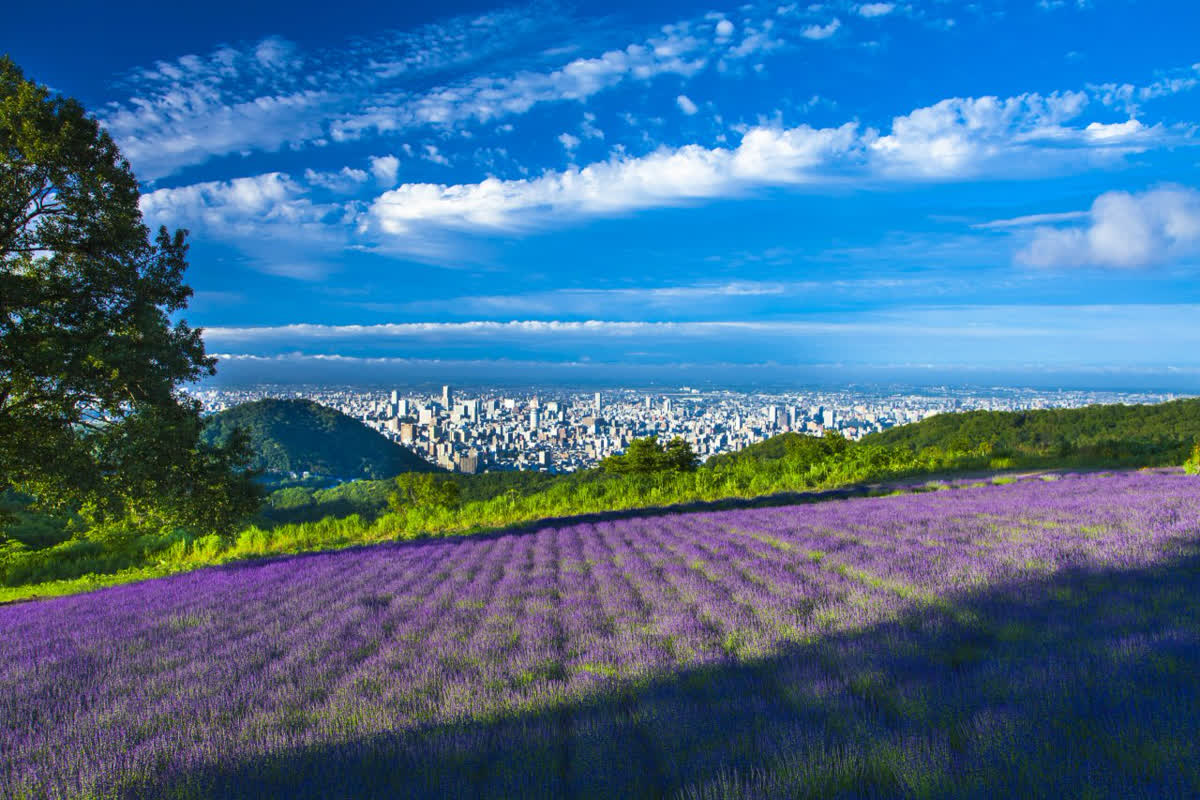
If you’re visiting between late June and mid-July, don’t miss this seasonal favorite. Valensole, roughly an hour’s drive from Aix, bursts into purple lavender fields that roll to the horizon.
Aix-en-Provence is a city made for slow savoring. Breathe in the smell of freshly baked bread at the morning market, let the fountains of Cours Mirabeau set the soundtrack for your espresso, and soak up the light that helped Cézanne chase those true colors all his life.
(Photo source: ⓒ InformaticsView)











Most Commented