
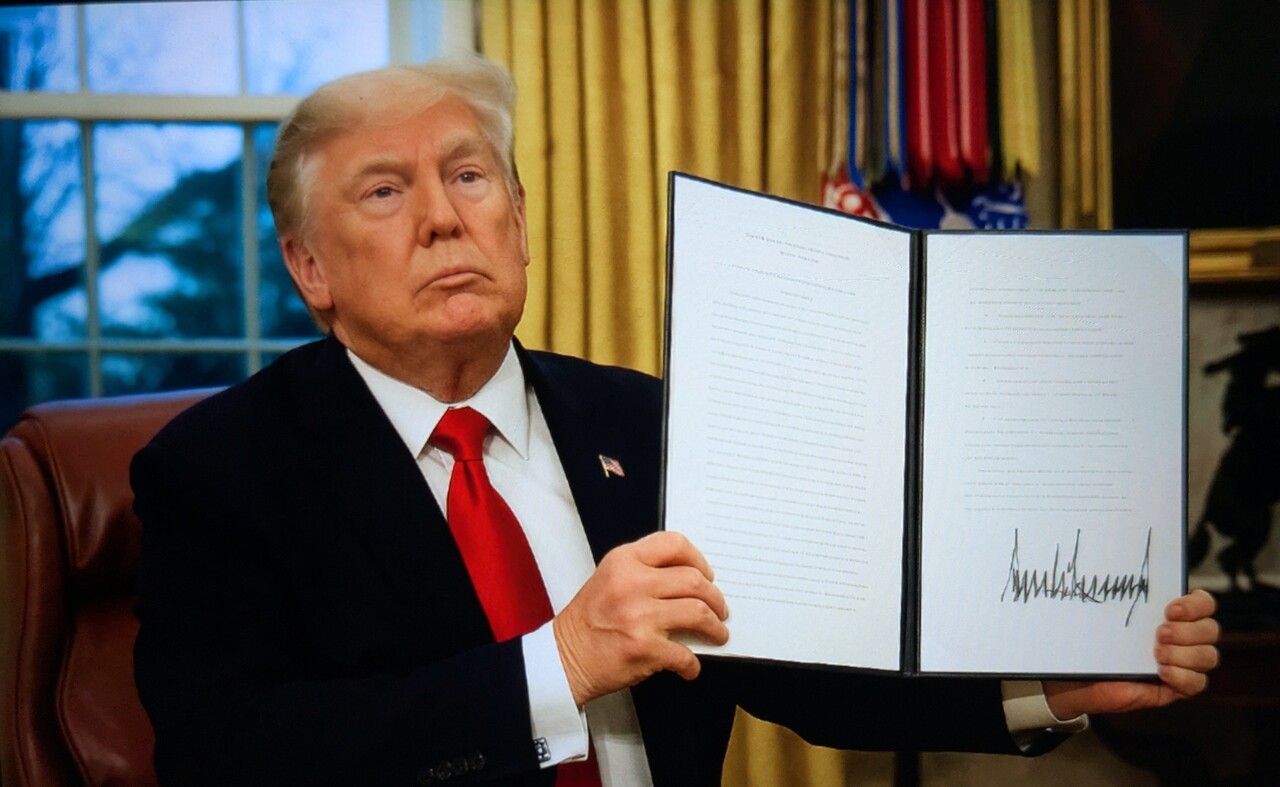
On June 2, President Donald Trump signed an executive order establishing a 30-day pre‑review process for advanced AI models.
Under the order, companies that develop cutting‑edge AI models would provide relevant information and access so the government can carry out security assessments. The policy does not create a mandatory licensing or pre‑approval regime; it is designed to rely on voluntary corporate participation.
The final order shortens the review window from an earlier draft that would have allowed reviews to extend up to 90 days. The AI industry had pushed to reduce the review period to 14 days.
At the time, President Trump delayed signing, saying he did not want to undermine AI’s economic benefits or set the United States back in the technology race with China. Former White House AI adviser David Sacks reportedly argued that the draft could lead to mandatory regulation and persuaded the president to hold off.
As a result, several tech executives who had been invited to Washington, D.C., for a signing ceremony two weeks earlier left after the event was abruptly canceled.
According to the Wall Street Journal, on June 1 President Trump asked to shorten the model review period during a meeting attended by Treasury Secretary Scott Bessent and Defense Secretary Pete Hegseth.
The move responds to concerns that high‑performance models such as Anthropic’s “Misos” could be misused in cyberattacks and pose national security risks. For that reason, the Trump administration has convened Anthropic as well as major technology and financial firms to develop countermeasures.
Within the administration, officials clashed over prioritizing AI innovation versus national security. Reducing the review period from 90 days to 30 is being read as a compromise between those competing priorities.
Notably, Trump issued an executive order late last year meant to curb state-level AI regulation; this new order establishes a limited federal oversight framework. Observers say it seeks to preserve a pro‑innovation stance while creating narrow federal supervision to address national security and cybersecurity risks.
Michael Kratsios, director of the White House Office of Science and Technology Policy, said the executive order will help the United States maintain its lead in AI while leveraging advanced technologies to strengthen cyber defenses. Former adviser David Sacks also welcomed the decision, calling it a game‑changer because it allows AI labs to follow a voluntary framework without delaying new model launches.
But Rep. Don Beyer (D), who co‑chairs a congressional AI caucus, criticized the policy as inadequate, saying it reflects the administration’s broader pattern of creating a lawless environment for AI development.
Reporter Dae‑jun Im ydj@aitimes.com














Most Commented