
Translation result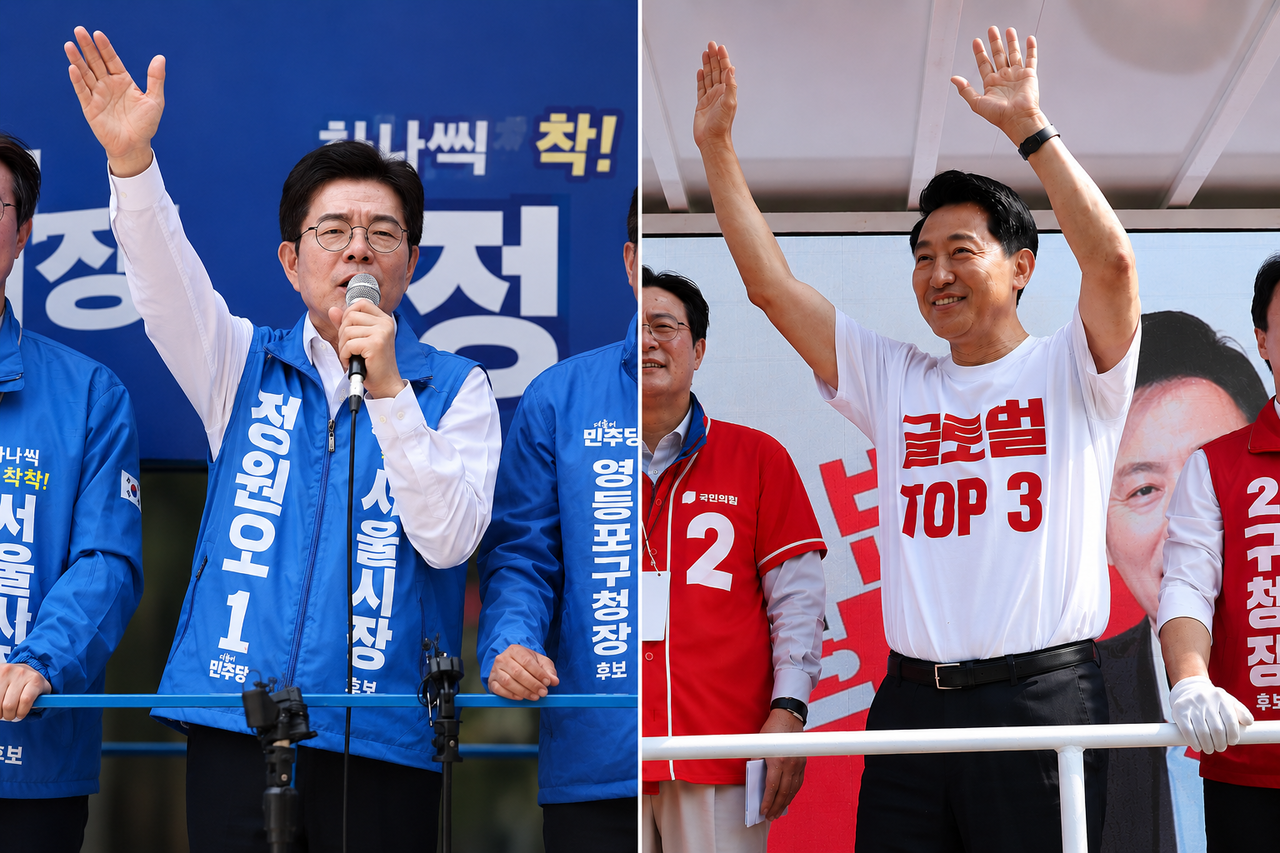 [Herald Economy=Senior Reporter Park Jong-il] The main vote in the June 3 local elections is now one day away.
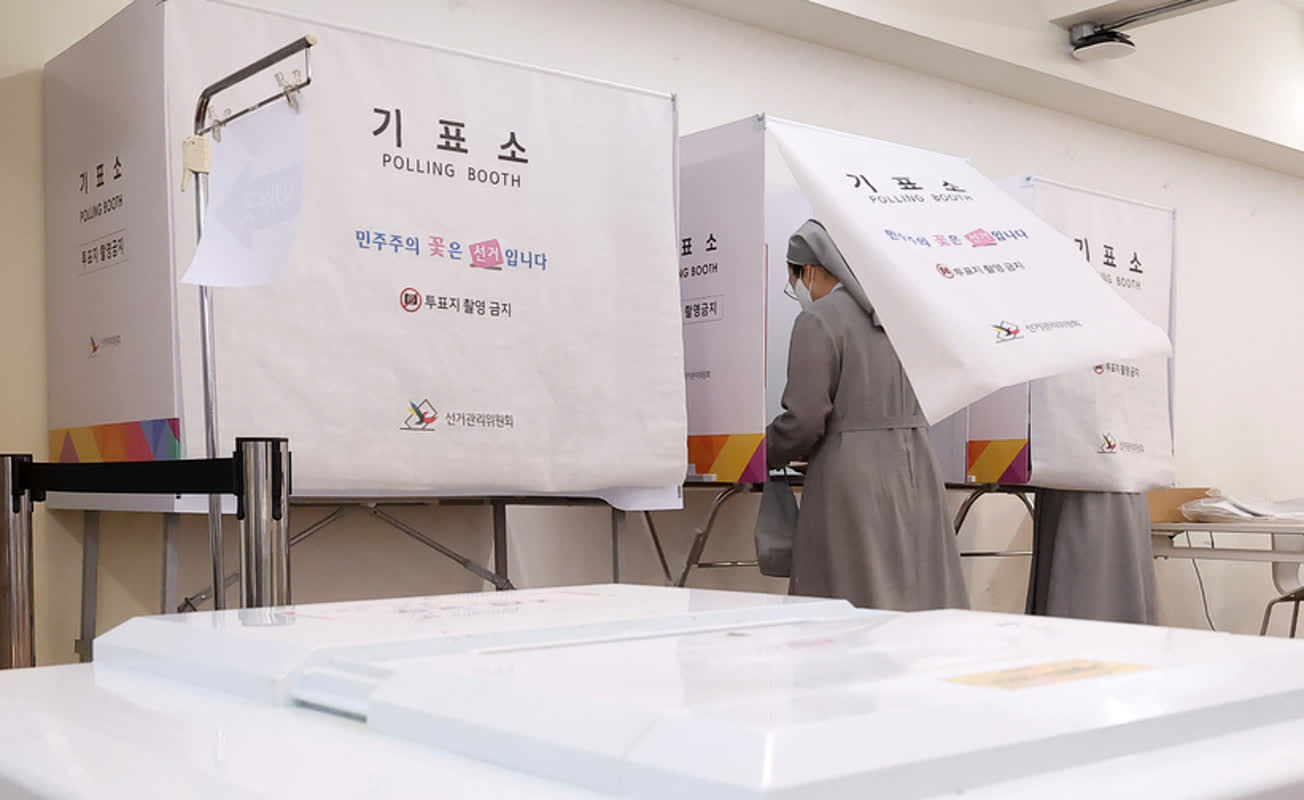
Early voting for this election was hotter than expected. Seoul’s early voting rate reached 23.84%, suggesting turnout on election day could also be substantial.
Looking at the Seoul mayoral race in numbers makes clear how much weight each citizen’s vote carries.
Seoul’s population is about 9.4 million, with roughly 8.3 million eligible voters. The city’s annual budget exceeds 51 trillion KRW (about $38.25 billion). By a simple calculation, the mayor will oversee a four-year budget that easily surpasses 200 trillion KRW (about $150 billion).
Dividing that total by the number of eligible voters gives each vote in the Seoul mayoral contest a notional value of roughly 24 million KRW (about $18,000). Even on an annual-budget basis, one vote represents more than 6 million KRW (about $4,500).
While this is a straightforward arithmetic division, it underscores the scale of the mayor’s powers and responsibilities.
Seoul is South Korea’s capital and its political, economic, and cultural center. With an annual budget above 50 trillion KRW (about $37.5 billion) and responsibility for the lives of some 9 million residents, the Seoul mayor is effectively the country’s most influential local government leader.
The candidates are Jeong Won-oh of the Democratic Party, Oh Se-hoon of the People Power Party, Kim Jeong-cheol of the Reform New Party, and Kwon Young-guk of the Justice Party.
In practice, the contest has narrowed to a two-way race between Democratic candidate Jeong Won-oh and People Power candidate Oh Se-hoon.
Jeong, a three-term mayor of Seongdong District, is emphasizing his local administrative experience. Oh, drawing on his prior tenure as Seoul mayor, is arguing for stronger global competitiveness and urban innovation to win voter support.
The four candidates met for the first—and only—joint TV debate on May 28, clashing over policy priorities, campaign pledges, and administrative competence.
Many observers say a single debate was insufficient to fully vet the candidates’ platforms and qualifications.
As a result, voters likely synthesized information from other debates, campaign materials, media coverage, and rallies to assess the candidates’ abilities, integrity, and policy vision.
Now the decision rests with the citizens.
Elections are democracy’s defining act. Each vote will help determine Seoul’s direction for the next four years.
Polls showed an ultra-tight race, making a one-sided outcome hard to predict. Turnout — which side can bring its supporters to the polls — is likely to be the decisive factor.
A senior official in one Seoul district said, “At this point, most voters have probably already made up their minds. We’ll only know who will lead Seoul for the next four years after the ballots are counted.”
Candidates for Seoul mayor and for the 25 district mayor posts will campaign until midnight, mounting a final push for every remaining vote.
Seoul residents’ votes will shape the city’s future for the next four years.
One vote is not insignificant. A single vote in the Seoul mayoral race is worth more than 24 million KRW (about $18,000).












Most Commented