
Translation result.
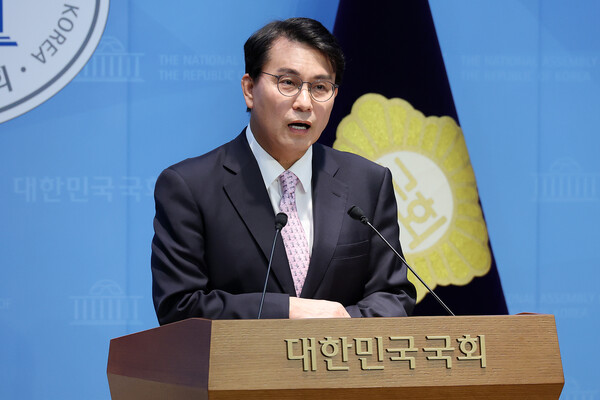
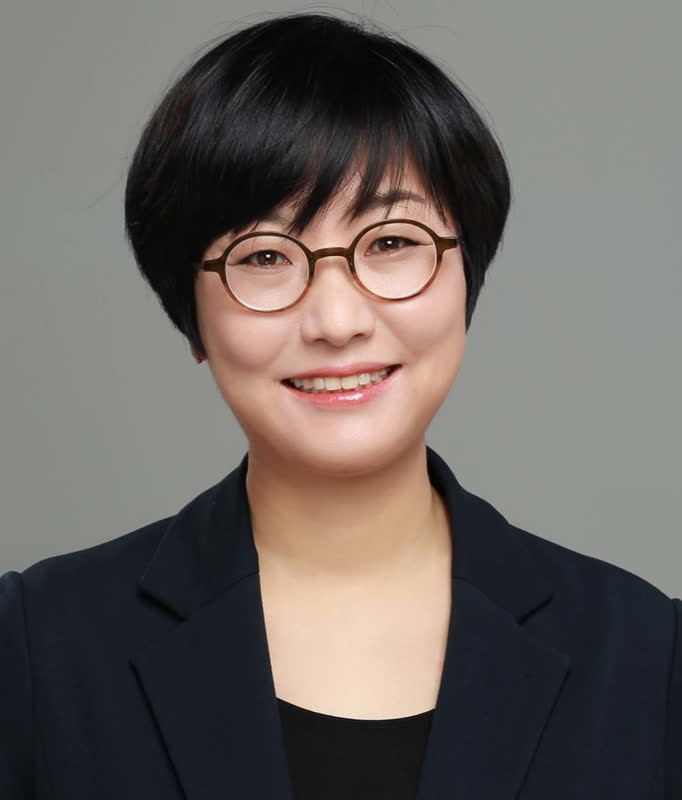
[The Public=O Doo-hwan, Reporter] Rep. Yoon Sang-hyun of the People Power Party sharply criticized proposals circulating within the government and ruling party on May 29 for an \”AI citizen dividend\” and for reclaiming excess semiconductor profits for social redistribution. Yoon said, \”What South Korea needs now is not politics that hands out money, but politics that opens opportunities for everyone to build the future.\”
He held a press conference in the National Assembly briefing room and warned that defining the semiconductor industry’s gains as \”excess profits\” and treating them as subject to social recovery is a dangerous idea that undermines the foundation of South Korea’s industrial competitiveness.
Observers said the briefing targeted recent remarks by Kim Yong-beom, director of policy at the presidential office, who floated the \”AI citizen dividend,\” and by Kim Young-hoon, minister of employment and labor, who called semiconductors a public good. When the ruling camp discussed socially redistributing gains from AI and the semiconductor industry, the opposition warned the proposals could chill corporate activity and unsettle markets.
Yoon took particular issue with the term \”excess profits.\” \”The term itself carries a value judgment implying those gains were unfairly earned,\” he said. Treating the achievements Samsung Electronics and SK Hynix produced after decades of heavy R&D investment and global competition as if they were up for reclamation shows a lack of understanding about innovative companies.
He added that countries around the world subsidize their semiconductor firms to compete for investment, while in South Korea a debate over seizing excess profits and paying a citizen dividend is unfolding. \”That could send the wrong signal to markets: that in Korea, when a company succeeds, the government will take it away,\” he warned.
Yoon said the recent controversy over large performance bonuses at Samsung Electronics, SK Hynix and other chipmakers cannot be dismissed as a simple labor dispute. \”This is not merely a matter of union greed,\” he said. \”It revealed a structural problem: gains are concentrated in a few large firms and industries, yet those benefits are not translating into broader national opportunity.\”
But he also cautioned that market logic alone cannot allay anxieties in the AI era. \”We cannot simply repeat market fundamentalism and expect to answer citizens’ fears,\” he said. The state must not ignore public concerns about job disruptions and industrial change driven by AI.
As alternatives, Yoon proposed building public AI infrastructure, providing nationwide AI skills training, and fostering a job ecosystem in which AI and people cooperate. Rather than distributing cash, he said the goal should be to give citizens direct access to and participation in AI-driven production systems.
\”The core of the AI era is not dividing money,\” he said. \”It’s opening doors so citizens can participate directly in new production systems. We should think in terms of a ‘basic production access right’ rather than basic income.\”
Addressing President Lee Jae-myung, Yoon urged, \”Do not make citizens chase pocket change. Build a country that expands opportunities and capabilities to create the future.\” He added, \”More important than a one-time dividend is a national system that enables everyone to join the growth trajectory.\”
Observers interpreted the press conference as the People Power Party branding the ruling camp’s redistribution talk as \”cash politics\” and signaling it will counter by prioritizing corporate competitiveness and access to future industries. The debate over semiconductors and AI appears to be spilling into a late-stage local election fight over economic and industrial policy.










Most Commented