
Translation result
AFC Women’s Champions League winner prize: 1,000,000 USD (approximately 1.33 billion KRW)
Sanctions block prize payment to North Korea; FIFA places the funds in escrow
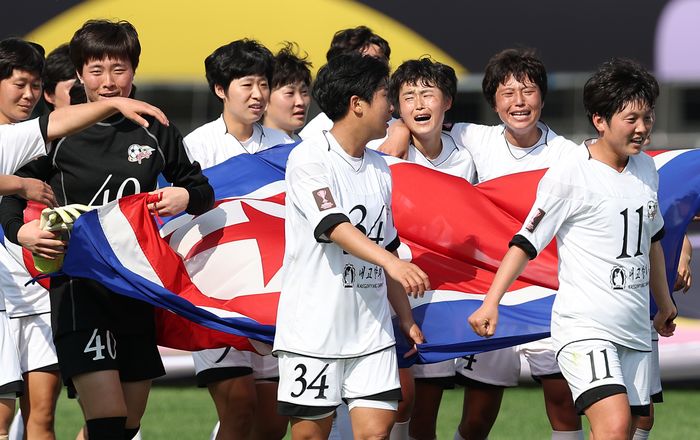
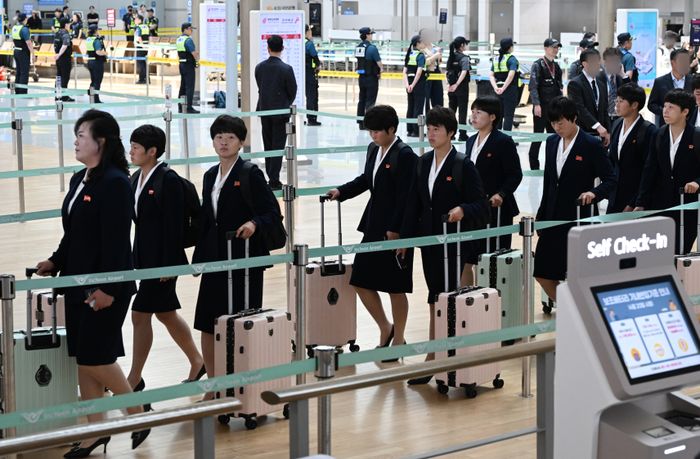
Naegohyang Women’s Football Club of North Korea, which dominated the AFC Women’s Champions League to claim the title, left South Korea with expressionless faces.
Their somber expressions reflected a harsh reality: although they won Asia’s premier club tournament and secured a 1,000,000 USD prize (approximately 1.33 billion KRW), they were forced to return home without receiving any of the money.
Why was that the case? Strong international economic sanctions on North Korea, led by the United Nations and other members of the international community, remain firmly in place.
Following repeated nuclear tests and missile provocations, global authorities have tightly restricted large capital inflows to North Korea. In particular, North Korean banks have been excluded from key international financial messaging systems such as SWIFT, making routine overseas transfers effectively impossible.
While UN Security Council resolutions do not explicitly ban the payment of sports prize money, the sanctions regime enforces strict controls over foreign-currency receipts and fund transfers into the country.
So what happens to the roughly 1.33 billion KRW Naegohyang won (approximately 1,000,000 USD)? For the time being, the prize is placed on hold and held in an international organization’s account.
FIFA and the Asian Football Confederation (AFC) typically freeze accounts or withhold prize payouts earned by North Korean teams in international competitions. Those held funds are later used to offset expenses — such as airfare, accommodation and local allowances — when North Korean national teams or clubs participate in future tournaments.
As a result, large sums earned through the players’ efforts do not reach their country directly; instead, the money functions like a prepaid balance managed by international sports bodies.
This is not a new phenomenon.
When North Korea reached the World Cup finals in South Africa in 2010 — its first appearance on the finals stage in 44 years — FIFA refused to transfer the participation payments (then reported at roughly 9 billion KRW (approximately 6.75 million USD)) to North Korea. Amid strained inter-Korean relations and international sanctions, FIFA froze the funds for an extended period and later redirected them indirectly to support youth soccer equipment and participation costs for North Korean teams.
Another example involves Han Kwang‑song, once dubbed “North Korea’s Ronaldo” while playing in Italy’s Serie A (including for Juventus). Under UN Security Council sanctions, North Korean workers earning income abroad — including athletes — were subject to repatriation and to restrictions designed to prevent proceeds from flowing to the regime.
To prevent a significant portion of Han’s overseas salary from being transferred to the North Korean government, his accounts were frozen or transfers blocked. As a result, he left his club and returned home, cutting short what should have been the prime of his career.
© Dailyan Co., Ltd. Unauthorized reproduction and redistribution prohibited
- “Champions?” Naegohyang left South Korea in silence, as they had on arrival
- Yang Hyun‑jun wins sixth trophy, completes Celtic double — heads straight to the U.S. for the World Cup
- Caddie’s advice sparks Kim Si‑woo comeback; he fends off Scheffler to retain lead at The CJ Cup
- Ronaldo, Messi and Modrić: the ‘last dance’ of soccer stars who defined an era
- “We won’t go to the U.S.” Iran picks Mexico as its World Cup base camp










Most Commented