
Ryu Hee-rim’s Controversial Tenure: What Led to the ‘Civil Complaint Sponsorship’ Scandal?
Daniel Kim Views
Translation result.
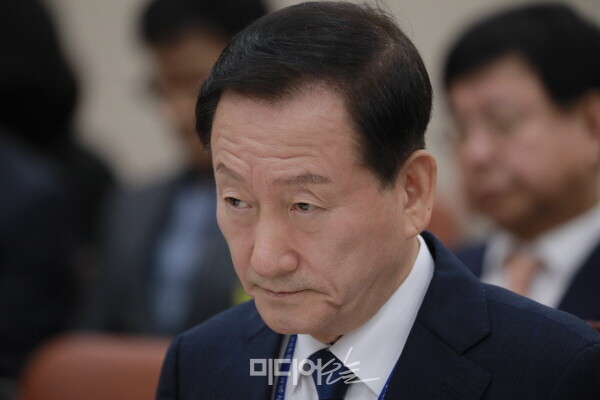
How different would things look now if the Yoon Suk-yeol administration’s Anti-Corruption and Civil Rights Commission (ACCRC) had properly evaluated allegations that former Korea Communications Standards Commission (KCSC) Chair Ryu Hee-rim solicited complaints? The ACCRC, which effectively cleared Ryu in July 2024, has now conceded—after two and a half years—that its earlier conclusion was incorrect.
On the 8th, ACCRC Chair Jeong Il-yeon released the findings of a 54-day Task Force to Restore the Commission. The report included an internal review of the allegations that Ryu solicited complaints, alongside other probes such as the alleged suppression of Kim Geon-hee’s Dior bag controversy. The task force found that then–Vice Chair and Secretary-General Jeong Seung-yoon improperly intervened in the complaint-soliciting investigation.
In December 2023, three whistleblowers and, in January 2024, 149 KCSC staff reported to the ACCRC that Ryu had mobilized dozens of family members and acquaintances to file complaints—targeting, for example, NewsTapa’s reports that cited recordings involving Kim Man-bae and Shin Hak-rim—and alleged violations of the Anti-Corruption and Conflict of Interest Act. After delaying its response, the ACCRC said in July 2024 that inconsistent witness statements prevented it from determining whether a violation had occurred and referred the matter to the KCSC.
The ACCRC report says former Vice Chair Jeong Seung-yoon urged the team handling the allegation to refer the case to external agencies such as the Board of Audit and Inspection and the National Police Agency, but that recommendation was rejected. Jeong also ordered that the anti-corruption subcommittee’s findings and conclusions be removed from the plenary agenda, preventing plenary members from seeing the working team’s assessment.
Critics argued that by forwarding the case in July 2024 to the KCSC—where Ryu was chair—the ACCRC effectively gave Ryu a pass. The task force’s report newly confirms Jeong’s role in that decision. Jeong, a former member of Yoon Suk-yeol’s presidential campaign, has since declared his candidacy for Busan education superintendent. Ryu was appointed to the KCSC after being recommended by Yoon during his presidency.
After the ACCRC referred the case, the KCSC conducted its own inquiry and in February concluded it could not determine illegality because it struggled to verify the facts. That effectively echoed the ACCRC’s earlier de facto exoneration seven months after the referral. The official who led the KCSC probe—Audit Office chief Park Jong-hyun, viewed as a close associate of Ryu—was promoted from Grade 2 to Grade 1 after issuing that finding.
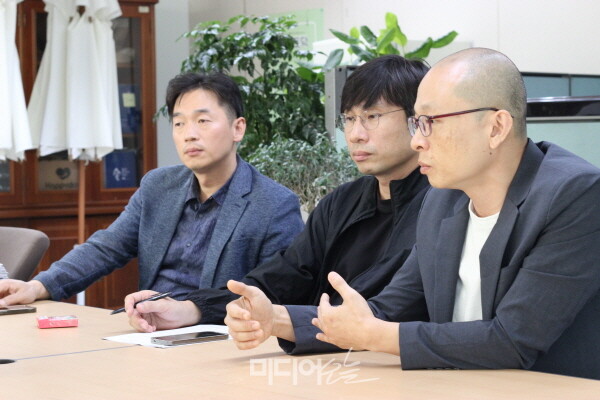
During the KCSC’s internal review, questions were raised about whether Ryu and Park were private interested parties, but the commission found no related filings. The ACCRC criticized the KCSC for failing to require conflict-of-interest declarations from the two individuals and for reaching conclusions without conducting further investigation. The ACCRC also requested that the Board of Audit and Inspection investigate indications that Ryu failed to fulfill his duty to report private interests.
Leveraging the ACCRC’s July 2024 finding, Ryu secured reappointment as KCSC chair. That resulted in an unusual nine-member commission dominated by three appointees recommended by the Yoon administration (Ryu Hee-rim, Kang Kyung-pil, Kim Jung-soo). The ACCRC said in April it only recognized the possibility of Ryu’s Conflict of Interest Act violation after a KCSC executive recanted testimony, then referred the matter to the Board of Audit and Inspection. In February, the Board concluded that Ryu was subject to an administrative fine under Article 5(1) of the Act for failing to recuse himself from deliberations despite knowing that family members and other private interested parties had filed complaints.
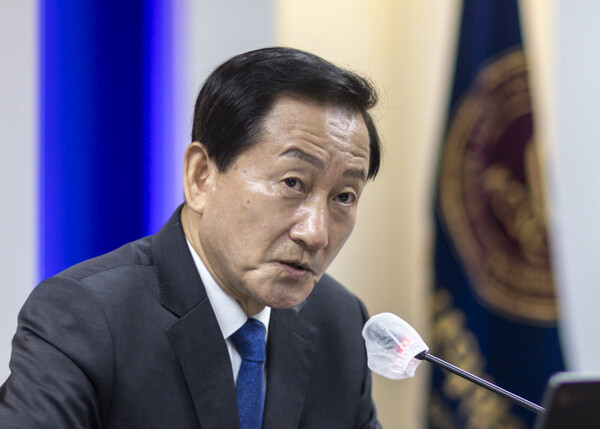
Both the ACCRC and the police delayed aggressive investigative measures, and the overall probe stalled. In the meantime, Ryu changed his cellphone and took other steps that diluted the evidence, making it harder to reconstruct the full scope of the complaint-soliciting scheme. In February, the Board of Audit and Inspection said it could confirm possible violations of the Conflict of Interest Act but found it difficult to determine exactly how the complaint-soliciting unfolded.
The media union’s KCSC branch has urged the commission, now led by Chair Ko Gwang-heon, to open an internal fact-finding investigation. In a statement on the 8th, the branch noted that during his confirmation hearing Chair Ko pledged to the public that he would thoroughly investigate past wrongdoings to restore the commission’s damaged credibility. It added that, as the ACCRC convened a ‘Task Force to Restore the Commission,’ the KCSC should form an internal fact-finding task force to identify the truth behind the allegations that Ryu solicited complaints, to expose internal collaborators, and to uncover any illegal conduct.









Most Commented