
Translation result
“A victory in Seoul and Busan matters to Jang, too
The central party must respect regional campaign committees”
“I can spar with Jeon Jae-soo — voters shouldn’t feel uneasy when we talk about the mayor’s job”
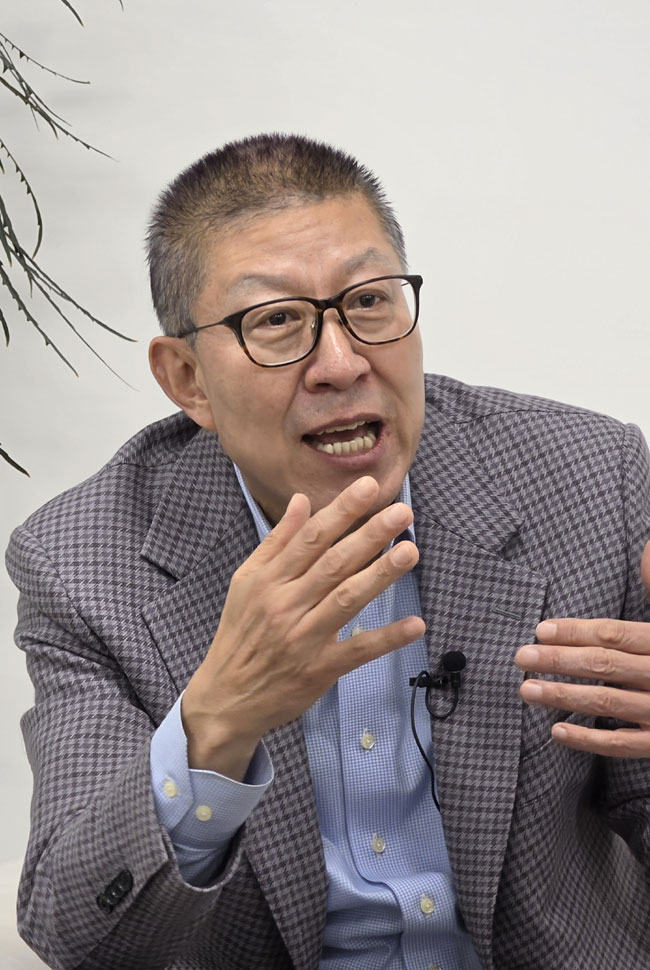 Busan — Reporter Yoon Jeong-seon
On the 27th, after registering as the People Power Party’s preliminary candidate for Busan mayor in the June 3 local elections and formally beginning his campaign, Mayor Park Hyung-joon described a potential cooperation with former party leader Han Dong-hoon as part of a broader push for conservative unity. Han, who was expelled from the party, has officially declared his candidacy for the Busan Buk-gap parliamentary by-election. Park said, “We now have the conditions to grapple directly in the ring,” and noted that the gap with Democratic Party candidate Jeon Jae-soo has been narrowing.
Meeting Park just days before his formal suspension from mayoral duties triggered by his candidate registration, at what amounted to his last official event, he urged the party to resolve internal disputes through “communication and restrained politics” rather than public conflict. The event was held at the Sky Plaza in the North Port waterfront park in Dong-gu and marked the 150th anniversary of Busan Port and the 2026 Joseon Tongsinsa Festival. Park observed, “After the Imjin War, Korea and Japan maintained exchanges through the Joseon Tongsinsa — a decision to transform conflict into cooperation and dialogue.” The following is an edited Q&A with Park.
 ―What’s the mood on the ground?
“It’s tight. I was slightly behind before the primary, but once I secured the nomination, the real ‘candidate’s time’ began. I’ve become the focal point for reassembling a fragmented base of support.”
―Some see Han’s bid in Busan Buk-gap as giving you momentum. Will you join forces with him?
“This isn’t about a personal alliance between Park Hyung-joon and Han Dong-hoon. My fundamental position is that conservatives must unite. I believe everyone should pool their strength under the larger framework of conservative unity.”
―There’s significant opposition to an alliance.
“That’s why the process needs to be orderly. Some in the conservative camp back Han, while others blame him for his role during President Yoon Suk-yeol’s impeachment process. They feel he acted hastily and failed to manage a disciplined transition. We need a measured approach.”
―Specifically, what’s your stance on cooperating with Han?
“If I publicly take sides, I risk accelerating division. Even if cooperation happens, doing it under my personal banner would be unwise. That’s why I emphasize regional campaign committees. The 17 ruling-party lawmakers in Busan hold divergent views on cooperating with Han. We should establish regional committees quickly and resolve the matter there. We must grant them autonomy and respect their decisions.”
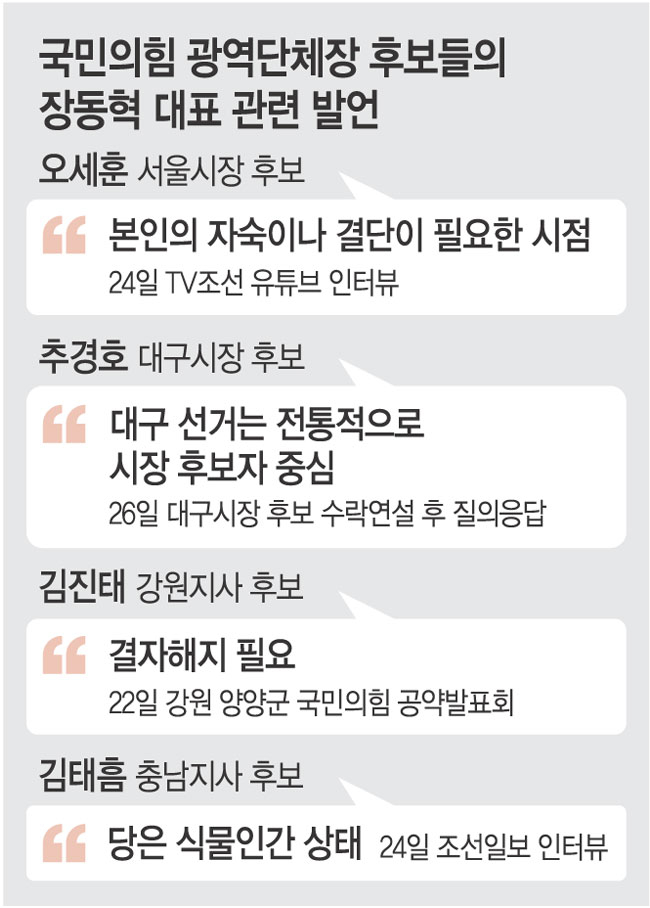
―What if a regional committee’s choice conflicts with Jang Dong-hyuk’s position?
“Jang should recognize that victories in Seoul and Busan are paramount. Those wins secure his standing and make future steps possible. The crucial question is how we win elections; we should not elevate personal political positions or emotions as the standard.”
―There has been public criticism of Jang after his return from the U.S.
“Publicly airing criticism of party leaders and others is inappropriate. A central problem in our politics is a lack of restraint. It’s also problematic that senior party figures have responded too passively to recent developments. It’s not solely any one person’s fault; everyone must reflect and learn.”
―How do you assess your opponent, Democratic Rep. Jeon Jae-soo?
“When citizens of Busan discuss their mayor, they should never feel uneasy. He’s a candidate who cannot clearly say whether he received a Cartier watch. Four of his young aides have been indicted for destroying evidence; if convicted, they could carry criminal records. Why would they destroy evidence? The candidate claims he didn’t know — is that acceptable?”
n









Most Commented