
Translation result
|
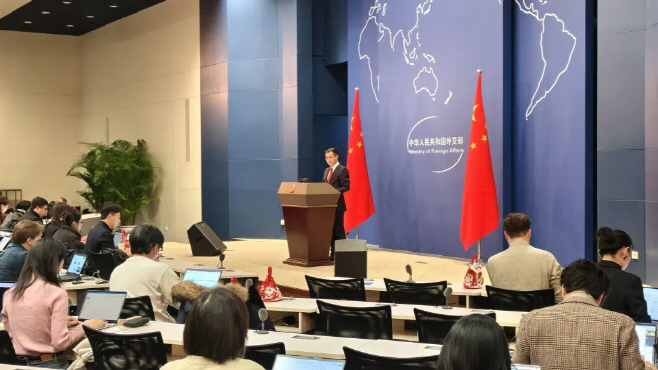
Lin Jian (林劍), the Chinese Foreign Ministry spokesperson, told reporters at the regular briefing on March 26 that, without offering separate confirmation of the White House’s May 14–15 summit announcement, state-to-state diplomacy plays an irreplaceable strategic leadership role in U.S.-China relations. He said the two sides are maintaining communication regarding President Donald Trump’s planned trip to China.
China generally avoids announcing a leader’s schedule far in advance. Plans are typically formalized when the date approaches or after the visit.
President Trump had originally scheduled the trip for March 31 to April 2. But the U.S. conflict with Iran, which began on Feb. 28, has shown signs it could last longer than expected. On March 16, Trump said he had requested a roughly one-month postponement. Since then, the two sides have been discussing new dates for the summit.
When asked whether China was monitoring negotiations between the U.S. and Iran, Lin said, \”The urgent task is to actively promote dialogue for peace, seize opportunities for peace and push for a ceasefire.\” He added that countries should create the conditions for sincere and meaningful peace talks to begin.
On reports that the U.S. plans to support construction of a new ammunition production facility in the Philippines through the alliance-and-partner group called the Indo-Pacific Industrial Resilience Partnership (PIPIR), Lin stressed that the Asia-Pacific remains a central engine of global development and stability. He criticized the move, saying the U.S. and its allies must respect the shared wishes of regional countries and should not import collective confrontation, clashes or war into the Asia-Pacific.
Lin warned, \”If relevant countries try to turn the region into a powder keg or an ammunition depot, they will only harm themselves.\” Again, the remarks were largely conventional.











Most Commented