
Government Strips Honors from 11 Veterans: A Deep Dive into the Controversial Decisions
Daniel Kim Views
Translation result
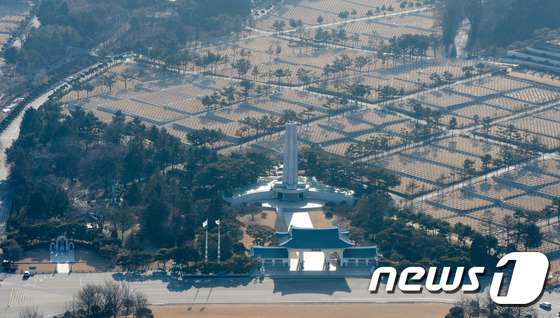
Officials belatedly confirmed on the 19th that the government revoked the state awards of 11 people who had previously received honors in cases tied to fabricated espionage accusations.
According to the official gazette published the previous day, President Lee Jae-myung revoked the honors of 11 individuals on Jan. 20 under Article 8(1)(1) of the Decorations Act and published notices regarding the recovery of those awards.
Kim Hae-young, the former chief of the inspection office in the Central Intelligence division of the National Security Council, had his Hongjo Geunjeong Medal revoked. He had been awarded the medal during the Park Chung-hee administration for his role in investigating and litigating the Guro Farmland incident.
The Guro Farmland incident occurred in the 1960s when the Park Chung-hee government incorporated land in Guro-dong, Seoul—land that had been distributed to farmers—into state property to build the Guro Industrial Complex. Landowners sued the state, and subsequent government investigations involved beatings, torture and other human rights abuses.
The government also canceled awards for people previously classified as meritorious in fabricated spy cases. Canceled honors include Cho Chang-wol’s Cheonsu-class Order of Merit for National Foundation; Ahn Kyung-chan’s Samil-class Order of Merit for National Foundation; the Boguk Pojang awarded to Kim Chang-wook, Cho Byung-je and Yoo Won-young; Shin Jae-heum of the Army Headquarters’ Military Security Command’s Gwangbok-class Order of Merit for National Foundation; and Jeong Hyun-ju’s Boguk Pojang.
In addition, authorities revoked awards for three people, including Han Cheol-heum, the former head of the Anti-Communist Investigation Division at the Agency for National Security Planning, for their roles in the April 1982 Mibeopdo spy case. Han had received the Samil-class Order of Merit; two other staff members had received the Gwangbok-class Order of Merit and the Boguk Pojang, respectively.
The Mibeopdo spy case traces back to the 1965 mass abduction of fishermen from Mibeopdo in Ganghwa County. From the 1970s into the early 1980s, returning fishermen and local residents were falsely accused of espionage, subjected to investigations and tortured—a widely recognized example of a fabricated spy case.
The government has recovered the physical medals or awards from two of the 11 targeted individuals. Officials were unable to retrieve awards from the remaining nine because most recipients are deceased or untraceable.
Under the Decorations Act, when a recipient’s meritorious service is found to be false, the decoration must be canceled and the medal or award, along with any related items or funds, may be reclaimed.
The law requires the minister of the Interior and Safety to request that the cancellation proposal be submitted to the State Council; absent special reasons, the minister must forward the proposal for the council’s consideration.
Previously, in 2023 the government canceled and reclaimed awards for 20 independence merit recipients after the State Council approved the measure. Most of those cases involved duplicate awards, and officials say some also involved false claims of merit.










Most Commented