
South Korea’s Corruption Perception Index Drops to 31st: What Does It Mean for 2025?
Daniel Kim Views
The Anti-Corruption and Civil Rights Commission announced on February 10 that South Korea ranked 31st out of 182 countries in Transparency International’s 2025 Corruption Perceptions Index (CPI), down one spot from 30th the previous year.
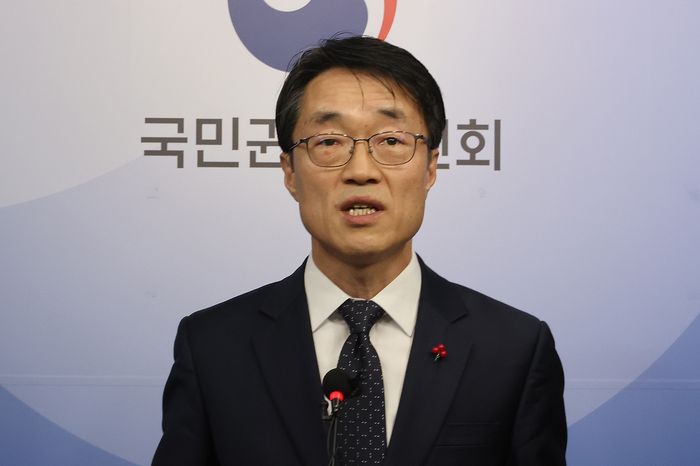
The commission explained that this decline represents a temporary pause in the long-term upward trend since 2017, attributed to various internal and external factors.
South Korea had achieved its highest ranking since 2012 at 30th place last year, but fell back one position within a year.
Among the 182 countries evaluated, Denmark topped the list with a score of 89 out of 100. South Korea shared its ranking with Brunei, Chile, and Saint Vincent and the Grenadines. The United States and the Bahamas (tied for 29th) ranked just above South Korea, while Cabo Verde and Israel (tied for 35th) were positioned below.
Within the Organization for Economic Cooperation and Development (OECD), South Korea’s ranking also dropped one spot to 22nd.
South Korea’s CPI score decreased to 63 out of 100, down from 64 the previous year.
A commission spokesperson told Dailyan that the current ranking reflects the impact of the December 3rd emergency martial law situation.
International assessment agencies noted that the volatility of domestic political conditions in late 2024 influenced the evaluation.
The Economist Intel Corporationligence Unit (EIU) commented last July that the attempted martial law declaration exposed vulnerabilities in South Korea’s political system, including unclear presidential authority, deep-rooted party conflicts, and limited political compromise.
The commission also cited declining business confidence surveys in the first half of last year due to economic uncertainty as a significant factor. The IMD (International Institute for Management Development) score, one of nine indicators affecting national integrity, fell 12 points to 49 from 61 the previous year.
The commission concluded that political and economic uncertainties following the martial law negatively impacted expert evaluations and business surveys, leading to downward pressure on scores.
To quickly recover the national integrity ranking and aim for the top 20, the commission plans to overhaul the anti-corruption system based on laws and principles.
They intend to strengthen legal enforcement by addressing gaps, such as establishing penalties for public officials’ family members who accept illicit gifts under the Act on Prohibition of Improper Solicitation and Graft.
To foster a culture of integrity, the commission will push for mandatory integrity education from elementary through college levels, developing age-appropriate content to instill ethics in future generations.
Han Sam-seok, the acting chair of the commission, stated, “While political and economic conditions have slightly lowered our national integrity score, we will use this as an opportunity for anti-corruption innovation.”
The Corruption Perceptions Index (CPI), published annually by Transparency International, measures public and political sector corruption based on professional assessments. A score above 70 indicates a generally transparent society, while South Korea’s range of 50-69 suggests a level of corruption that is not absolute.
© Dailyan. All rights reserved. Unauthorized reproduction and redistribution prohibited.













Most Commented