
Is Jimmy Lai’s 20-Year Sentence a Death Knell for ‘One Country, Two Systems’? Insights and Implications
Daniel Kim Views
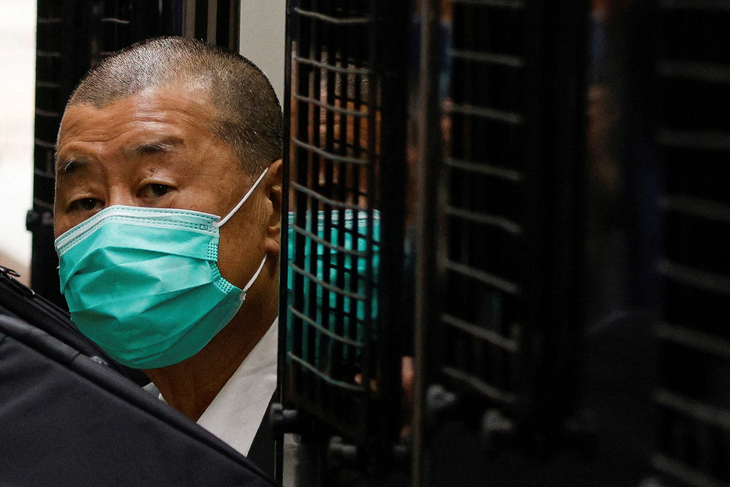
▲Jimmy Lai, founder of Hong Kong’s pro-democracy newspaper ‘Apple Daily’ (Photo: Reuters/Yonhap)
The international community has unanimously decried the 20-year prison sentence handed down to Jimmy Lai, a prominent Hong Kong pro-democracy activist and media mogul.
According to reports, U.S. Secretary of State Marco Rubio issued a statement on December 9th (local time), denouncing the verdict as “an unjust and tragic conclusion.”
Rubio asserted, “This verdict demonstrates to the world that China is willing to renege on its international commitments made in the 1984 Sino-British Joint Declaration and will stop at nothing to silence advocates of fundamental freedoms in Hong Kong.”
The Joint Declaration, signed by the UK and China in 1984, stipulated that Hong Kong would maintain a high degree of autonomy and the “one country, two systems” principle for 50 years after its return to China, until 2047.
Rubio emphasized, “Mr. Lai and his family have already endured immense suffering through two years of trial and over five years of detention,” and called on Chinese authorities to grant Lai humanitarian parole.
British Foreign Secretary Yvette Cooper condemned the 20-year sentence for the 78-year-old Jimmy Lai as effectively a life sentence, describing it as the outcome of politically motivated charges aimed at suppressing dissent. Lai holds British citizenship.
Volker Turk, the UN High Commissioner for Human Rights, urged that the Hong Kong court’s ruling against Lai be declared incompatible with international law and overturned. Turk highlighted that the vague and sweeping provisions of Hong Kong’s National Security Law have been interpreted and enforced in ways that violate Hong Kong’s international human rights obligations.
EU spokesperson Anita Hipper expressed dismay over the verdict against Lai, demanding his immediate and unconditional release.
On the day of sentencing, Taiwan’s Mainland Affairs Council (MAC) condemned the ruling as “political persecution.” The following day, Taiwan’s President Lai Ching-te took to social media, criticizing China’s “one country, two systems” proposal for Taiwan as now devoid of meaning.
In a Facebook post on December 10th, President Lai stated, “This ruling once again proves that China’s ‘one country, two systems’ has become nothing more than an empty slogan. Hong Kong’s experience serves as a stark reminder that democracy and freedom are never guaranteed. I urge China to cease its politically motivated persecution under the guise of judicial process and to release Jimmy Lai immediately.”
Japan’s Chief Cabinet Secretary Hirokazu Matsuno expressed grave concern about the impact this case will have on the freedoms of expression, assembly, and association that have underpinned Hong Kong’s democratic and stable development.
Australian Foreign Minister Penny Wong also voiced deep concern over the sentences imposed on Jimmy Lai and his co-defendants. She called on China to end its crackdown on freedom of expression, assembly, and the press, and to repeal the Hong Kong National Security Law.
Jimmy Lai, the founder and proprietor of the prominent pro-democracy newspaper Apple Daily, was arrested in August 2020, shortly after the implementation of Hong Kong’s National Security Law. On December 9th, a Hong Kong court sentenced Lai to 20 years in prison for three counts of violating the National Security Law, including collusion with foreign forces and publishing seditious materials, following his conviction in December of the previous year.
This marks the harshest sentence imposed under the National Security Law since its enactment by the Chinese government in June 2020. The law, created in response to large-scale anti-government protests in Hong Kong in 2019, allows for sentences up to life imprisonment for crimes such as secession, subversion of state power, terrorism, and collusion with foreign forces.









Most Commented