
Translation result
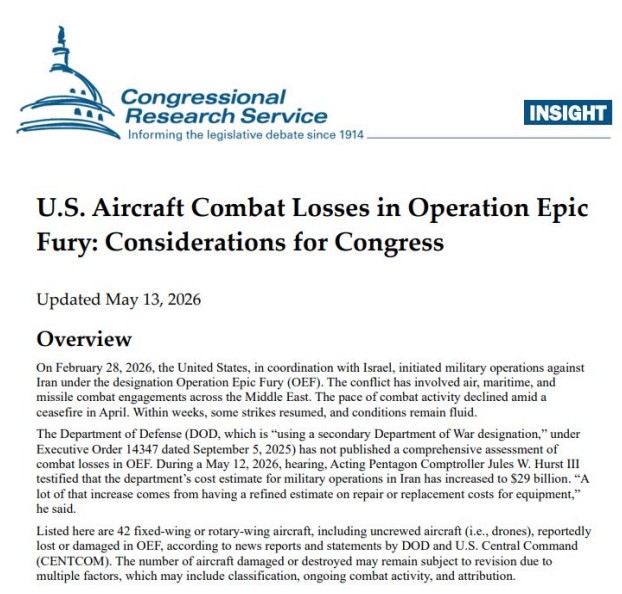
Source: https://www.congress.gov/crs-product/IN12692
[Kim Hyung-seok Column] The MQ-9 Reaper Crash Was Just the Opening Act: An Invisible Shot
In March I asked on these pages: How did the Reapers go down? At the time the clue was that 11 aircraft were lost in roughly ten days, and my assessment was that residual, mobile air-defense systems had exploited complacency born of an era of uncontested airspace. Two months later that assessment has moved from hypothesis to documentary record. A U.S. Congressional Research Service report to Congress says that during Operation Epic Fury against Iran, 42 U.S. military aircraft were destroyed or damaged, and unmanned systems accounted for more than half those losses — 24 were MQ-9 Reapers. The pattern of loss is clearer now, but a more consequential truth lies elsewhere.
The same report notes Iranian ground fire damaged an F-35A on March 19. That was damage, not a shoot-down, and it should be distinguished from Tehran’s claim of an F-35 kill. Still, the implication is stark: the very logic that brought down Reapers reached fifth‑generation fighters. The missiles identified in March — the Missile‑358 and the AD‑08 Majid — do not turn on radar. They track targets using passive electro‑optical and infrared sensors, so aircraft that rely on radar‑warning receivers often receive little to no advance notice. Stealth reduces radar cross‑section; against an opponent that does not use radar, that shield loses much of its value. Infrared turned out to be a design gap in stealth aircraft, and Iran appears to have exploited it. The F‑35 returning to base fits a profile of near detonations that damaged flight surfaces and stealth coatings without destroying the jet.
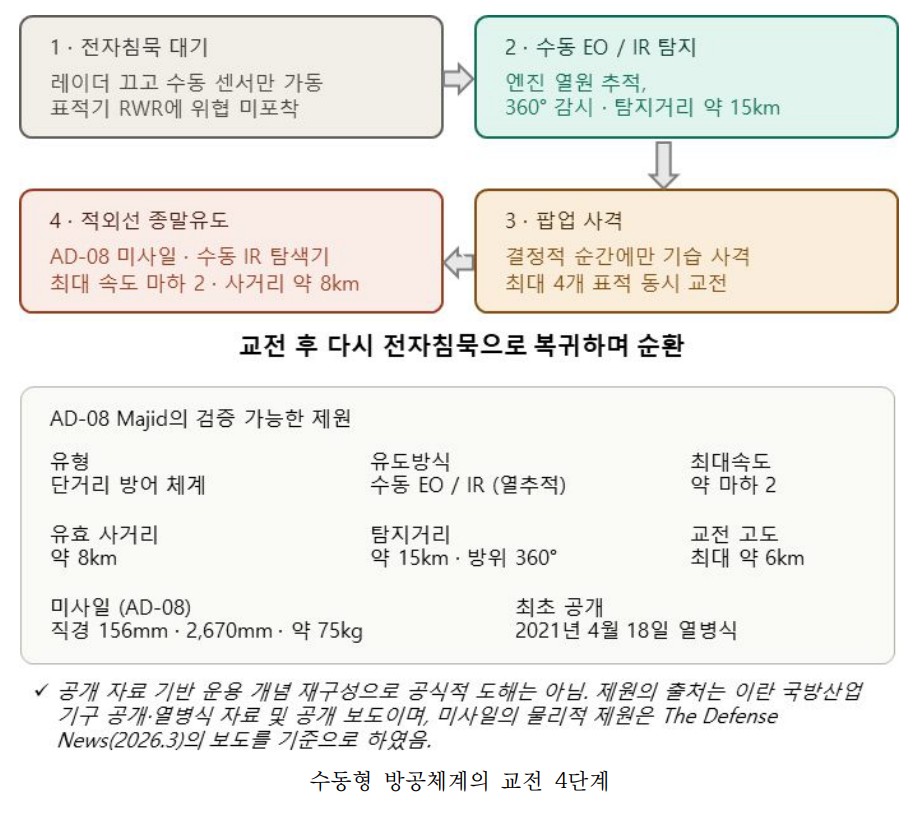
Fifth‑generation fighters array multiple infrared sensors around the airframe to spot the heat of incoming missiles, alert the crew, and counter with high‑G maneuvering and flares. But that defensive chain depends on early detection. Weapons that aim optically while keeping radar silent break that assumption. One hit does not always equal a shoot‑down, but the fact a stealth jet was exposed to an unannounced shot marks a new reality. The Missile‑358 patrols a designated area in a figure‑eight and autonomously strikes when a target comes into range; the Majid lurks in industrial parks or under road overpasses and stays silent until the decisive moment. That design philosophy — going dark to avoid detection — is especially lethal against technically superior opponents.
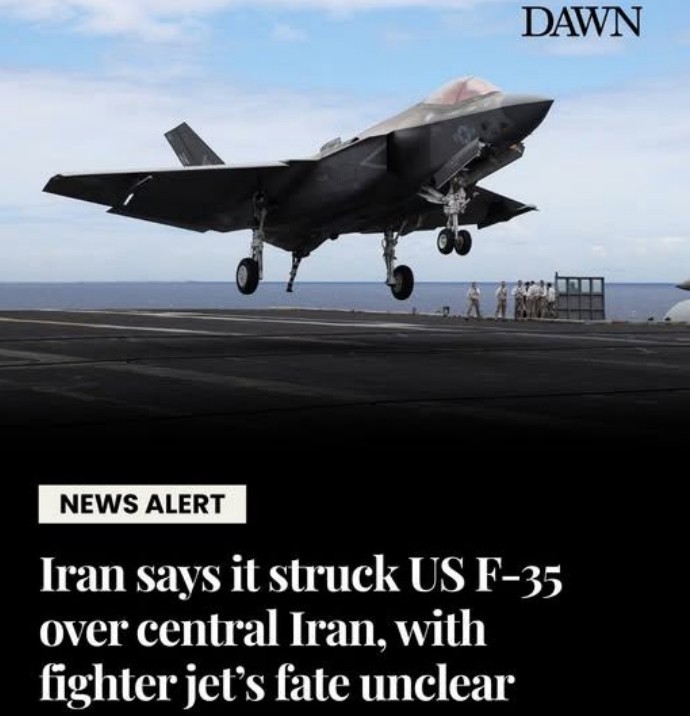
Source: https://www.facebook.com/dawndotcom/posts/irans-islamic-revolutionary-guard-corps-irgc-said-on-thursday-that-it-had-struck/1360390932799208/
Note the asymmetry in target selection. Iran focused not on frontline fighters but on the enablers that sustain air operations. CRS records show seven KC‑135 air‑refueling aircraft were destroyed or damaged, and five of them were struck while parked at Prince Sultan Air Base in Saudi Arabia. An E‑3 AWACS was also reportedly destroyed. Tankers, AWACS, radar nodes and communications form the nervous system of air operations: they launch fighters, feed them fuel and targeting data, and give them eyes and ears. When that nervous system is degraded, even the most capable strike platforms struggle to operate. The maxim that slow, large systems die first spread beyond the Reaper fleet to ISR, refueling and early‑warning assets. This campaign demonstrated that degrading support infrastructure is often more cost‑effective than trying to shoot down a lone fighter.
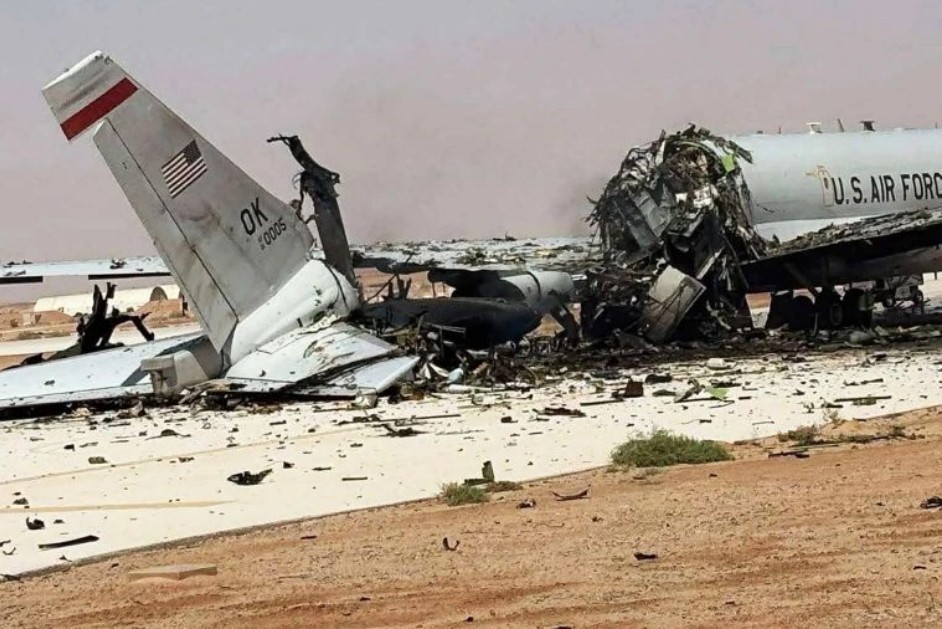
Source: https://www.nbcnews.com/world/iran/iran-war-attack-us-base-saudi-arabia-sentry-jet-destroyed-strike-rcna265764
China did not observe quietly. A PLA commentator said the 358 could easily down slow Reapers, calling it a \”hidden arrow\” aimed at Western drones, and state media highlighted how cheap, radar‑silent interceptors can neutralize assets worth tens of millions of dollars. My March warning — that every potential adversary would study this battlefield — now appears to be migrating from analysis into doctrine.
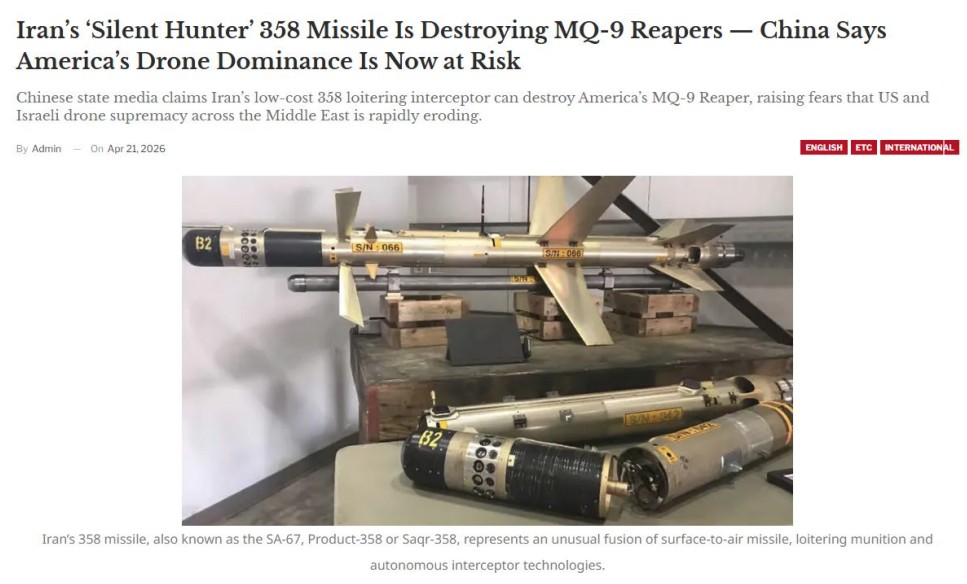
Source: https://defencesecurityasia.com/en/iran-silent-hunter-358-missile-destroying-mq9-reapers-china-us-drone-dominance-risk/
So what’s the solution? The diagnosis I offered in March still holds. To survive high‑intensity conflict, unmanned systems must evolve toward two extremes. One path treats them as high‑value, survivable assets: winged, stealthy designs that increase physical survivability. The U.S. Air Force’s Collaborative Combat Aircraft (CCA) program — represented by Anduril’s YFQ‑44A and General Atomics’ YFQ‑42A — is a concrete example of that direction.
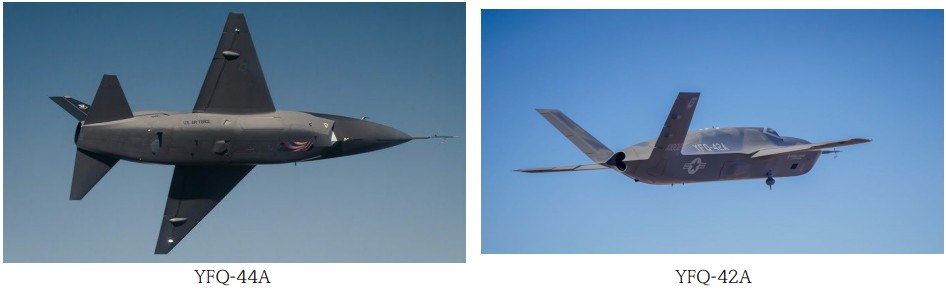
Source: https://www.youtube.com/watch?v=vhczBn2Yu-8;https://www.ga-asi.com/yfq-42a-returns-to-flight-testing
The other path is low‑cost, attritable systems: smaller airframes that reduce detection probability and accept attrition. Miniaturization trades endurance and range for affordability. Efforts to overcome that tradeoff include air‑launched effects (ALE) carried to the edge of adversary air defenses by large \”mothership\” aircraft, relay swarms that stitch together short loiters into persistent coverage, and wireless power transfer (WPT). If real‑time energy resupply matures in operational settings, small platforms could sustain much longer missions.
But Epic Fury left another lesson: war tests not only battlefield effects but industrial resilience — the ability to replace what you lose. The Reaper production line that supplied those 24 losses has closed, and the market now holds only about ten new airframes. Reports that the Air Force is considering re‑acquiring aircraft it once planned to retire underscore a paradox: even assets designed to be expendable become permanent losses if the production base cannot replenish them.
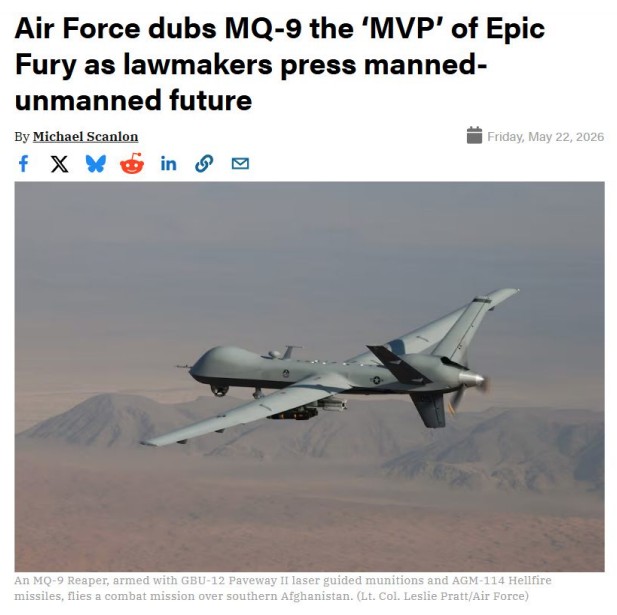
Source: https://www.defensenews.com/news/your-military/2026/05/21/air-force-dubs-mq-9-the-mvp-of-epic-fury-as-lawmakers-press-manned-unmanned-future/
On the Korean Peninsula the questions are concrete. Can our systems detect and counter passive infrared threats that do not rely on radar? Are our air‑refueling and early‑warning assets dispersed and hardened so they are not sitting vulnerable on the ground? In a crisis, can our domestic industry rebuild lost unmanned capabilities? North Korea has shown it can mass‑produce drones from commercial components despite resource constraints, which suggests resilient, repeatable production is not an abstract problem for us.
We must design multi‑sensor fusion to close detection blind spots, disperse and harden critical assets, and build peacetime domestic production and replenishment chains for unmanned systems. Rather than relying on a single advanced shield, survival demands forces that are smaller, dispersed and continuously replenishable. That conclusion is unchanged from March; only the scope has broadened to include stealth fighters and the entire airborne nervous system. The MQ‑9 Reaper’s losses were not the end but the opening act.
The author, Kim Hyung‑seok, is a professor in the Defense Power Studies Department at Hansung University’s Graduate School of Defense Science and a visiting research fellow at the Korea Institute for Military Affairs,
and the author of books including Spear and Shield of the Sky: The Frontlines of Drone Warfare; Three‑Second Choice: A Survival Manual for the Drone Battlefield; Killer Drones; and Four Years of the Russia‑Ukraine War: What Has It Left Behind?

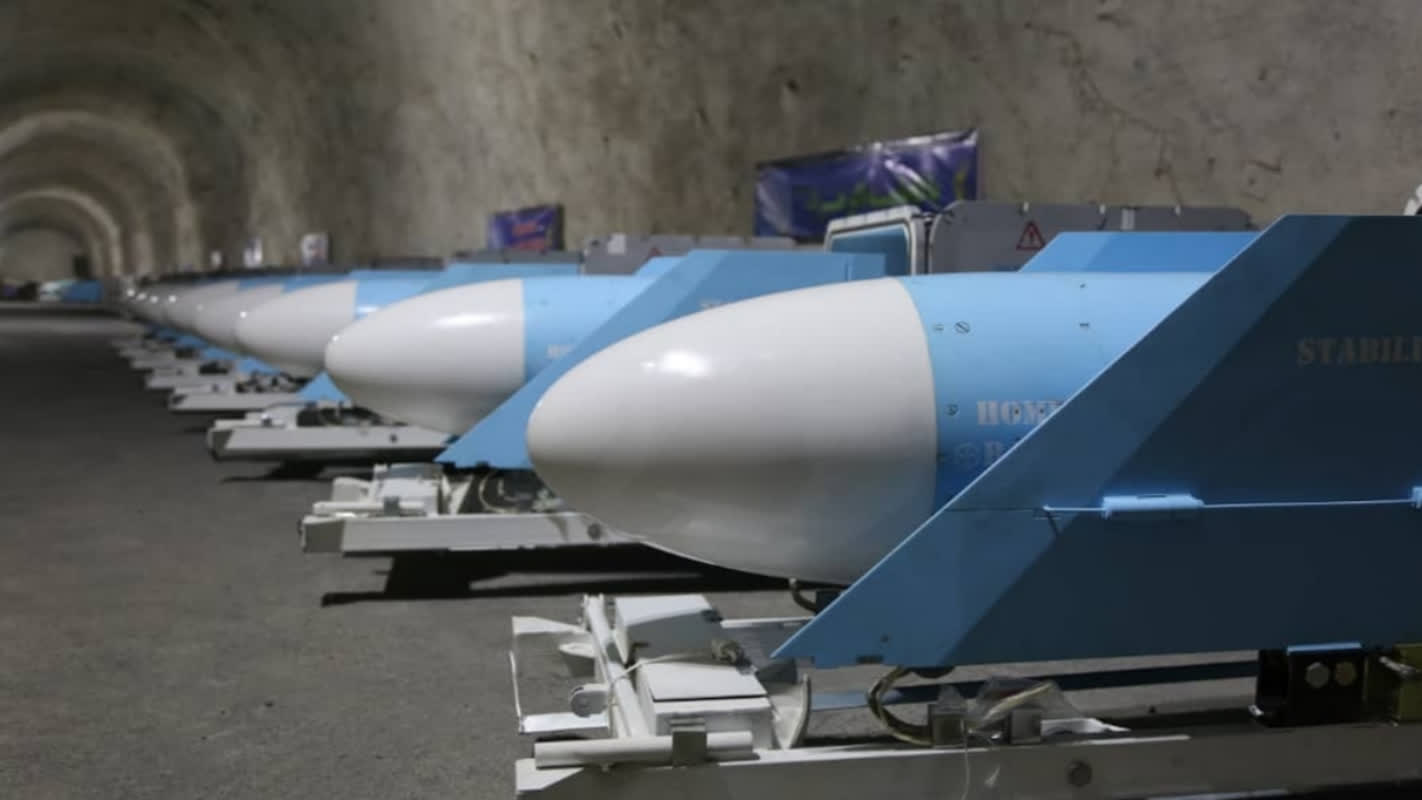










Most Commented