Quick access to main page (top) Direct access to main contents Quick access to main page (bottom)

7 Ghost Ships Selected: US Navy’s New Plan to Dominate the Pacific

Daniel Kim Views  

Translation result

태평양
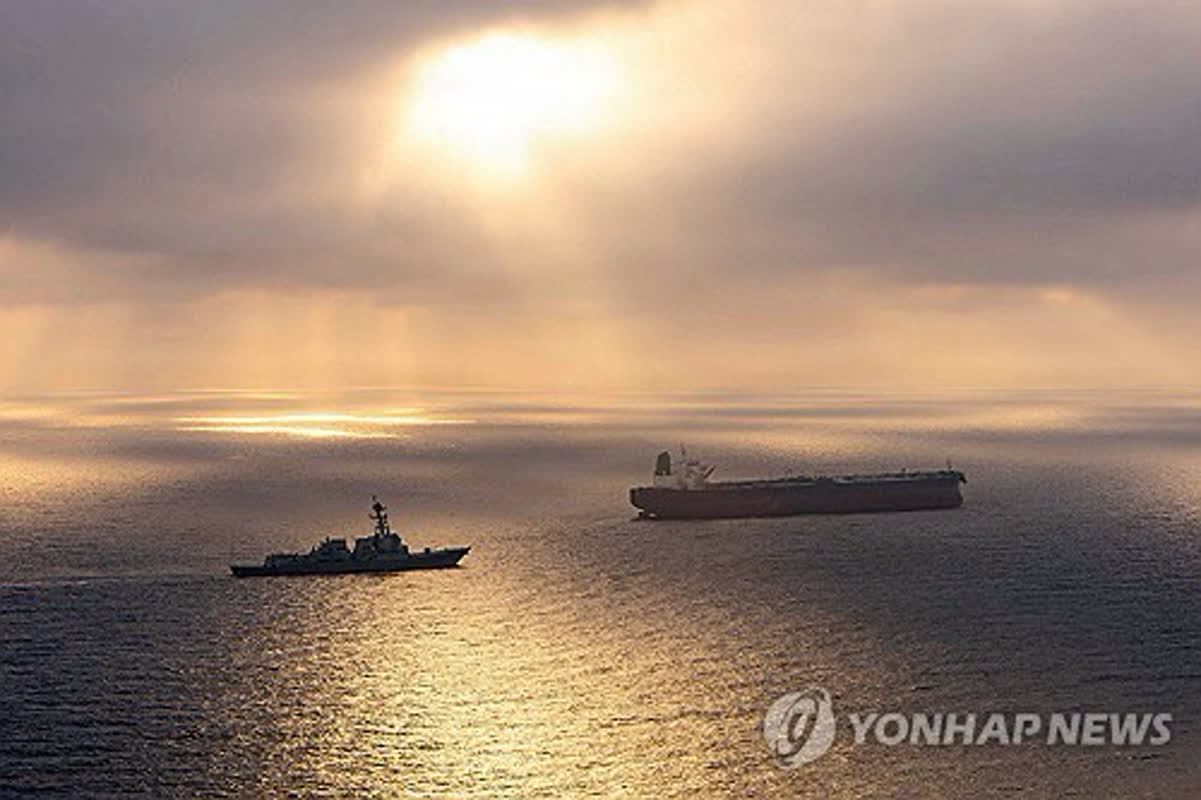
U.S. Navy / Source: Yonhap News

The U.S. Navy has selected seven designs from more than 20 submissions to its Medium Unmanned Surface Vessel (MUSV) marketplace, moving those entries from paper review into prototype testing.

The performance bar is high. The vessels must operate through heavy seas at roughly 46 km/h (about 25 knots), travel 4,630 km (about 2,880 miles) and sustain an effective payload of up to 25 metric tons.

These platforms aren’t intended merely for scouting. The Navy is pursuing a modular maritime robotic architecture that can swap in missiles, surveillance sensors or electronic-warfare packages depending on the mission.

With a 4,630-km endurance, MUSVs could remain on station across the western Pacific—linking Guam, Japan and the Philippines—while reducing the need to escort them with crewed warships.
태평양
HII Romulus / Source: HII

The Navy’s decision to withhold the names of competing companies is noteworthy. That secrecy likely opened the contest to more than traditional shipbuilders—bringing in firms with expertise in autonomy, software and commercial vessel design.

Defense procurement innovation: lowering risk with commercial tech

Rather than fund full development up front, the Navy is using a market-driven approach: companies must demonstrate a working prototype before the service commits to lease or buy. It’s a pay-for-performance model designed to accelerate fielding while shifting early development risk to industry.

By accepting commercial autonomous-vessel technology, the Navy aims to compress timelines that would otherwise be spent on military-only development. Firms absorb the failure risk; the service takes proven capabilities.

Still, the platform’s value will depend far more on software than on steel: reliable autonomous navigation, robust collision avoidance, secure remote control and hardened cyber defenses are mission-critical.
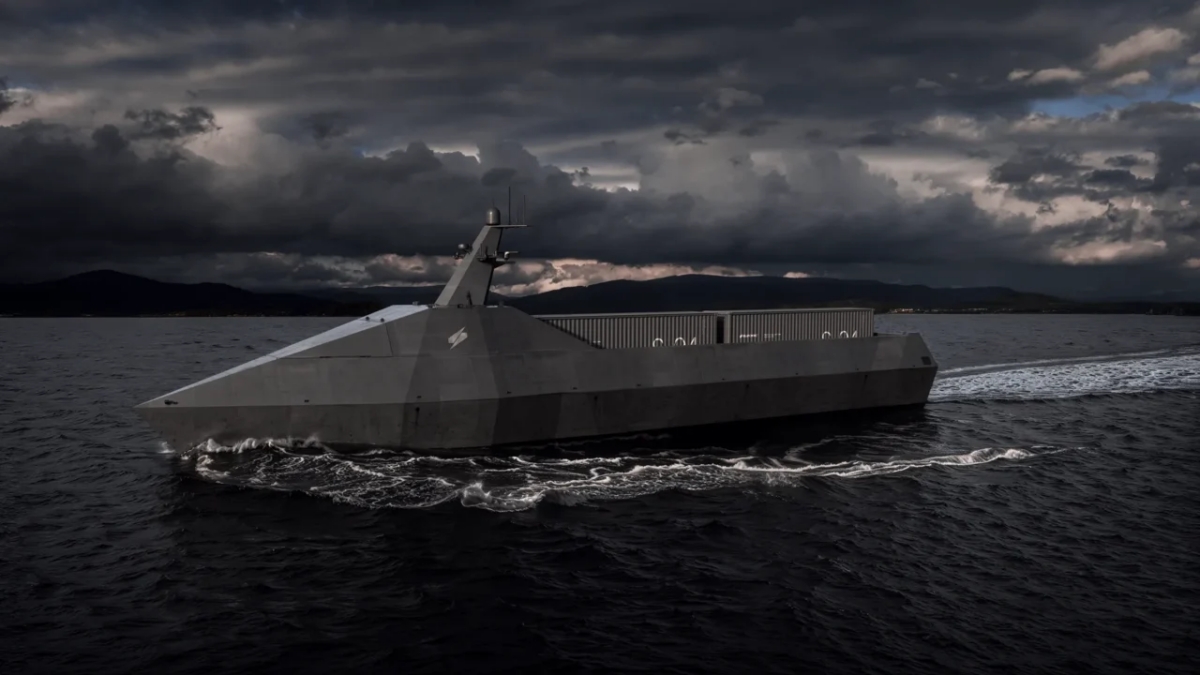
태평양
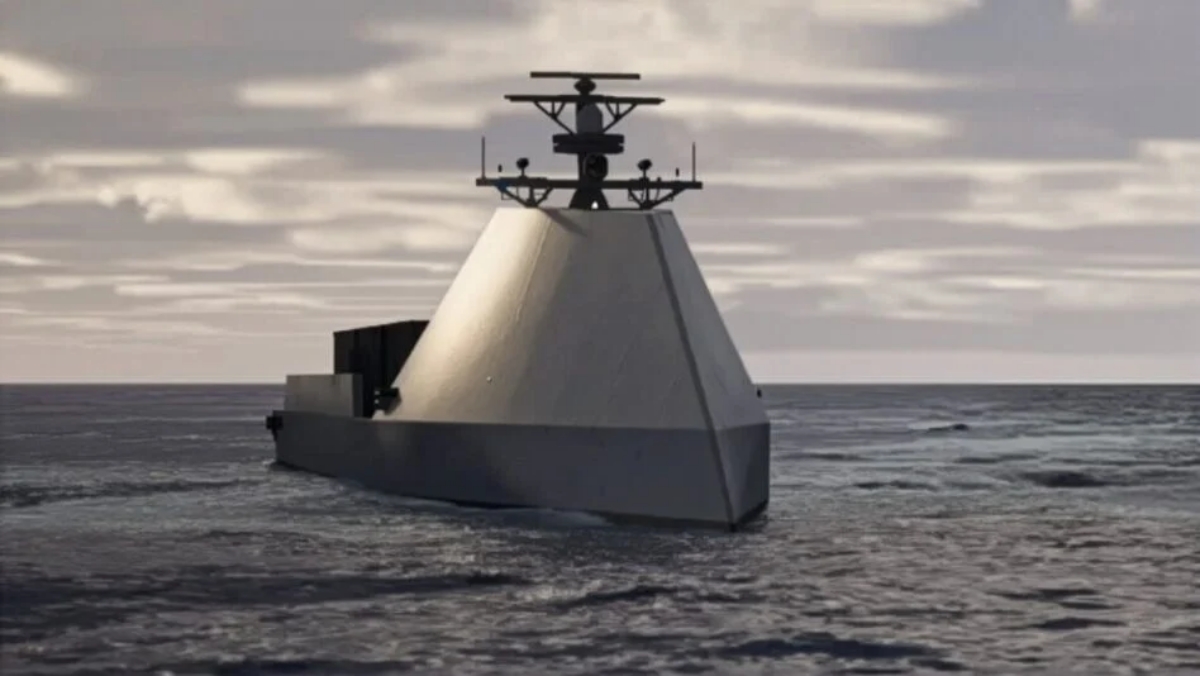
Marauder concept art / Source: Saronic

The design’s ability to carry two standardized containers is central. In peacetime, MUSVs can operate as persistent ISR platforms. In crises, they can be reconfigured with missile launchers or electronic-warfare modules and serve as remote strike or support nodes.

Implications for South Korea’s navy tactics and defense industry

Confronted with North Korean threats and manpower shortfalls, the Republic of Korea Navy faces a stark choice: adopt unmanned surface vessels for monitoring high-risk areas in the Yellow Sea and southern waters or accept increased vulnerability. For Seoul, USVs are increasingly a matter of force survivability.

Unmanned vessels can serve as expendable decoys to protect crewed ships and, when fitted with containerized weapons, act as scalable, sea-based firepower nodes.

The Navy’s move underscores a strategic shift: naval competition is moving away from a simple count of large hulls toward a race to disperse unmanned strike nodes across the maritime battlespace.
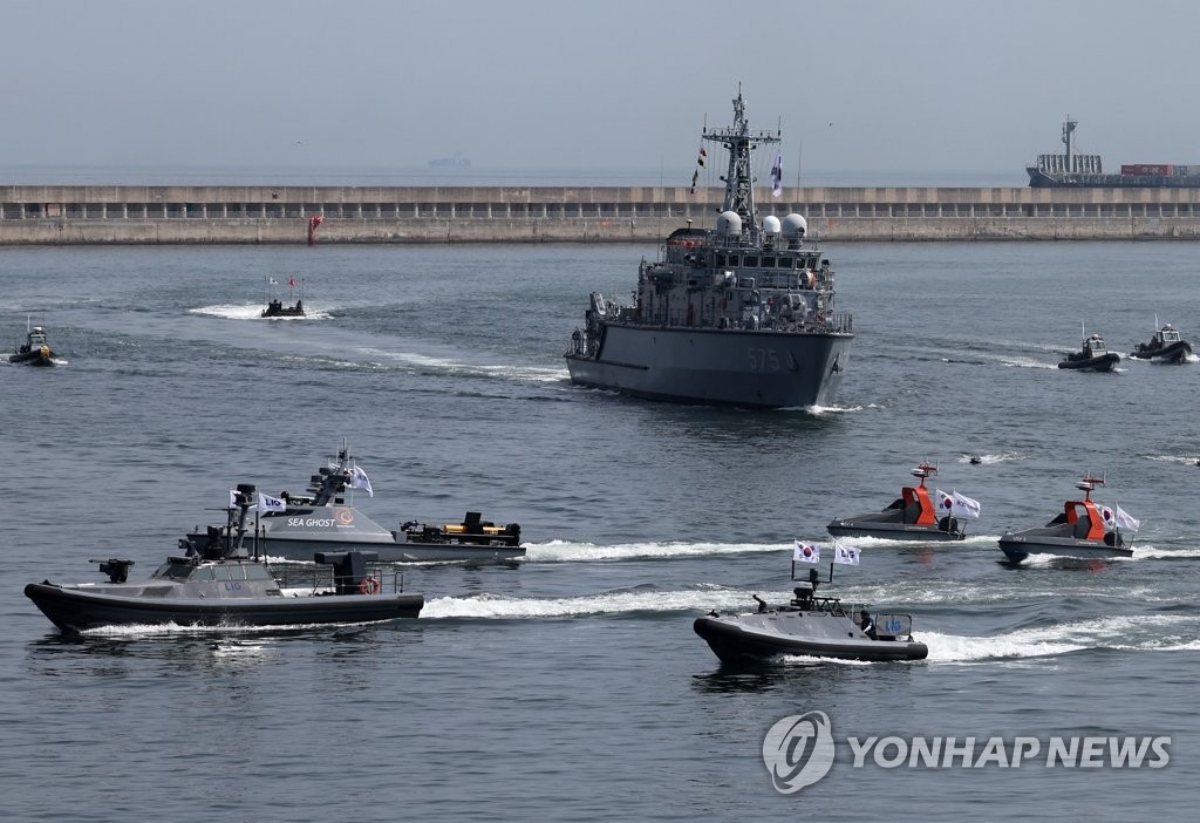
태평양
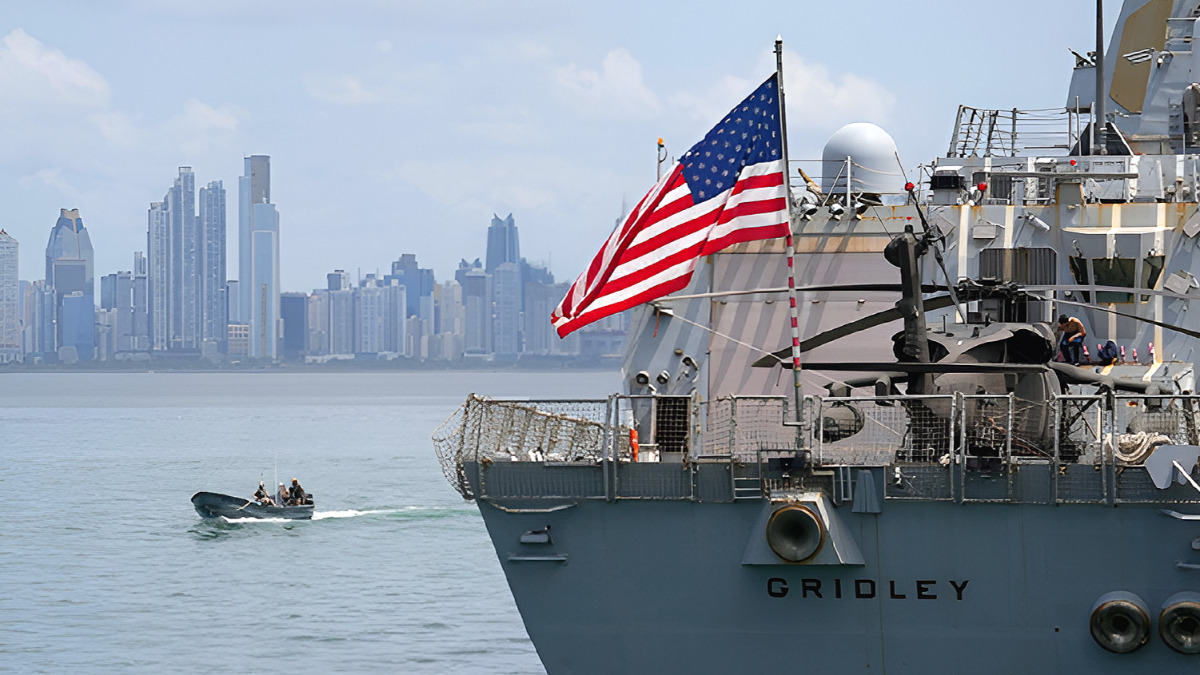
Republic of Korea Navy / Source: Yonhap News

South Korea’s navy must go beyond technology development. It needs clear operational doctrine—deciding whether USVs will be controlled from land-based command centers or by ship crews, and under what rules of engagement they will operate.

If the norm becomes vessels that appear to be surveillance ships in peacetime but can be rapidly outfitted with missile modules in crises, traditional classifications of naval vessels will be upended.

Real-time trending stories

  • “Turning sworn enemies into one team?” — How Türkiye’s control is reshaping the Middle East and the Mediterranean
  • “We paid $14 billion but the weapons haven’t arrived” — Why supply delays are putting U.S. forces in Korea on edge
  • “Is the Arctic becoming China’s?” — Why Beijing is bringing big money to the Arctic Ocean
Daniel Kim
content@tenbizt.com

Comments0

300

Comments0

[Military] Latest Stories

  • 30 of 33 Iran Missile Bases Still Active: Intelligence Defies Trump Claims
    30 of 33 Iran Missile Bases Still Active: Intelligence Defies Trump Claims
  • US Javelin Missiles Deployed in Taiwan’s High-Stakes Live-Fire Drill
    US Javelin Missiles Deployed in Taiwan's High-Stakes Live-Fire Drill
  • North Korea’s 10-Year Nuclear Threat: Is a Limited Strike Imminent?
    North Korea's 10-Year Nuclear Threat: Is a Limited Strike Imminent?
  • AI vs. Video Compression: How RMX is Redefining Tactical Edge Tech
    AI vs. Video Compression: How RMX is Redefining Tactical Edge Tech
  • US-South Korea Security Meeting Sparks Tension Over Military Control
    US-South Korea Security Meeting Sparks Tension Over Military Control
  • Iran Claims Missile Strikes on U.S. Military Bases: Did They Hit?
    Iran Claims Missile Strikes on U.S. Military Bases: Did They Hit?

Weekly Best Articles

  • Choi Dong-seok’s Family Bond: How a Simple Engraving Reveals Deep Love for His Children
  • Kwak Sun-hee’s Stunning Wedding Photos: A Celebration of Love and Courage
  • Is ‘I Am a Natural Person’ Just a Big Lie? Comedian Yoon-taek Reveals Shocking Secrets!
  • Health Scare: Why Fans Are Worried About Go Ji Yong’s Dramatic Weight Loss
  • Discover the Winter Gongju Chestnut Festival: A Taste of Korea at H-Mart in the USA!
  • 2026 Spring Wildfire Prevention: How Gyeryong City is Cutting Response Time to 30 Minutes!

You May Also Like

  • 1
    Trump Slashes AI Review Window to 30 Days Amid National Security Debate

    Politics 

    Trump Slashes AI Review Window to 30 Days Amid National Security Debate
  • 2
    Ukraine’s EU Bid Surges as Hungary Drops Opposition Amid Russian Attacks

    Politics 

    Ukraine’s EU Bid Surges as Hungary Drops Opposition Amid Russian Attacks
  • 3
    Trump Backs Colombia's 'El Tigre' — What It Means for U.S. Relations

    Politics 

    Trump Backs Colombia’s ‘El Tigre’ — What It Means for U.S. Relations
  • 4
    Trump Backs Colombia's Far-Right Outsider—What's at Stake?

    Politics 

    Trump Backs Colombia’s Far-Right Outsider—What’s at Stake?
  • 5
    12.5% Tariff Hit: South Korea Faces New U.S. Trade Penalties

    Politics 

    12.5% Tariff Hit: South Korea Faces New U.S. Trade Penalties

Popular Now

  • 1
    12.5% Tariff Alert: Why the U.S. Is Targeting South Korean Imports

    Politics&nbsp

  • 2
    Marta Kostyuk Makes History at French Open Amid Ukraine Crisis

    Politics&nbsp

  • 3
    37 Years in Exile: The Tiananmen Leader Who Just Wants to Go Home

    Politics&nbsp

  • 4
    South Korea's Cheongju Airport Faces Crisis as Passenger Numbers Explode

    Politics&nbsp

  • 5
    Nuclear Submarine Race: South Korea's High-Stakes Bid for U.S. Fuel

    Politics&nbsp

Weekly Best Articles

  • Choi Dong-seok’s Family Bond: How a Simple Engraving Reveals Deep Love for His Children
  • Kwak Sun-hee’s Stunning Wedding Photos: A Celebration of Love and Courage
  • Is ‘I Am a Natural Person’ Just a Big Lie? Comedian Yoon-taek Reveals Shocking Secrets!
  • Health Scare: Why Fans Are Worried About Go Ji Yong’s Dramatic Weight Loss
  • Discover the Winter Gongju Chestnut Festival: A Taste of Korea at H-Mart in the USA!
  • 2026 Spring Wildfire Prevention: How Gyeryong City is Cutting Response Time to 30 Minutes!

Must-Reads

  • 1
    Trump Slashes AI Review Window to 30 Days Amid National Security Debate

    Politics 

    Trump Slashes AI Review Window to 30 Days Amid National Security Debate
  • 2
    Ukraine’s EU Bid Surges as Hungary Drops Opposition Amid Russian Attacks

    Politics 

    Ukraine’s EU Bid Surges as Hungary Drops Opposition Amid Russian Attacks
  • 3
    Trump Backs Colombia's 'El Tigre' — What It Means for U.S. Relations

    Politics 

    Trump Backs Colombia’s ‘El Tigre’ — What It Means for U.S. Relations
  • 4
    Trump Backs Colombia's Far-Right Outsider—What's at Stake?

    Politics 

    Trump Backs Colombia’s Far-Right Outsider—What’s at Stake?
  • 5
    12.5% Tariff Hit: South Korea Faces New U.S. Trade Penalties

    Politics 

    12.5% Tariff Hit: South Korea Faces New U.S. Trade Penalties

Popular Now

  • 1
    12.5% Tariff Alert: Why the U.S. Is Targeting South Korean Imports

    Politics 

  • 2
    Marta Kostyuk Makes History at French Open Amid Ukraine Crisis

    Politics 

  • 3
    37 Years in Exile: The Tiananmen Leader Who Just Wants to Go Home

    Politics 

  • 4
    South Korea's Cheongju Airport Faces Crisis as Passenger Numbers Explode

    Politics 

  • 5
    Nuclear Submarine Race: South Korea's High-Stakes Bid for U.S. Fuel

    Politics