
If the government releases the debris it recovered locally, investigators could verify this immediately. They haven’t, which raises questions.
The impact point is too low for a drone strike, but the damage looks light for an anti-ship missile.
Bottom line: I assess this as an anti-ship missile hit — likely a Noor-family missile operated by Iran’s Islamic Revolutionary Guard Corps.
I’ll lay out the reasons below.
1. Analysis of strike photos
In the released photos, the strike struck the ship’s port quarter at roughly 5 meters above the waterline.
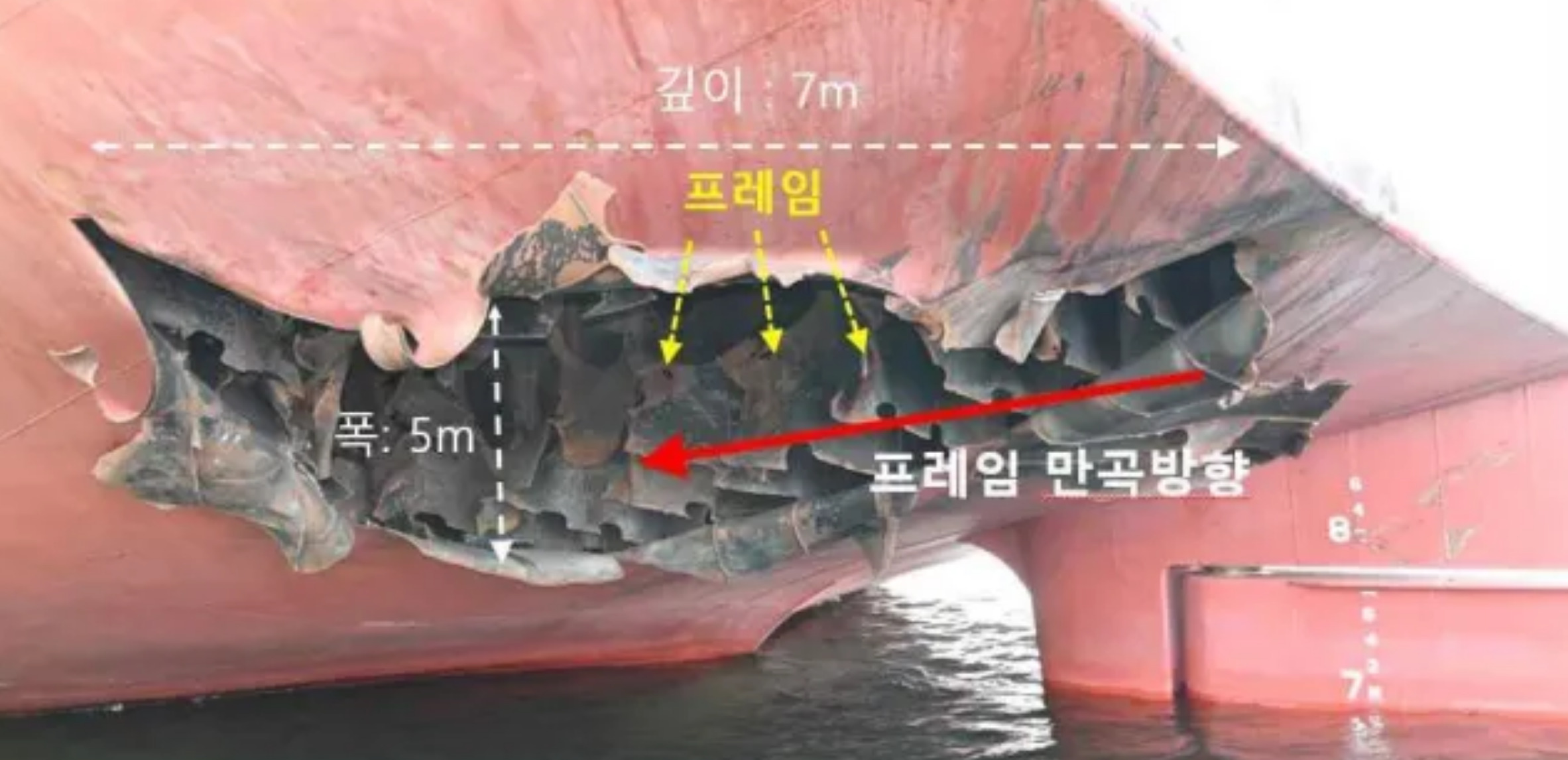
A few key observations:
- Double-hull construction
As the photos show, the Namoo has a double-hull. There’s a void between the outer shell and the inner plating, with bulkheads running through that space.
Double hulls are standard on warships, tankers and icebreakers to improve survivability and reduce pollution risk in accidents.
The steel plate on the Namoo is reported at about 10–15 mm thick.
- The impact area is steeply angled.
The strike location slopes steeply relative to horizontal — roughly 6–70 degrees.
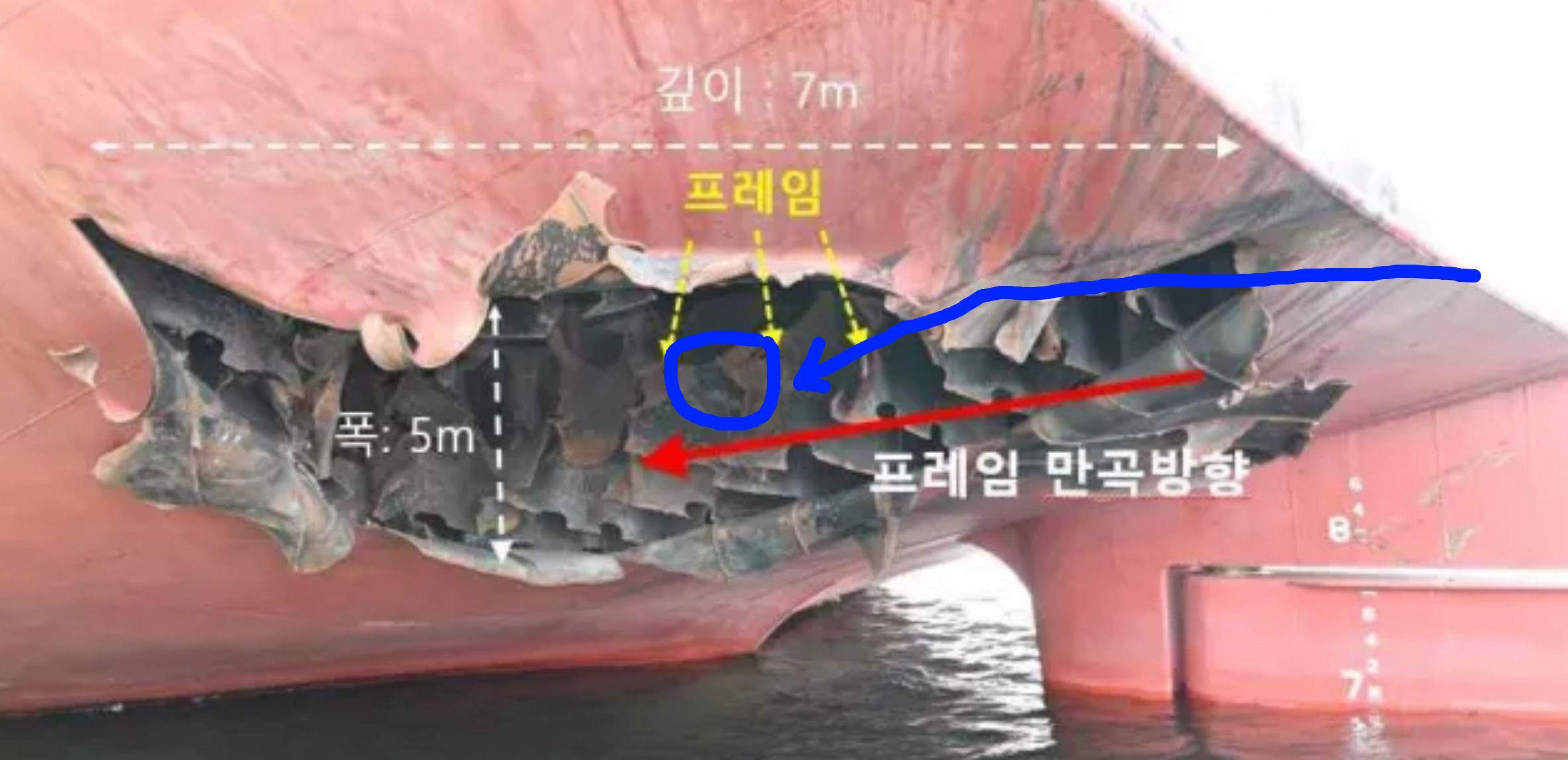
- The detonation likely occurred in the inter-hull void.
Below I show the approach path and probable point of detonation inferred from the photos.
I judge that the warhead did not perforate both hulls. Instead, it detonated in the space between the outer and inner plates.
The steel at the blue-marked location in the photos is rounded outward, and notably the fourth bulkhead to the right is bent opposite the apparent approach direction — consistent with an internal blast from the inter-hull space.
In short,
The projectile penetrated at least 15 mm of steel, breached a steeply sloped outer shell and five internal vertical bulkheads, then detonated in the middle of the double hull.
I will proceed on that premise. If you disagree with that assessment, the rest may not be relevant.
2. Assessing the drone hypothesis
- The Shahed lacks reliable sea-skimming capability.
These low-cost drones generally use commercial GPS and almost certainly lack precision altimeters required for true sea-skimming. Their terminal dive tends to be near-vertical.
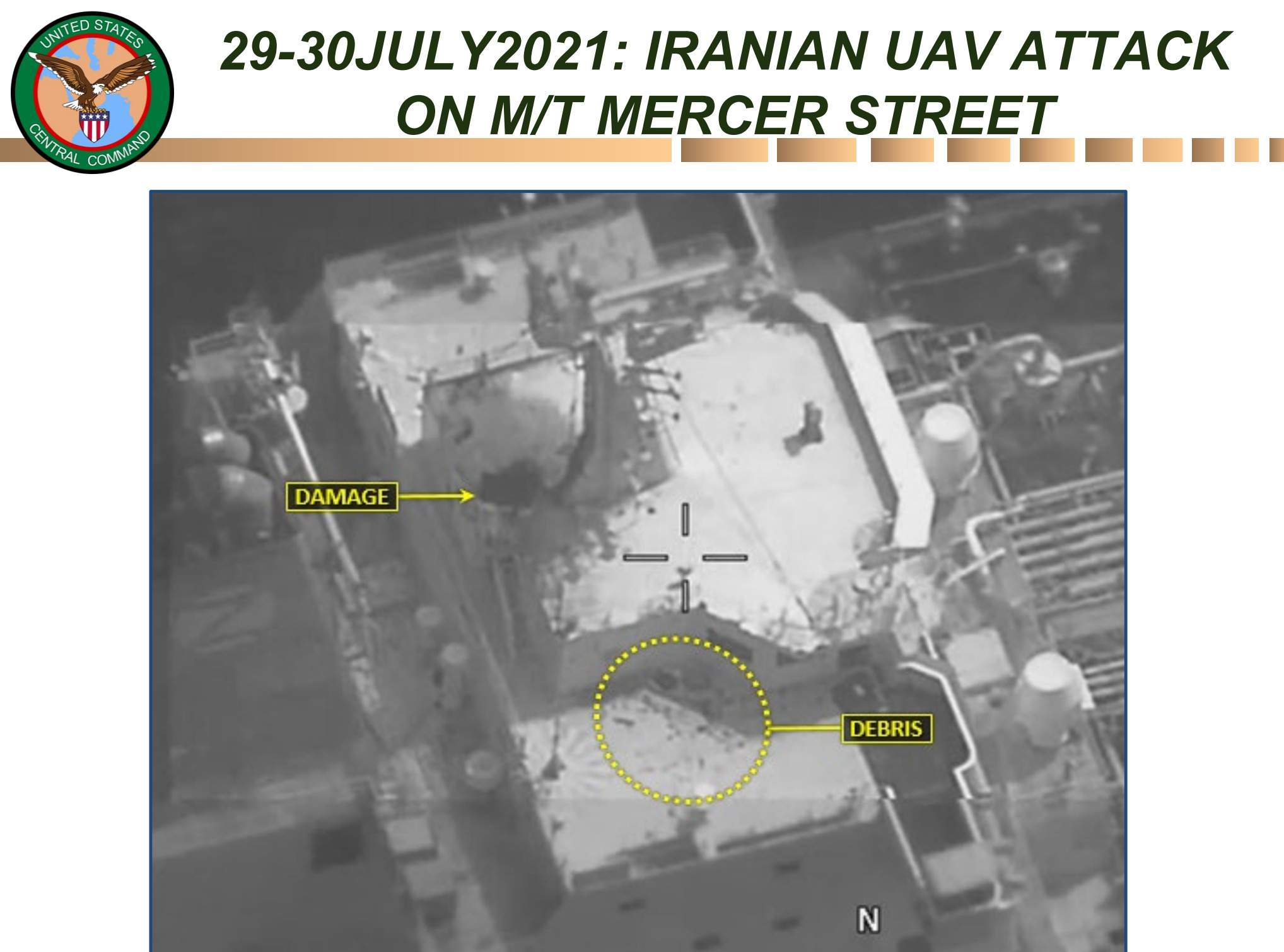
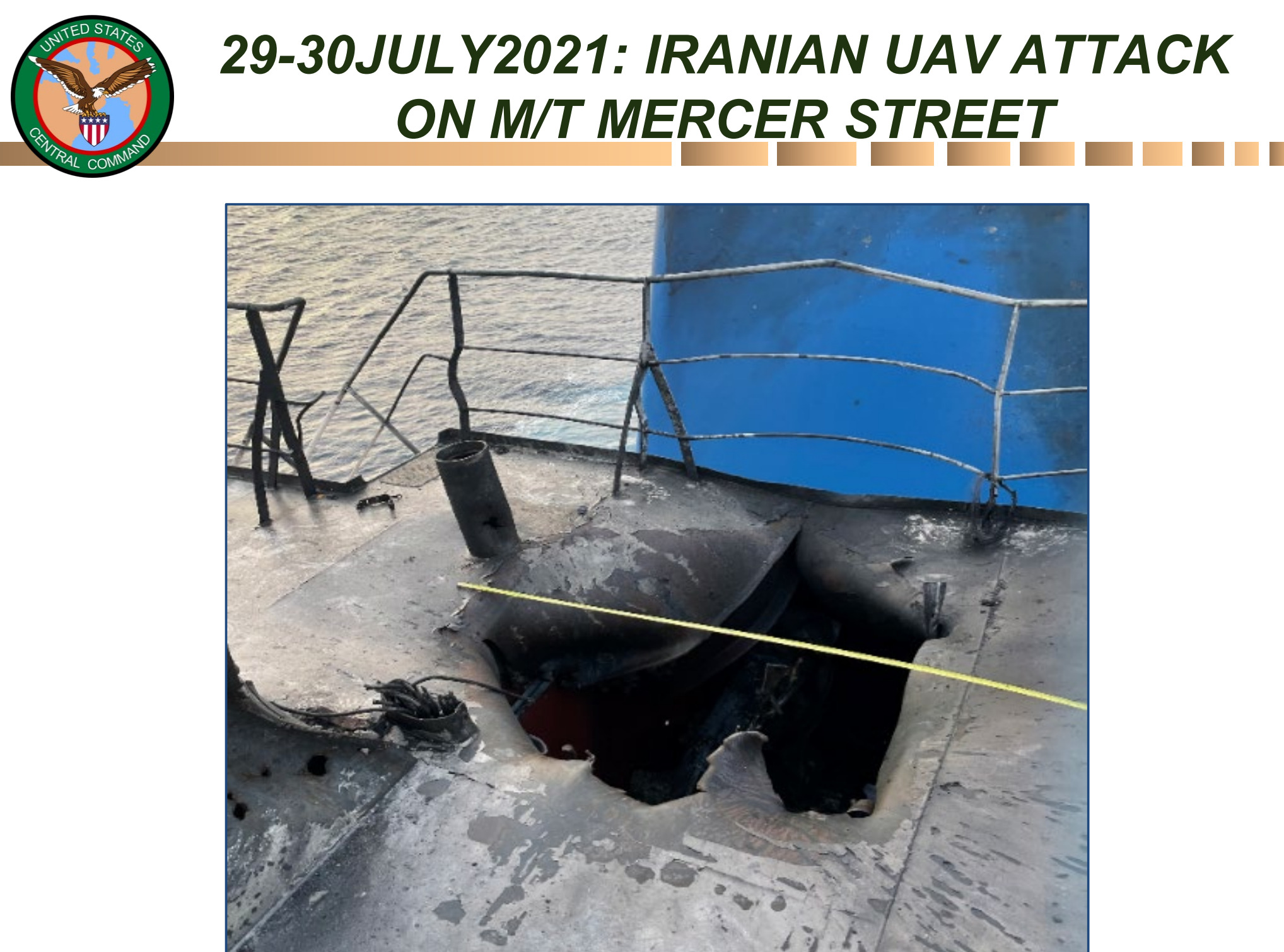
The photo below shows damage to the tanker Mercer Street after a Shahed strike in 2021. The drone lodged in the deck.
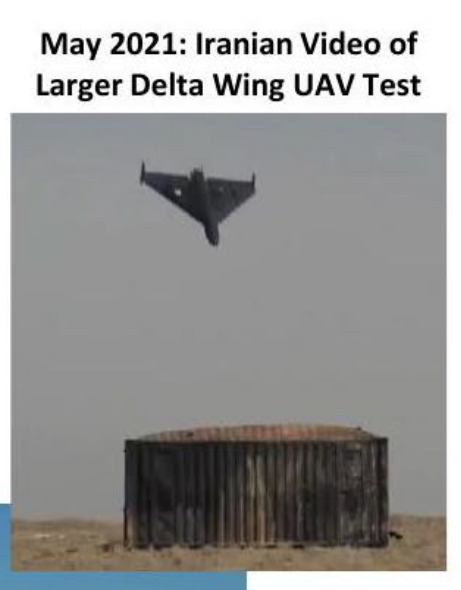
Some newer models are fitted with Starlink or 5G links and can be manually guided, so operator-controlled strikes are possible.
That said, I find it unlikely that two operators could repeatedly guide a drone to hit exactly the same small, highly angled spot.
- Shahed-series drones cannot reliably penetrate 15 mm steel.
Again, Mercer Street photos show holes, but the warhead did not fully penetrate. The strike detonated at or just outside the hull, and the blast bent the steel inward, creating the openings.

- Could a 400 kg drone at 800 km/h penetrate by kinetic energy?
I ran the numbers on the heaviest, fastest Shahed variant.
The model cited in open sources is the Shahed-238: a jet-powered variant around 380 kg with a top speed near 800 km/h.
I computed kinetic energy.
E = 1/2 mv^2
= 1/2 × 380 kg × (222.22 m/s)^2
= 9,382,523 J — roughly 9 million joules.
That’s a large amount of energy — comparable in order to the energy involved with some armor-penetrating impacts.
But analysis indicates that despite that energy, a Shahed’s nose section is brittle and shatters on impact. The drone’s energy disperses rather than concentrating like a solid projectile, so penetration of plated hulls is limited.
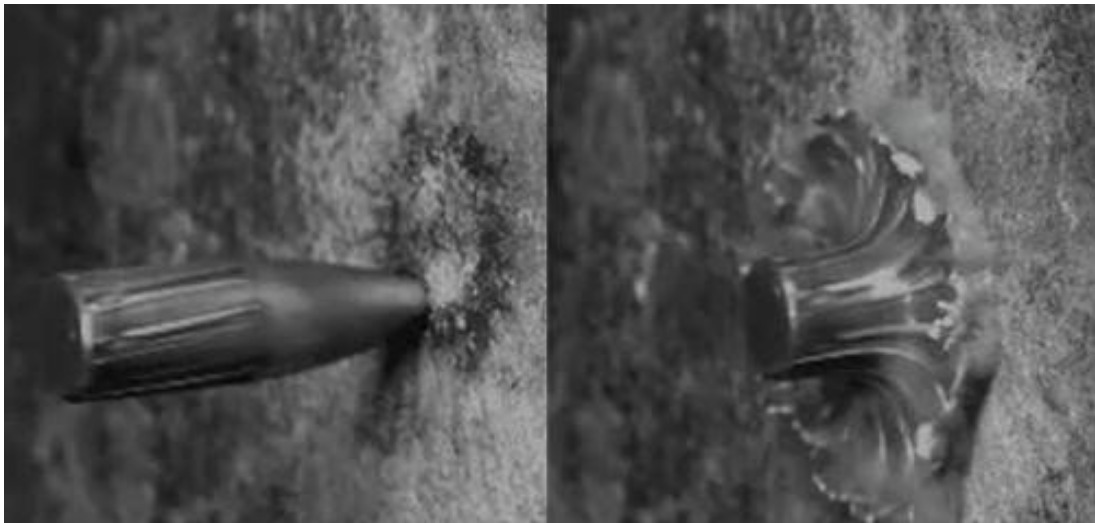
Namoo isn’t fitted with military armor — its plating is around 15 mm — so it’s vulnerable, but I still assess that a Shahed-type drone is unlikely to penetrate more than a few plates and breach five internal bulkheads as seen here.
3. Anti-ship missile hypothesis
- Candidates among Iran’s anti-ship cruise missiles
Iran fields several anti-ship missiles, both ballistic and cruise. Among cruise missiles, candidates include Nasr-1, Noor, Ghadir, Qader and Abu Mahdi.
Nasr-1 has only about a 35 km range and lacks a delayed or penetrator-style warhead, so it’s unlikely. Abu Mahdi is a newer, extreme-range system (in excess of 1,000 km) and also seems unlikely for this engagement.
Ghadir and Qader are extended-range variants of the Noor.
That leaves the Noor-family missiles, which carry roughly 165 kg warheads.
- Why would a 165 kg warhead produce relatively light damage?
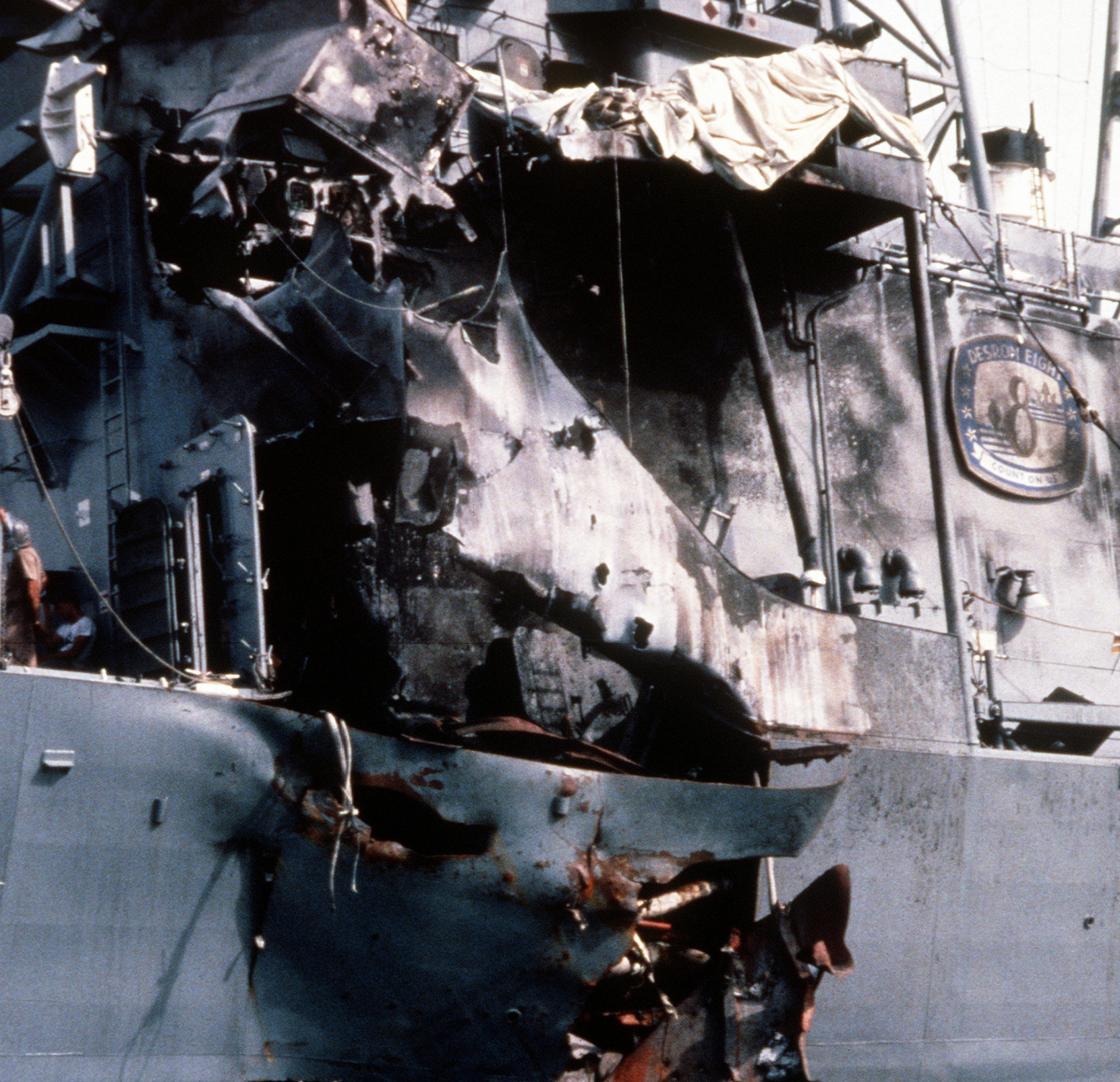
That question is valid. A 165 kg warhead — similar in weight to an Exocet — would normally inflict heavier damage.
Below are photos of USS Stark after an Exocet hit during the Iran–Iraq War.
The photo below shows a Harpoon test hit; Harpoon warheads weigh about 221 kg.
- Missile hits have sometimes caused surprisingly light damage.
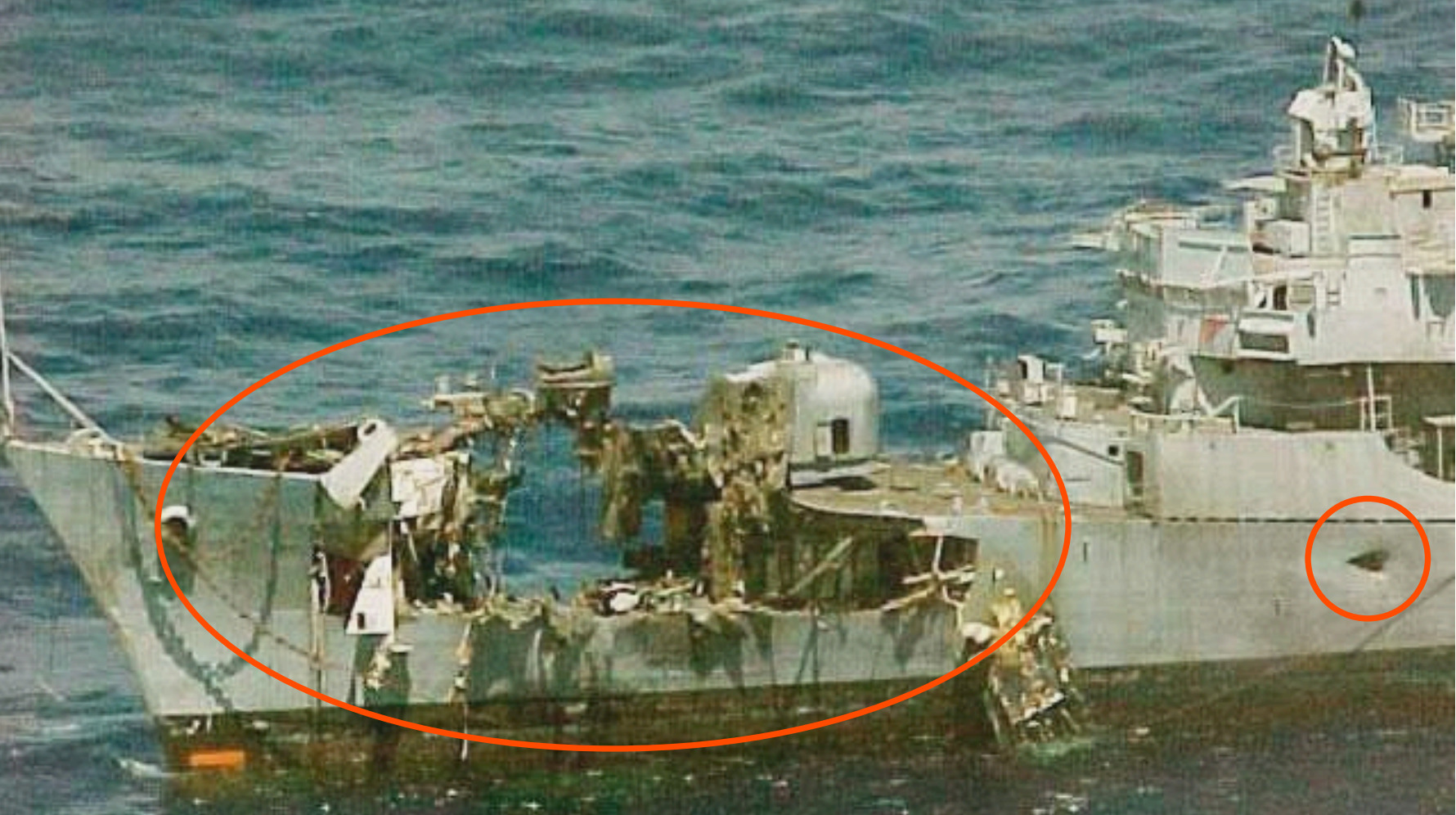
The photo below shows the Israeli corvette INS Hanit after being struck by a Noor missile during the 2006 Lebanon conflict at the circled area.
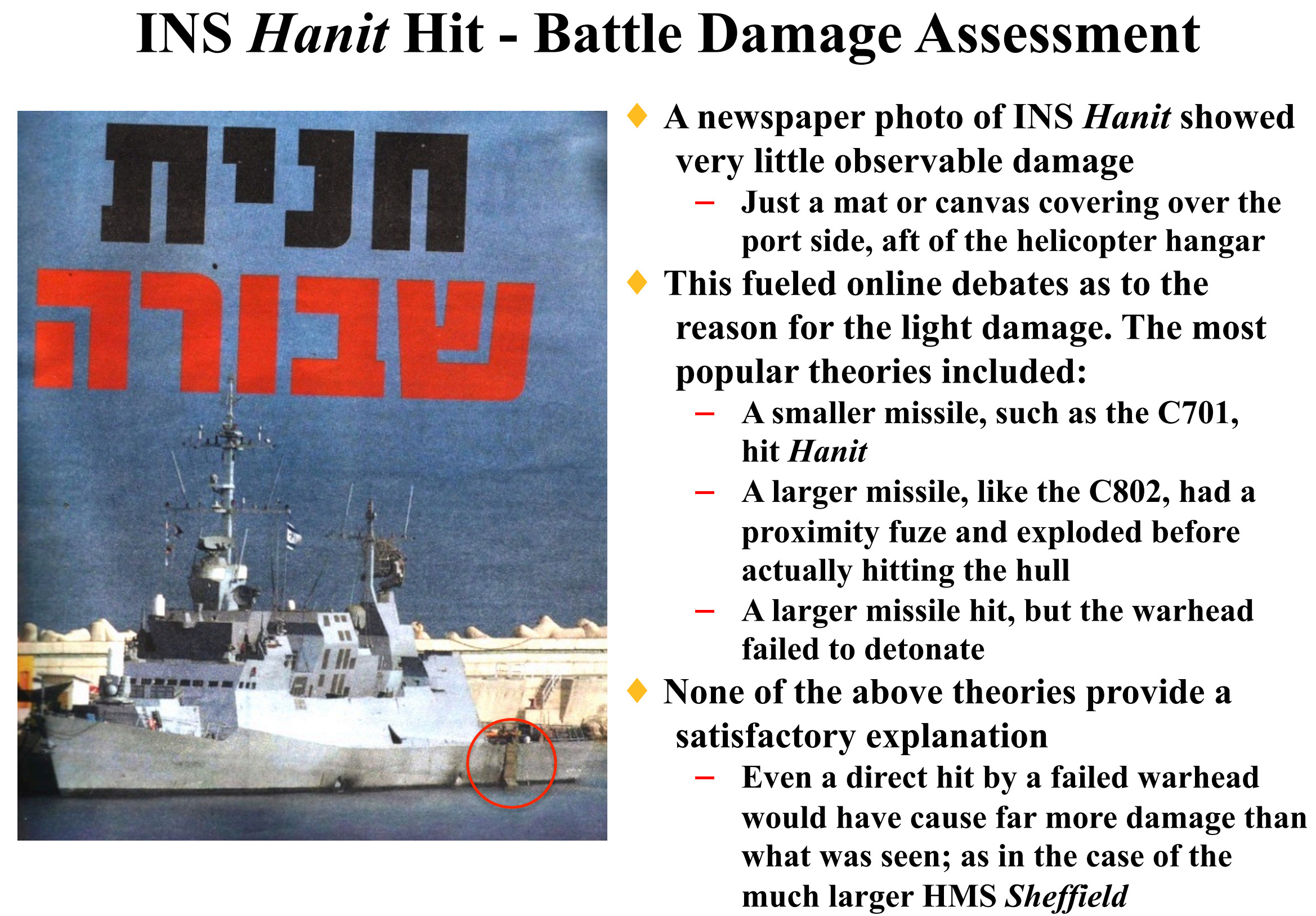
Compared with Exocet impacts, the damage was minimal, which generated controversy.
However, after additional photos were released, investigators concluded the missile struck the upper deck and much of the blast vented upward, so the ship sustained limited damage.
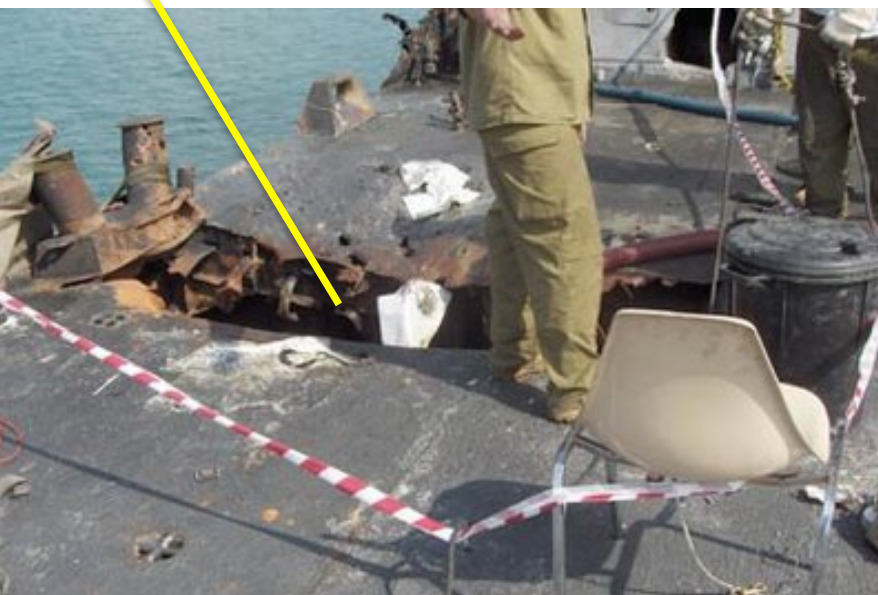
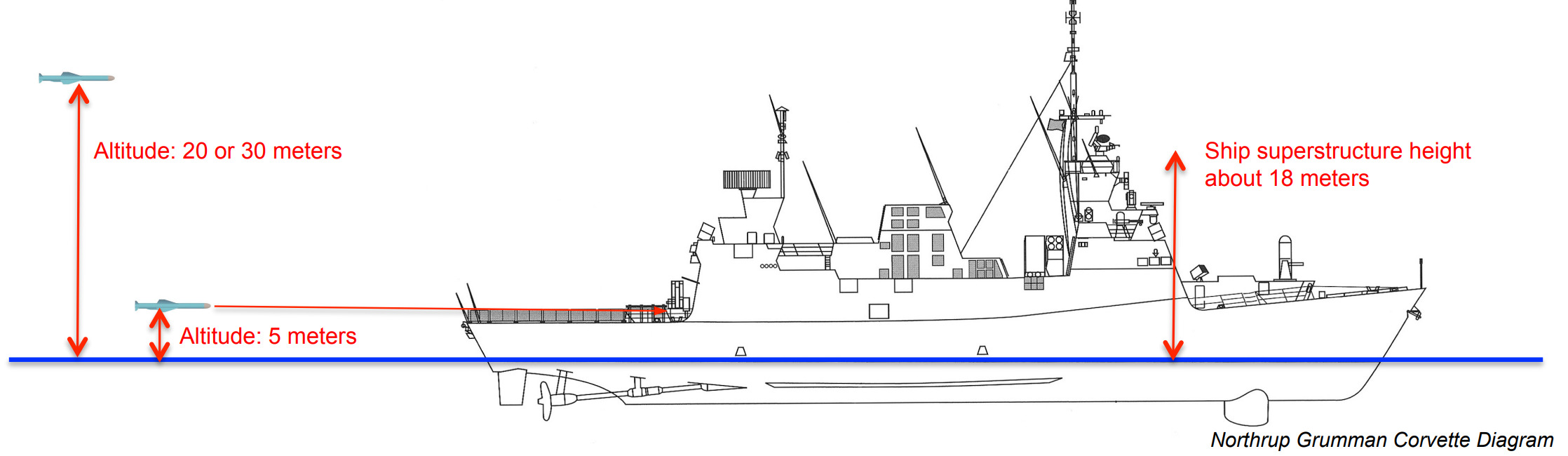
Doesn’t that scenario look consistent with the Namoo case?
The most important aspect of all translation processes is to keep the {vi[numeric value]}) type symbols intact without deleting or translating them. Please ensure this is strictly followed. Additionally, maintain the same number of {vi[numeric value]}) symbols as in the first translated result.












Most Commented