
Translation result.
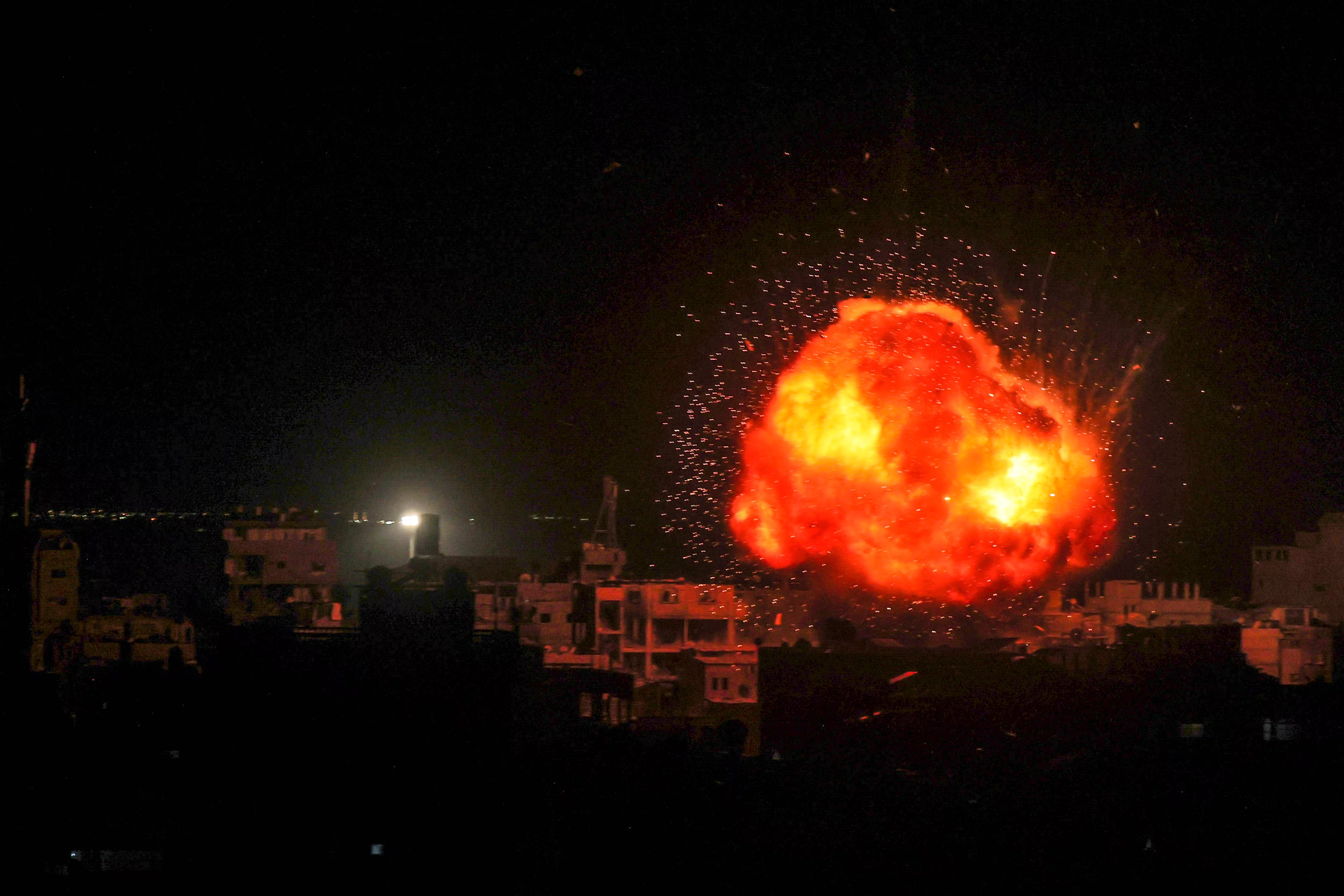
Clashes between Israel and the Iran-aligned Lebanese militia Hezbollah continued on the 10th (local time), a day before follow-up ceasefire talks between the United States and Iran were set to resume.
U.S. President Donald Trump reportedly urged Israeli Prime Minister Benjamin Netanyahu to refrain from a large-scale assault into Lebanon, but Israeli forces kept up airstrikes. The renewed fighting along the Lebanon front has added strain to Washington’s mediation efforts as talks gain momentum.
Lebanon’s state news agency NNA reported that Israeli strikes hit Deir Kahnun Ras al‑Ain in southern Lebanon, destroying several ambulances and fire trucks. Israel has repeatedly accused Hezbollah of using relief vehicles to move weapons. NNA also said strikes struck Al‑Tayr in southern Lebanon and Sahmar in the eastern Bekaa region. Authorities have not confirmed casualty figures.
Hezbollah quickly retaliated, issuing a statement saying it fired missiles at Israel’s Ashdod naval base. The group framed the attack as a response to recent Israeli strikes on Beirut and what it described as Israel’s unilateral breach of a ceasefire agreement. Both sides have repeatedly pointed to alleged violations to justify further military action.
The exchanges have become an added source of instability as Washington manages a ceasefire phase with Tehran. The clashes complicate an already delicate diplomatic effort and raise the risks of a wider escalation.
President Trump has sought to rein in Israeli military operations to avoid a broader regional conflagration, but Israel has continued offensive operations aimed at preventing Hezbollah from rearming. U.S. officials now face three simultaneous challenges: negotiating with Iran, guaranteeing Israeli security, and stabilizing Lebanon.
Israel and Lebanon are due to hold direct talks in the United States next week to discuss disarming Hezbollah, but prospects for a breakthrough look slim. Hezbollah deputy leader Naim Qassem warned Lebanon’s government not to make unilateral concessions to Israel. Inside Lebanon, officials remain divided over whether a ceasefire should come before disarmament talks.
Beirut’s government says its priority is stopping the fighting and reducing civilian harm. Israel says it needs to degrade Hezbollah’s military capability to ensure long‑term security along the border. That gap makes a quick, meaningful settlement unlikely even if Washington steps in as mediator.
Analysts warn that even if U.S. talks with Iran move forward, the Lebanon front could remain a separate powder keg. With airstrikes and retaliatory attacks continuing before the ceasefire discussions formally begin, the first real test of de‑escalation in the region may play out between Israel and Hezbollah.











Most Commented