
Translation result
|
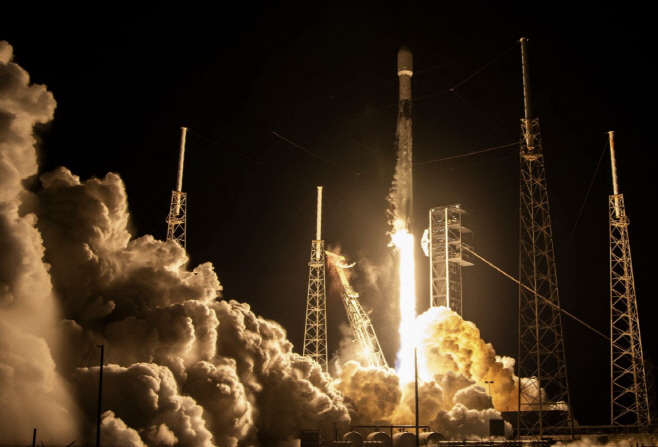
South Korea has reached a major milestone in its defense space history.
At the end of April, the five satellites in Seoul’s independent reconnaissance program—known as the 425 project—completed operational testing and entered service. About 2 years and 4 months after the first launch on Dec. 2, 2023, South Korea now fields a strategic “eye” capable of detailed surveillance across the entire Korean Peninsula.
But beneath that outward success lies a stark challenge: real‑time information sharing. Our reporting indicates recent delays in data exchange with U.S. systems are creating unseen gaps in how the ROK military operates its Kill Chain.
The 425 project’s capstone: a pair‑hour sentinel is online
The central objective of operationalizing all five reconnaissance satellites was to establish persistent monitoring. One electro‑optical/infrared (EO/IR) satellite and four all‑weather synthetic aperture radar (SAR) satellites now operate as a cluster. Together they give the ROK military the ability to revisit and image selected North Korean targets roughly every two hours.
This capability reduces South Korea’s reliance on U.S. strategic assets and gives Seoul direct control over imagery intelligence—allowing commanders to task and collect on targets at chosen times.
Notably, the newly operational SAR satellites can detect transporter‑erector‑launcher (TEL) movements through cloud cover and at night. Analysts say that materially strengthens the Kill Chain—one pillar of South Korea’s three‑axis defense—by improving options for timely, preemptive strikes.
SpaceX launch vehicles proved K‑space reliability: decisive 14‑minute confirmations
A close partnership with U.S. commercial launch provider SpaceX proved decisive to the program’s success. SpaceX streamed each mission live on X (formerly Twitter) and on its website, publicly documenting launch events and validating satellite deployments to a global audience.
△ 1 (Dec. 2, 2023): Following the 3:19 a.m. launch, SpaceX posted “Deployment of Korea 425 confirmed” just 14 minutes later, signaling the start of an independent reconnaissance era.
△ 2 (Apr. 8, 2024): Live coverage showed ground‑station contact about 45 minutes after the 8:17 a.m. launch.
△ 5 (Nov. 2, 2025): After the 2:09 p.m. launch, confirmation of successful orbital insertion arrived at 2:23 p.m.—14 minutes later.
SpaceX assigned the mission name “Korea 425 Mission” for each flight and hosted dedicated live pages. The consistent, public confirmations reinforced that South Korea’s space assets meet international reliability standards.
Information‑sharing bottleneck in the U.S.–ROK alliance: what is the new J‑10 tasked to do?
Technical independence does not automatically translate into operational integration. Tensions have surfaced in U.S.–ROK military channels over real‑time tracking of North Korean nuclear and missile activity. Reports that the U.S. limited or delayed key intelligence during the satellite operationalization phase have exposed digital synchronization problems between indigenously owned and allied systems.
To address these bottlenecks, U.S. Forces Korea (USFK) stood up a new organization, J‑10 (Integrated Strategy Directorate). J‑10 functions as the control tower for nuclear‑conventional integration (CNI), implementing decisions made by the U.S.–ROK Nuclear Consultative Group (NCG) at the operational level. Its mission is to link U.S. nuclear‑response assets with South Korean high‑power precision‑strike systems in real time.
Defense experts stress J‑10 is more than a liaison cell: it is a strategic artery that must fuse imagery and sensor data from ROK satellites into U.S. nuclear‑operational processes. They say current sharing delays reflect growing pains in security protocols and data standardization. If those delays persist, the Kill Chain’s critical “golden time” for response could be lost.
|
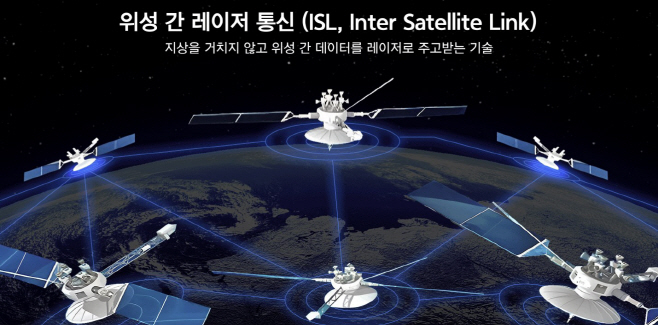
Break the 30‑minute barrier—AI and microsatellites offer the path forward
To complete the Kill Chain, Seoul must close the current two‑hour surveillance gap. With North Korea compressing missile launch preparation to roughly 30–40 minutes, a two‑hour revisit cycle becomes a potentially fatal vulnerability.
Seoul is accelerating deployment of microsatellite constellations. The plan calls for dozens of small satellites densely staged in low‑Earth orbit to cut revisit times to under 30 minutes. That capability must be paired with an AI‑driven big‑data analysis platform capable of flagging anomalies within seconds—human analysts alone cannot process the flood of imagery in real time.
The U.S.–ROK intelligence alliance must prove itself through capability
Completing the 425 project is a beginning, not an endpoint. Experts say that, building on SpaceX‑proven launch reliability and the hardware Korea now fields, the next competitive edge will be software—analytics, fusion, and speed. When South Korean‑produced intelligence matches U.S. assets in sophistication and timeliness, Washington will have stronger incentives to share real‑time data more broadly.
When information flowing through the USFK J‑10 channel becomes a sharp spear and a reliable shield for both allies, the Kill Chain will deliver a fully credible deterrent.













Most Commented