
Translation result
 Marcus Galloskas, Director for Indo‑Pacific Security, Atlantic Council[Provided by Yonhap][Provided by Yonhap]
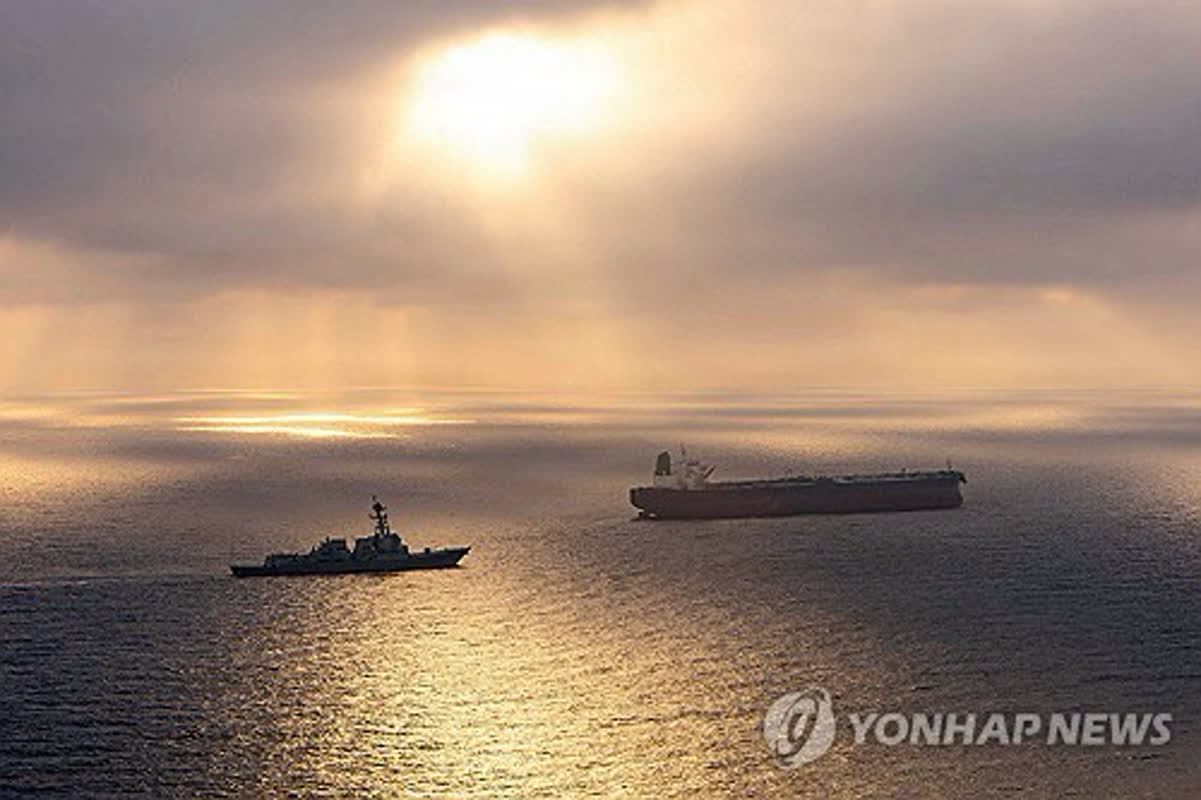
A U.S. expert warned that North Korea could carry out a limited nuclear strike against South Korea within the next 10 years, and said the United States and its allies must prepare thoroughly. Marcus Galloskas, director for Indo‑Pacific security at the Atlantic Council in Washington, D.C., presented findings from a recent Guardian Tiger III tabletop exercise (TTX) and related study at a forum on May 13 (local time). The exercise begins with a localized clash in the Yellow Sea. In the scenario, North Korea fires a torpedo armed with a small nuclear warhead and sinks one South Korean warship. U.S.-ROK combined forces respond with a large airstrike against Kim Jong Un’s family villa in Wonsan and issue a warning to avoid further escalation. Instead, North Korea conducts a limited air-delivered nuclear strike on Dokdo. Galloskas said it would be very difficult, at that point, to justify declaring an all‑out war solely on the basis that a warship was sunk with a nuclear weapon. \”That creates a political and operational dilemma for the United States and South Korea,\” he said. He added that the Dokdo strike would further complicate decision-making. Because the island is almost uninhabited, the move yields little military gain but imposes a serious political dilemma about how to respond. Galloskas warned that both governments might hesitate to launch stronger nuclear retaliation out of fear the conflict could spiral into full-scale nuclear war. The TTX then depicts rapid escalation. The U.S. reinforces its nuclear posture by deploying dual-capable fighters to Gunsan Air Base. North Korea responds with conventional missiles and drones and fires submarine-launched cruise missiles armed with low‑yield nuclear warheads. U.S.-ROK forces carry out a limited conventional-nuclear counterattack. North Korea fires multiple short‑range ballistic missiles at Gunsan Air Base. Ultimately, the allies issue an ultimatum to Pyongyang. In the scenario, when North Korea refuses, its regime collapses; Pyongyang retaliates by launching nuclear strikes on U.S. targets, hitting Alaska’s missile defense systems and even Pearl Harbor in Hawaii, and the conflict escalates into all‑out war. \”The threat of a limited nuclear attack by North Korea is far more realistic than a large‑scale nuclear strike aimed at population centers,\” Galloskas said. \”We need to prepare better—psychologically and militarily—or our deterrent will weaken.\” He urged sustained dialogue among allied governments despite the sensitivity of the issue. If the problem is confined to secrecy, he warned, allies cannot conduct the training and analysis needed to prepare effectively. Galloskas said the TTX and study should inform how policymakers approach the transfer of wartime operational control (OPCON) between South Korea and the United States. He added that, regardless of the command-and-control arrangements the alliance adopts, planners must prepare for this threat. The Atlantic Council conducted the TTX and study, which modeled a limited nuclear attack in East Asia, with funding from the Defense Threat Reduction Agency (DTRA) under the U.S. Department of Defense. #NorthKorea #Nuclear #TTX #WartimeOperationalControl Yonhap News TV inquiries and tips: KakaoTalk/LINE jebo23 Ye‑rin Kim (yey@yna.co.kr)








Most Commented