
Translation result.

Andalusia in southern Spain is a vivid blend of lingering Islamic influences and lively Spanish culture. Seville, the birthplace of flamenco and a center for bullfighting; Granada, a masterpiece of Islamic architecture; and Málaga, Pablo Picasso’s energetic port city—all offer their own flavor of charm.
The region is popular because cities are well connected by train, intercity buses, and shuttle tours. Here’s a stylish, practical route that covers the must-see trio: Seville, Granada, and Málaga.
Seville
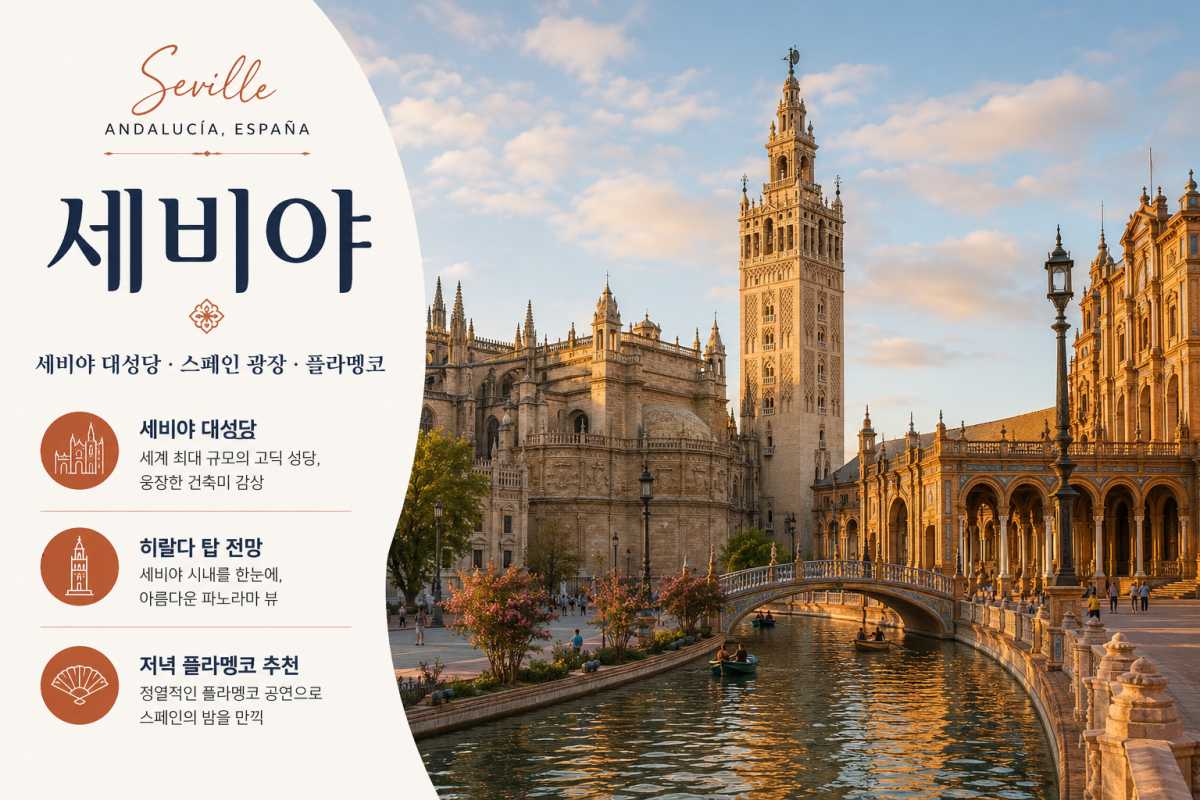
Seville is Andalusia’s financial hub and ranks as Spain’s fourth-largest city. Its crown jewel is Seville Cathedral—the world’s third-largest cathedral. Inside, you’ll find an enormous gilded altarpiece and the tomb of Christopher Columbus. For sweeping views, climb the Giralda tower.
Don’t miss the Plaza de España, built for the 1929 Ibero‑American Exposition. Its semi-circular layout and ornate tilework are especially striking at sunset, when the light turns the façades golden. Since Seville is the spiritual home of flamenco, end an evening with an intimate live performance to soak up the atmosphere.
Granada

Granada was the last stronghold of Islamic rule on the Iberian Peninsula, and the city preserves a beguiling mix of Catholic and Moorish influences. The unmissable highlight is the Alhambra.
The Nasrid Palaces and the Generalife gardens dazzle with geometric arabesques, intricate tilework, and water features that showcase masterful Islamic design. Tickets sell out fast, so book well in advance.
At sunset, head to the Mirador de San Nicolás in the whitewashed Albaicín quarter. From this hilltop viewpoint you’ll watch the Alhambra glow warm and red as the sun dips—an iconic moment you won’t forget.
Málaga
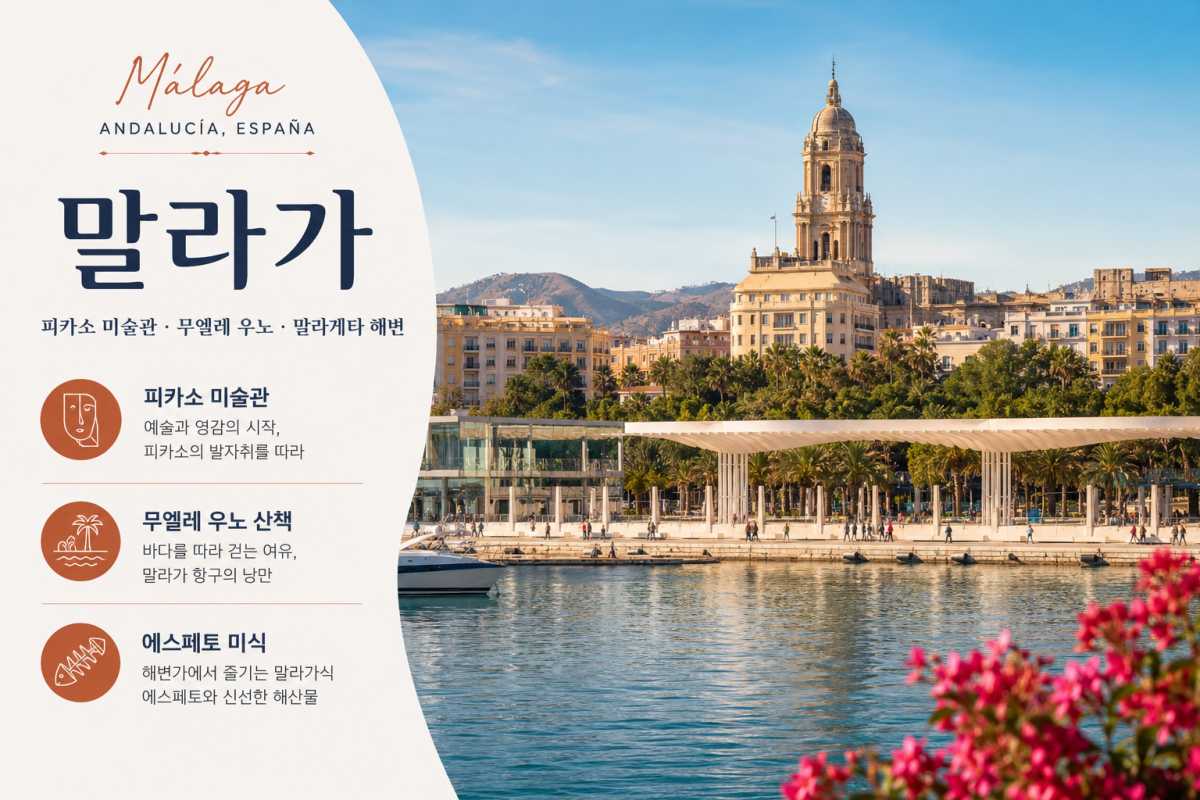
Málaga is the sun-drenched gateway to the Costa del Sol and the lively port where Pablo Picasso was born. While Seville and Granada focus on historic architecture, Málaga feels like a modern beach city with a vibrant arts scene.
In the city center, visit Picasso’s birthplace and the Picasso Museum to trace his early life and see a range of works. Afterward, walk along Muelle Uno—the contemporary harbor lined with shops and yachts—then continue to La Malagueta beach for a seaside stroll.
For a true local treat, try espeto: sardines skewered and grilled over wood fires right on the beach. It’s a simple, unforgettable taste of Málaga.
Top route tips for Andalusia
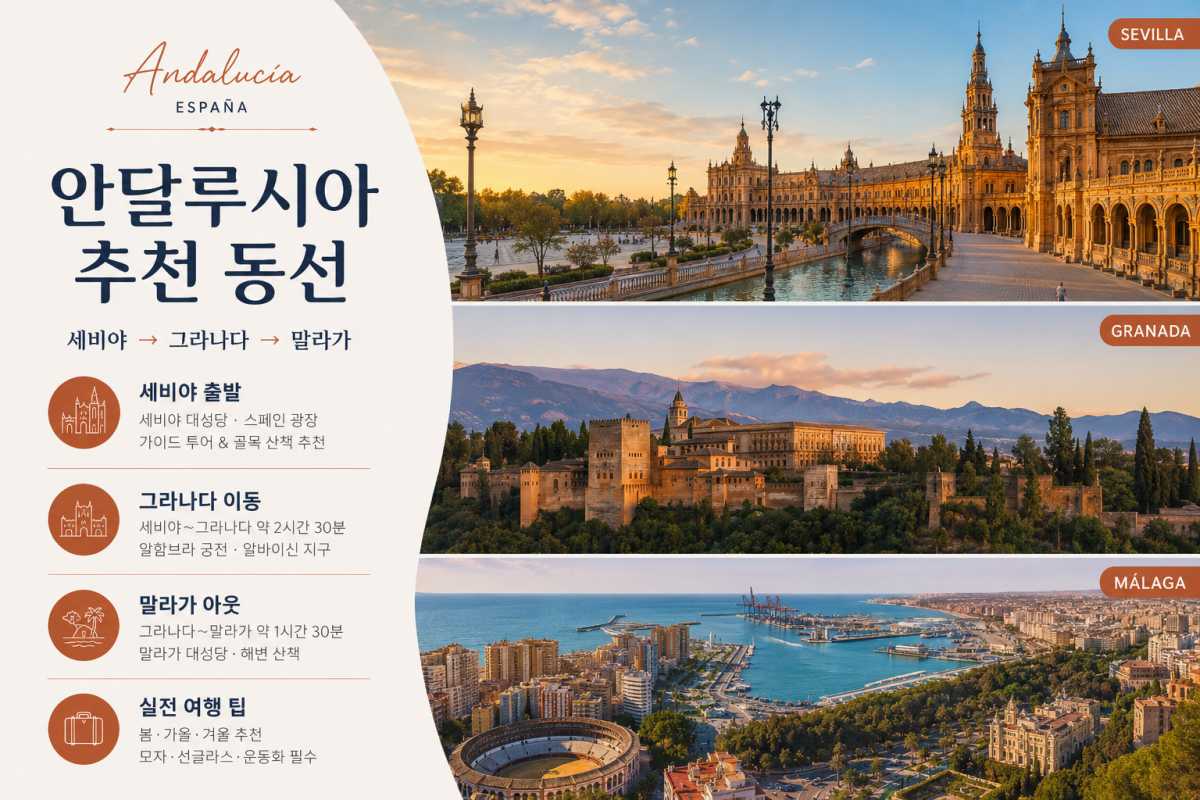
To travel efficiently, fly into Seville, continue on to Granada, and depart from Málaga—or do the route in reverse. The train from Seville to Granada takes about 2 hours 30 minutes, and the bus from Granada to Málaga is roughly 1 hour 30 minutes, so transfers are straightforward.
Southern Spain gets very hot in summer—daytime highs can approach 40°C (about 104°F)—so spring, fall, or winter are the most comfortable times to visit. Bring sunglasses, a hat, and sunscreen to block the strong midday sun. And because many streets are cobbled, pack cushioned walking shoes for comfortable exploring.












Most Commented