
Translation result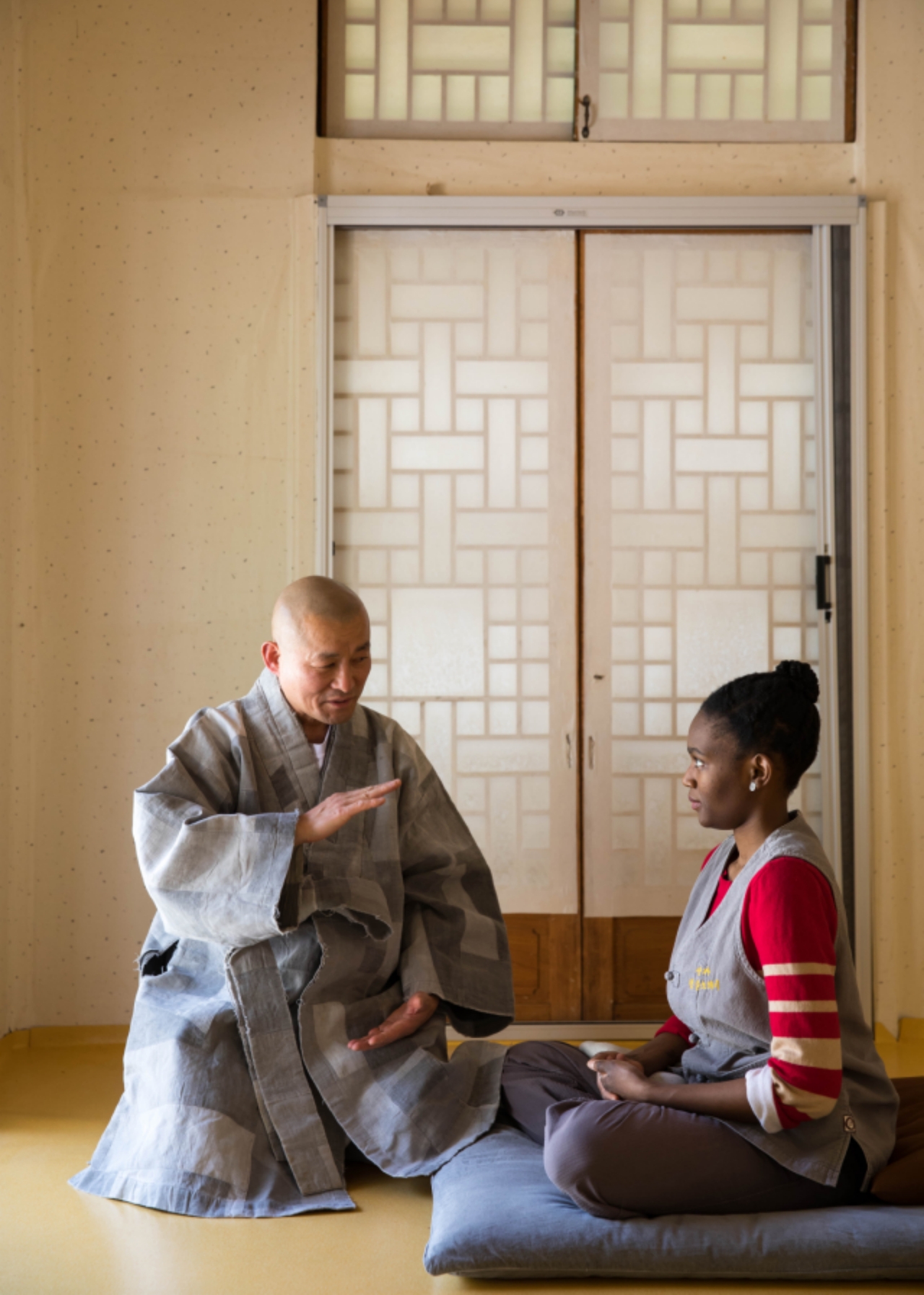 [Herald Economy — Reporter Kim Myeongsang] “Focus only on the numbers. One on the inhale, two on the exhale. Don’t leave gaps — follow the numbers closely.”
The monk’s calm voice settled around us. It was time to learn Seon (Zen) meditation. I lowered my gaze and tried to steady my breath, but a fog of errands rolled in. When I forced my attention onto the floor pattern to quiet my thoughts, the number 3 appeared — then, bizarrely, a seagull. Dizzy thoughts clouded my mind. The monk called this 客塵煩惱: fleeting afflictions that cling like outside dust.
“Our minds never sit still. Just as muddy water clears when you let it settle, a turbulent mind must calm before you can meet the true self inside.”
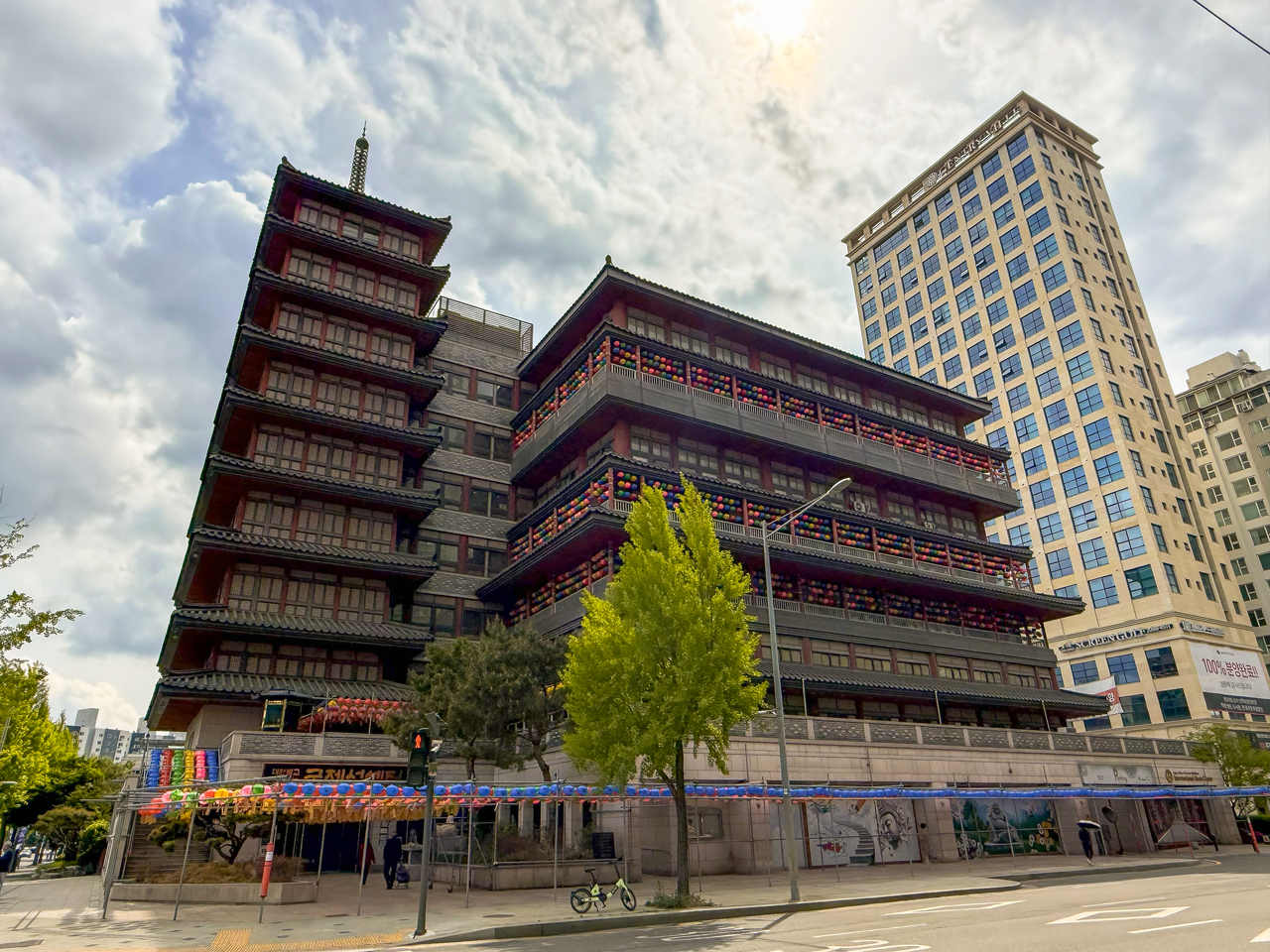 The International Seon Center, run by the Jogye Order of Korean Buddhism, is a downtown retreat for the mind. The seven-story building rises in the heart of Mok-dong, Seoul, its exterior calling to mind the lost Silla-era nine-story wooden pagoda of Hwangryongsa. Tucked between taller structures, it feels both incongruous and strikingly present.
Opened in 2010 to share Buddhist practice and culture globally, the center stacks the open layout of a traditional temple vertically: the information desk is on the first floor; the main halls sit on the second and fourth; the dining hall is on the third; guest rooms for temple-stay participants are on the fifth; and the sixth and seventh floors are private monk quarters. Functionally, it operates much like any countryside temple.
I visited just before Buddha’s Birthday, and colorful lanterns decorated the entrance. I joined the “Minimalism in Temple Stay” program — a one-night, two-day experience in a single room that focuses on meditation and private reflection.
 My room exceeded expectations: fan, air-conditioning, private shower and toilet, desk, outlets, and bedding — on par with a business hotel. As of May, the one-night program runs 100,000 KRW (about $75), covering an intro Seon lecture, two meals, and lodging. Considering today’s prices, it felt very reasonable.
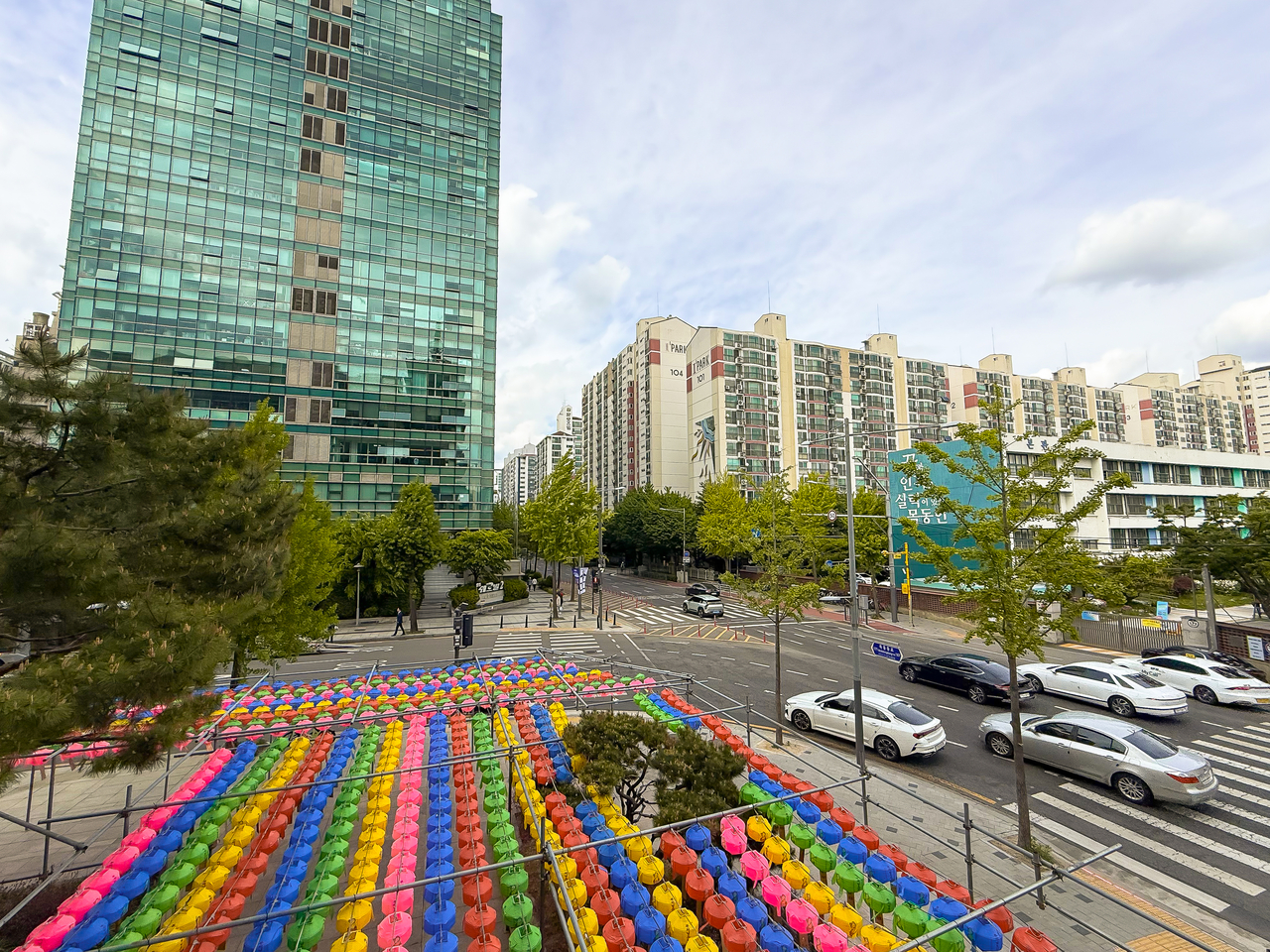
Changing into training clothes and looking out the window, I saw apartments, a school, and cars — cafes and convenience stores were right outside. The vibe was far removed from a mountain temple. Crossing one street felt like stepping out of the secular world; a fresh, odd sensation washed over me. Where else does so much change just a block from ordinary life?
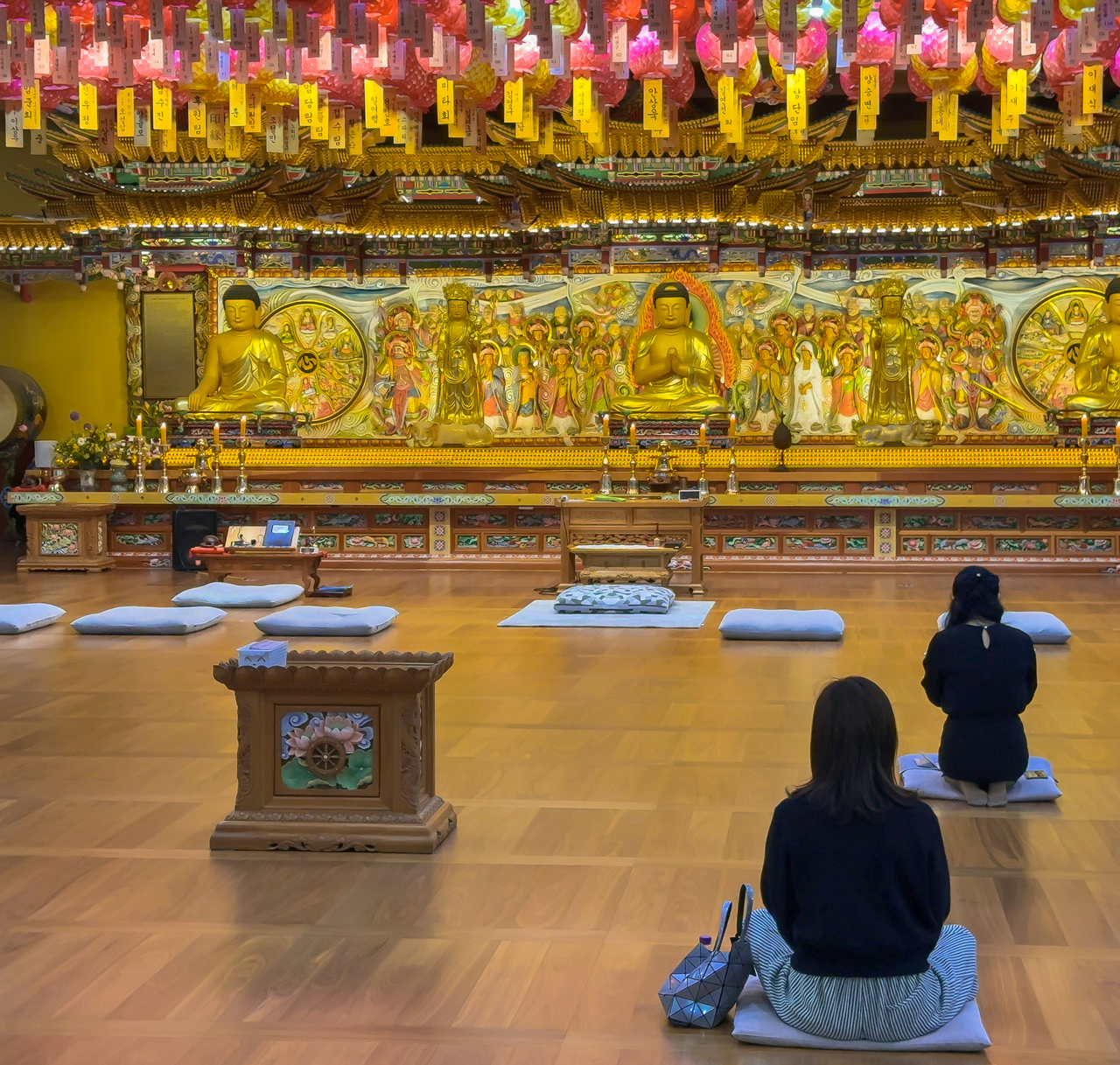 The temple-stay rules mirror those at mountain temples. The day begins at 4:10 a.m. with the dawn service, and lights-out is at 9 p.m. The building locks from 10 p.m. to 4 a.m. — partly for security, but also to enforce a structural break from the outside world. Unlike forced isolation, chosen solitude felt oddly comforting.
After orientation and a bow in the second-floor main hall, dinner was served at 5 p.m. The dining hall runs buffet-style so guests can choose portions. At the temple, eating is practice in itself: you acknowledge the labor behind each dish and leave nothing behind.
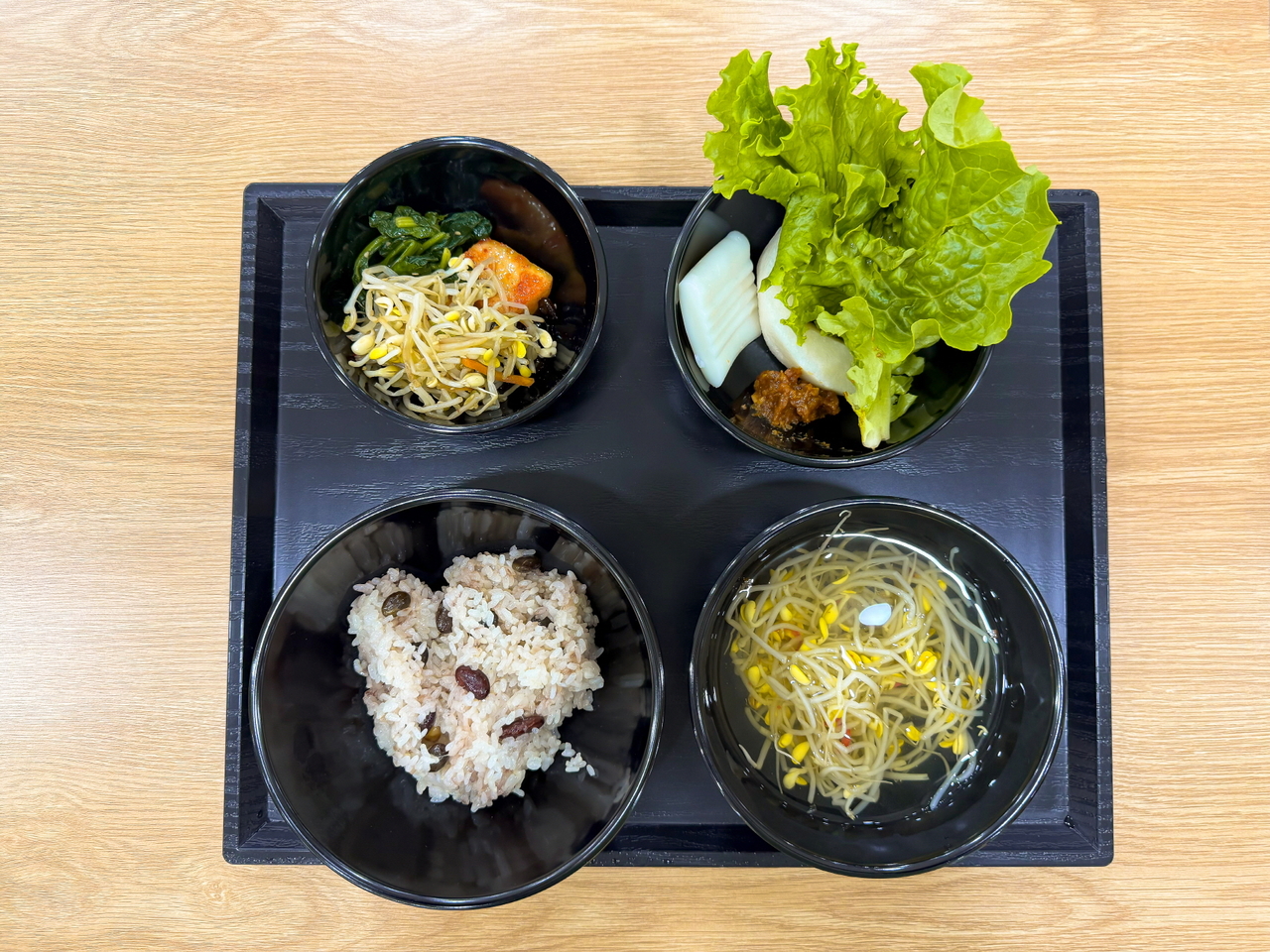 I worried I’d be picky, but the meal won me over. Bean sprouts, spinach, cubed radish kimchi, lettuce, soybean paste, and rice cakes made a clean, mild spread — I cleared my bowl. With a mostly vegetable meal, I felt full but easy on the stomach. I pressed my bowls together in thanks. When was the last time I felt gratitude for a meal rather than gripe about a side dish?
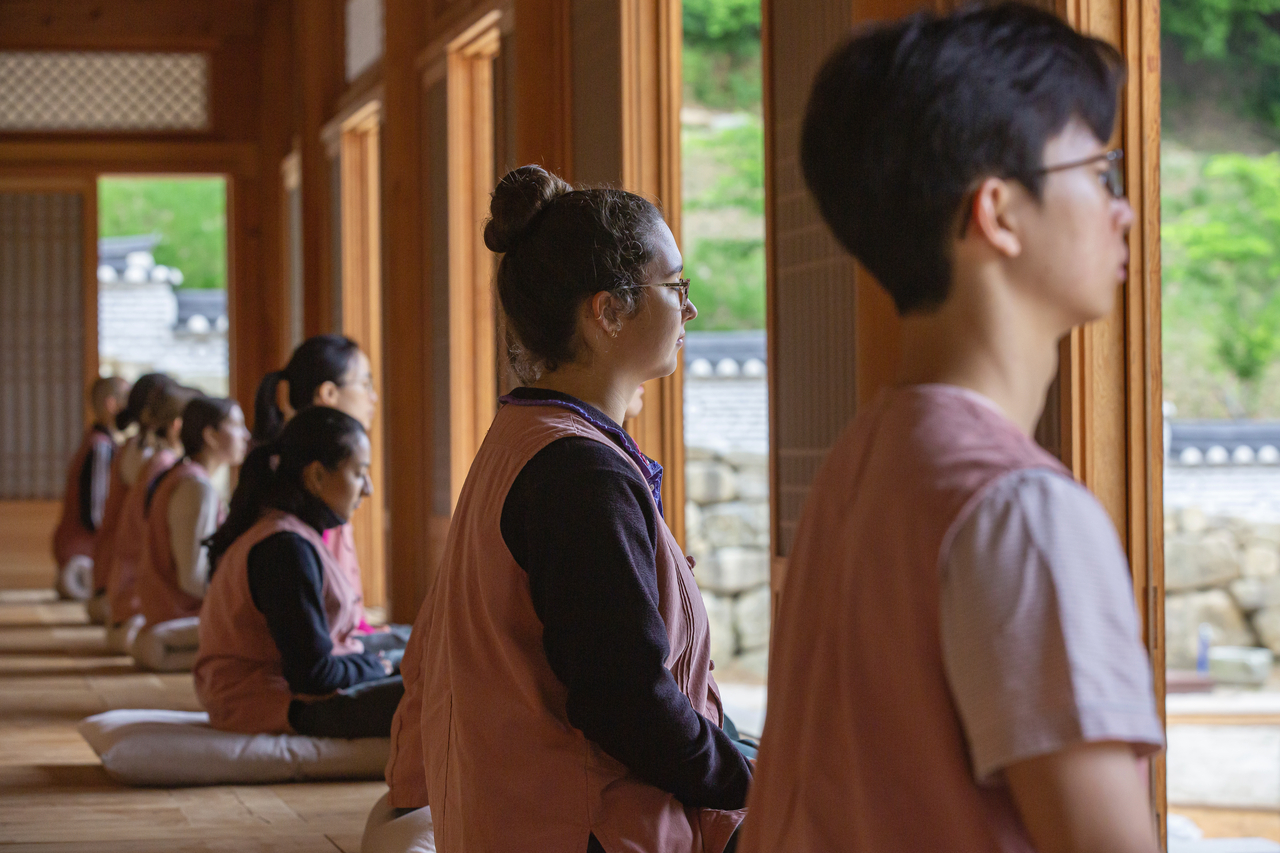
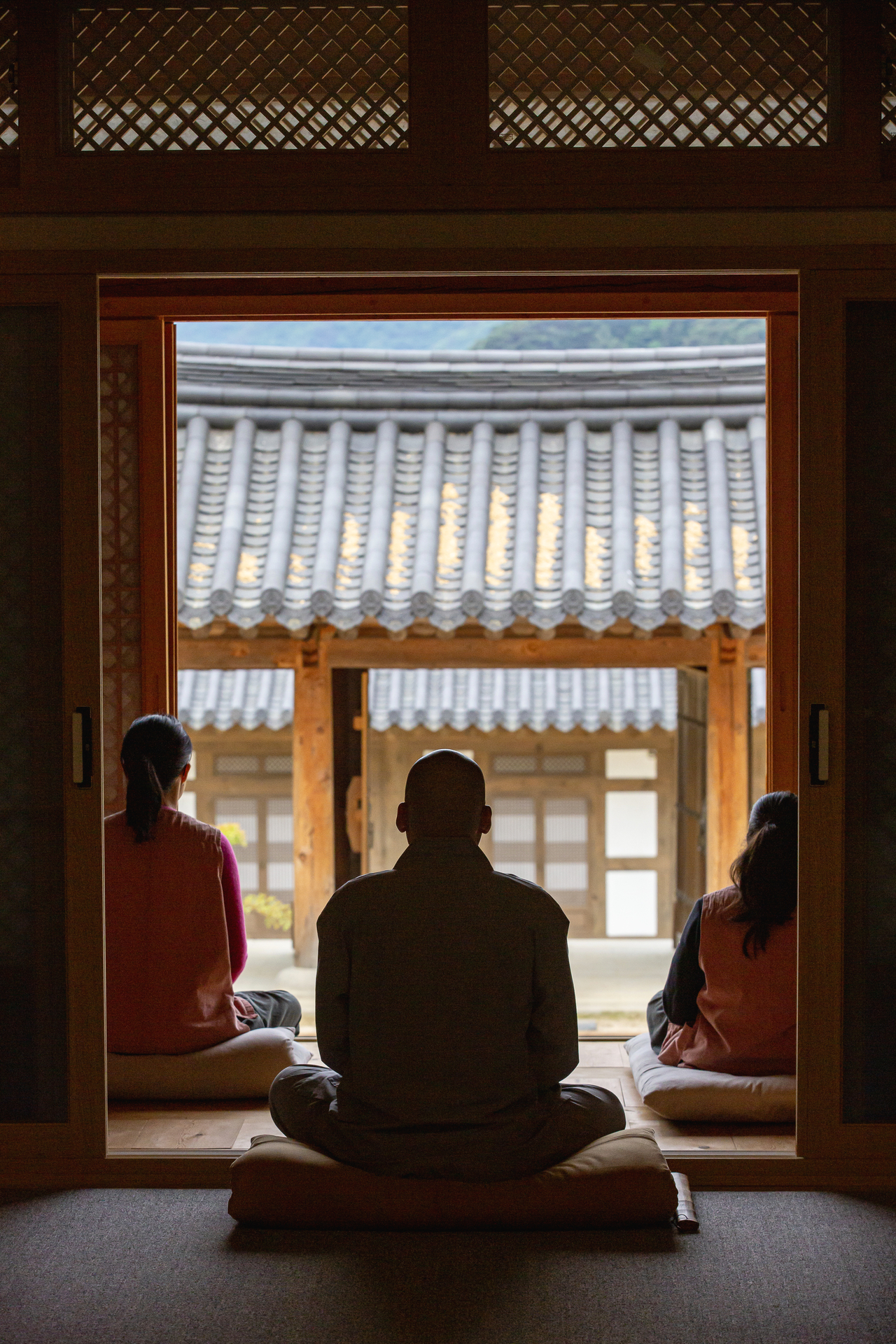 After evening service came the heart of the stay: Seon meditation. Venerable Jin, the temple-stay guide, stressed that Buddhist meditation isn’t just relaxation or zoning out — its goal is awakening. “Awakening isn’t grand; it’s knowing your mind as it is.”
He explained that our core nature is pure, but layers of affliction, unconscious traces, and attachment to “I” hide it. Meditation is the process of dusting off the mind to meet who you really are.
“Follow your breath as it is. Say ‘one’ on the inhale, ‘two’ on the exhale. Count from one to nine, then return to one.”
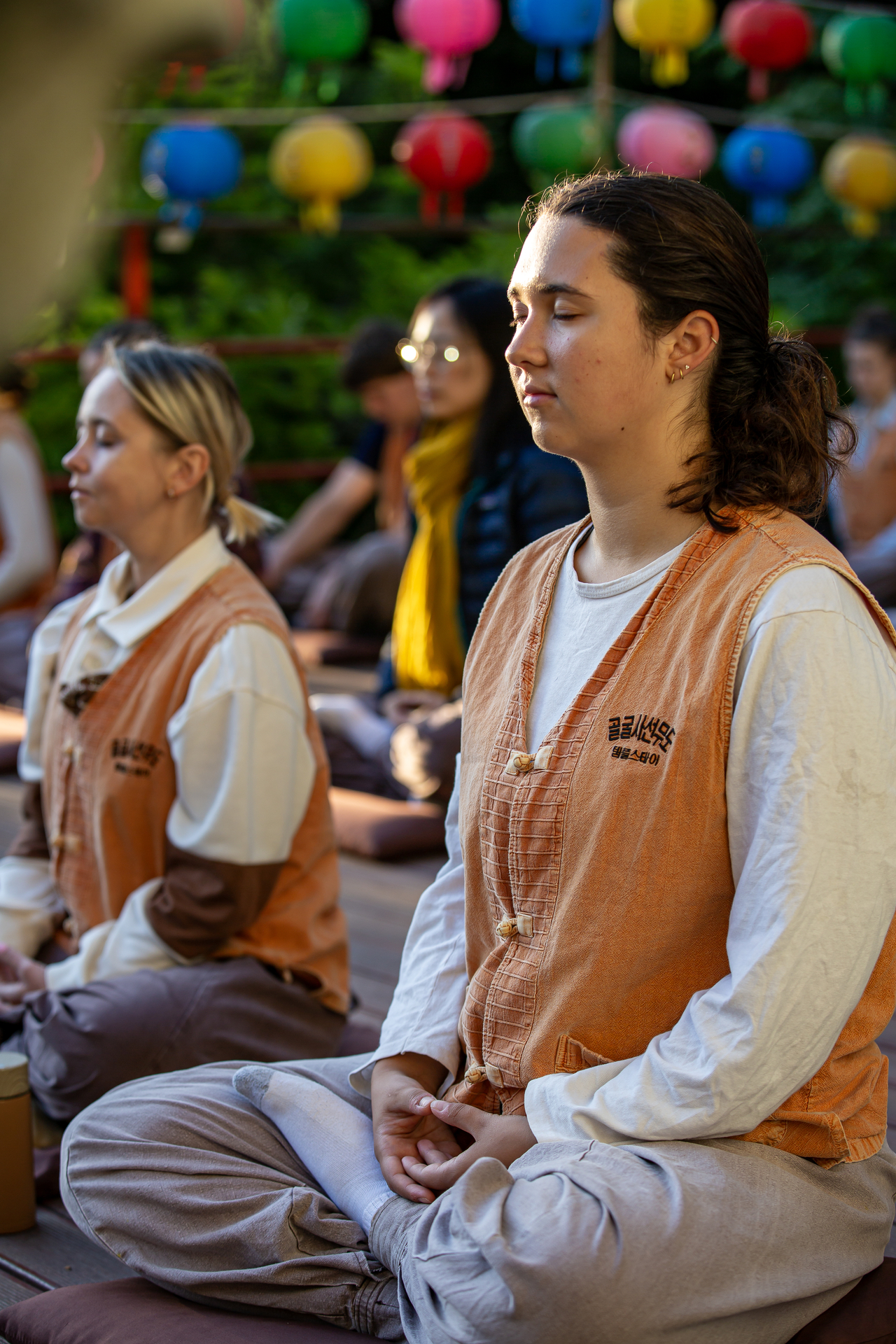
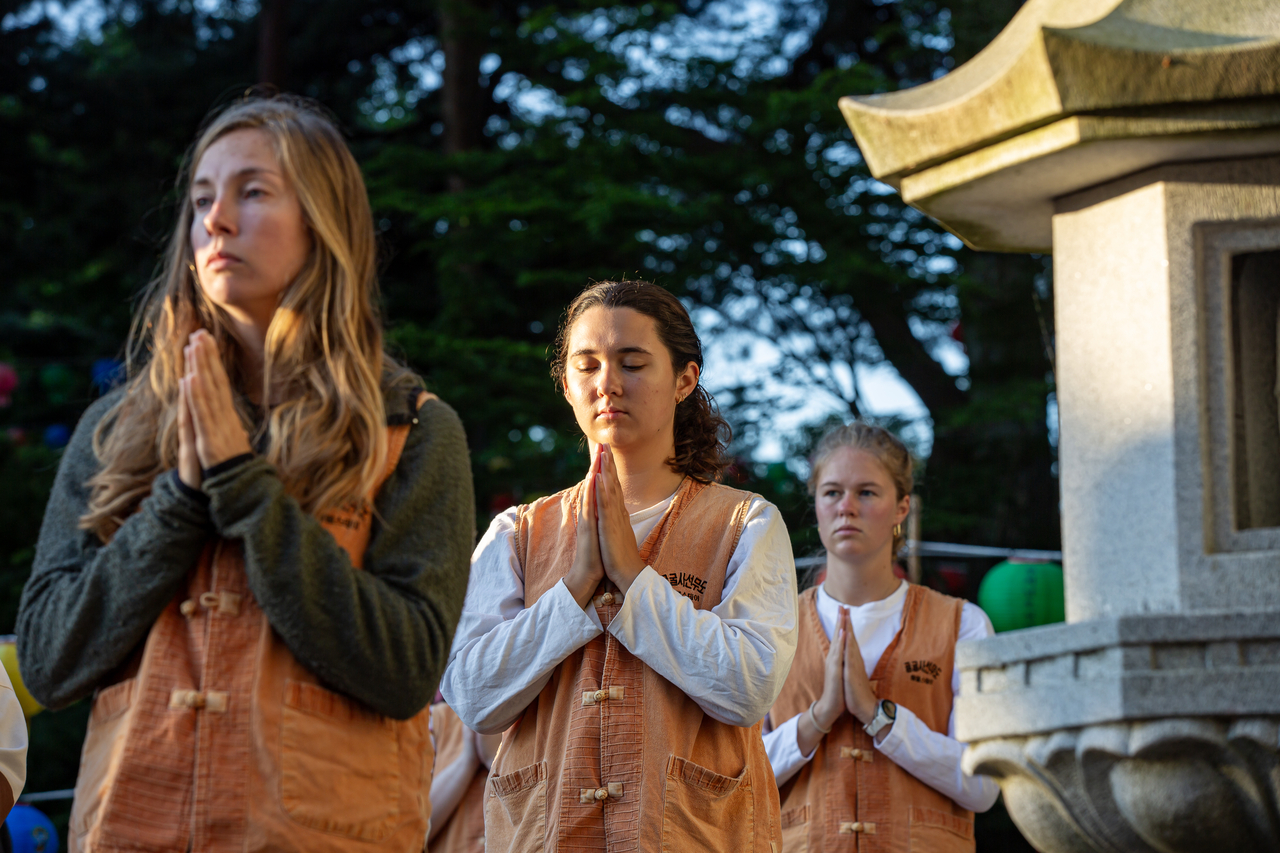 The monk led us in 수식관, a breath-counting practice that pairs numbers with breath to settle a scattered mind and help you notice when you’ve drifted.
“Don’t close your eyes. Drop your gaze about a meter ahead and stay clear and alert. Count and focus only on the breath. Three minutes.”
The singing bowl rang. Its metallic tone spread slowly and softly, opening a door to another space. But it wasn’t easy. Thoughts surged in, and just when I felt focused, my mind slid away.
The Buddhist scripture Inwanggyeong (仁王經) says one thought contains 90 instants, and each instant holds 900 moments of arising and passing. The mind constantly appears and disappears. By that count, the mind’s switch flips more than 81,000 times in the blink of an eye.
So the person I was a moment ago isn’t the same as now. After tens of thousands of tiny changes, we’re always new. Because we’re in constant flux, there’s no fixed “I.” Buddhism urges us to see how useless attachment is and let it go.
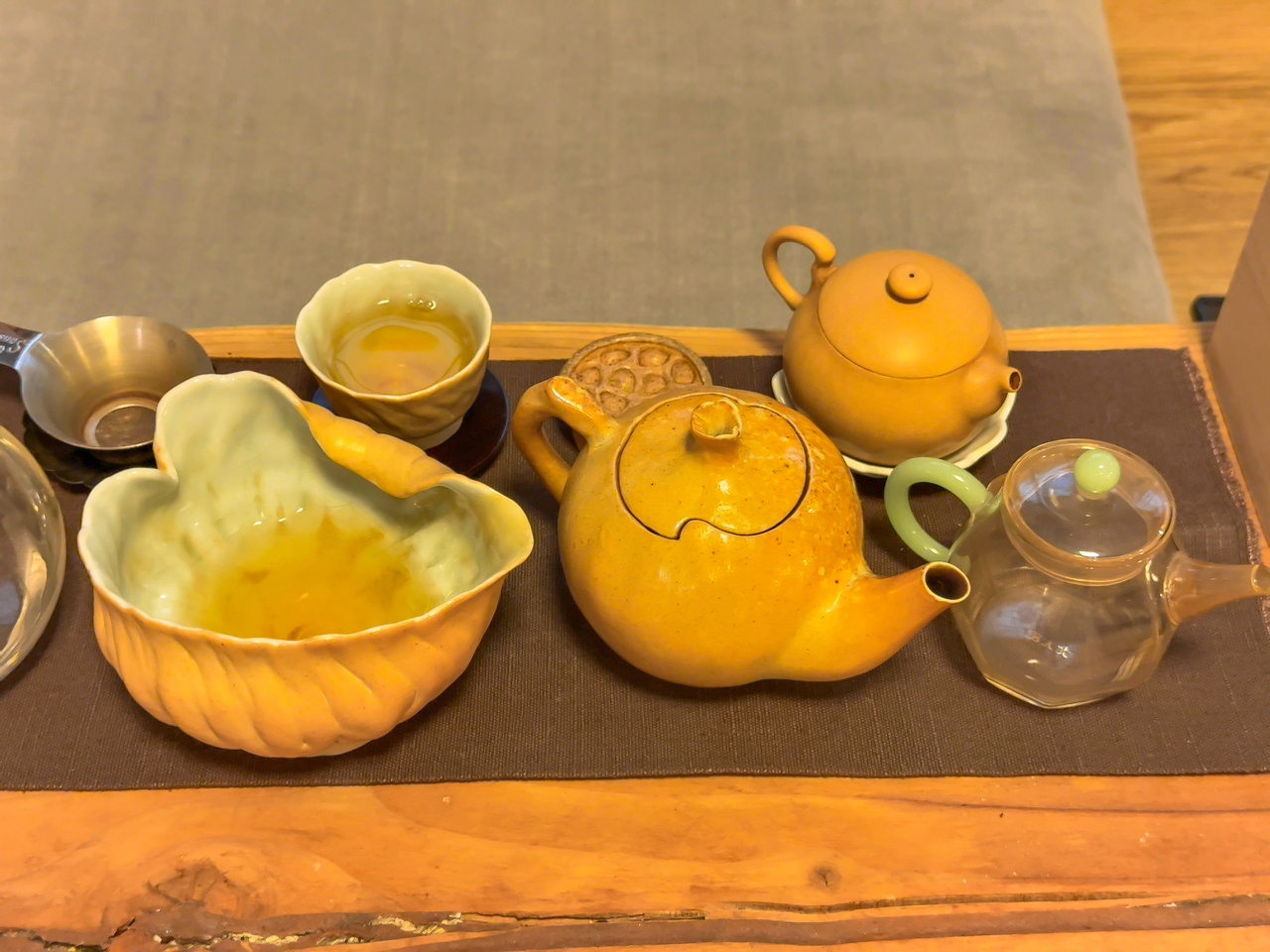
 The next morning I woke, hoping for a different self — but my mind was still full of to-dos. Even during morning tea with the monk, my thoughts drifted. He pointed out that most people don’t live in the present; they move through life and then die.
“Dragging the past forward and hauling the future into the present keeps you from being fully here. That’s delusion. Because we carry those burdens, we can’t be wholly in any moment. Letting go takes practice. Today, be a bit more present than yesterday.”
 After tea, all programs wrapped up by 10 a.m. Back in the city, time rushed by as if nothing had happened. Work continued, and anxiety about the future clouded the present — a classic case of delusion. At home, instead of turning on the TV, I sat down for Seon meditation.
“The mind never stays still. When thoughts arise, don’t follow them. Return to your breath and counting. The more you repeat this, the stronger your ability not to follow them becomes.”
I remembered the monk’s words, and though distractions still came, a short stillness left my head clearer and my heart lighter. For that while, everything else faded. That was enough. I would likely drift back into affliction, but there was no need to worry about a future that hadn’t arrived.
 One gift of travel is experiencing newness. Stepping out of your routine gives you distance to see your life from a step back. Temple-stay programs can help people rediscover meaning through Buddhist practice amid modern life’s fatigue.
The International Seon Center lets you enjoy temple practice without trekking into the mountains. It sits on a metro line yet offers psychological distance while minimizing disruption to daily life — an odd, appealing kind of retreat. The center runs programs like digital detox, healing meditation, and Seon meditation. Reservations are available through the Temple Stay official website.










Most Commented