
Translation result
[JoyNews24 Reporter Lee Mi-young] [Park Seong-gi’s Walking Travels]「4」 Reading Seoul on Tiptoe⋯Walking Haebangchon (Part 1) — continued
Haebangchon today, seen on the descent
I head back out to the Haebangchon five-way intersection and set my course for Sinheung-ro. From the intersection, the road that slopes down toward Gyeongridan in Itaewon is Sinheung-ro. The view coming down this street feels nothing like the one I saw climbing up toward Sinheung Market. If the uphill path had calmed my breathing, the downhill stretch loosens my shoulders and lightens my step.
![Sinheung-ro scene [Photo=Park Seong-gi]](https://contents-cdn.viewus.co.kr/image/2026/04/CP-2023-0079/image-d524c2fe-7f23-43c3-90ac-761ed20c6a71.jpeg)
My feet suddenly feel lighter, and my eyes drift slowly down the hill. Every alley wedged between the stacked houses holds traces of everyday life. Village buses and cars thread through the narrow streets, and people weave along the sidewalks. This neighborhood once sheltered many U.S. service members and civilian staff who lived off-base—hence the early presence of American-style pubs and restaurants.
Today, cafes, wine bars, and spots that draw a younger crowd line the street. At the cafés on the gentle slope, people sit facing the road; foreigners are easy to spot. Lines form outside famous bakeries, burger joints, and pasta places. For a moment, you could swear you’re in the middle of a foreign city.
![Sinheung-ro scene [Photo=Park Seong-gi]](https://contents-cdn.viewus.co.kr/image/2026/04/CP-2023-0079/image-fabe9016-7d12-43cc-8584-a45e37a96c65.jpeg)
A colorful little haven for young people
Walking this street, you rarely see two people dressed the same. Clothes, strides, attitudes—everyone’s different. These aren’t trend followers; they’re self-stylists, confidently showing who they are. The neighborhood’s appeal isn’t just the quirky reworked buildings. It’s the people who casually wear their personalities on the street. Those differences don’t clash—they become one cohesive scene. This feels like a small liberation for today’s youth. Hallyu didn’t start somewhere far away; it’s already here, quietly flowing through the ways people show themselves in these alleys. After people-watching and café-hopping, I find myself at Haebangchon’s entrance and pause.
![Earthenware at the Haebangchon entrance on Sinheung-ro [Photo=Park Seong-gi]](https://contents-cdn.viewus.co.kr/image/2026/04/CP-2023-0079/image-c781de70-0882-4cfd-9b71-45179eb4fa5a.jpeg)
Where my steps stop, the story continues
Looking back down the hill, I take in more than just worn alleys. I catch the lingering warmth of lives that leaned against this slope—the people who were pushed out, who returned, and who fought to rebuild. Seoul reinvents itself constantly, but Haebangchon holds time that won’t simply wash away. It still tells its story, slowly. Walking here is not just touring a neighborhood; it’s reading the scars of an era and the new lives that grew from them. The road ends, but the time it leaves inside you lingers.
![Scenes of Sinheung-ro in Haebangchon. [Photo=Park Seong-gi]](https://contents-cdn.viewus.co.kr/image/2026/04/CP-2023-0079/image-c7feb76e-42c7-472b-9579-946a4aab83cc.jpeg)
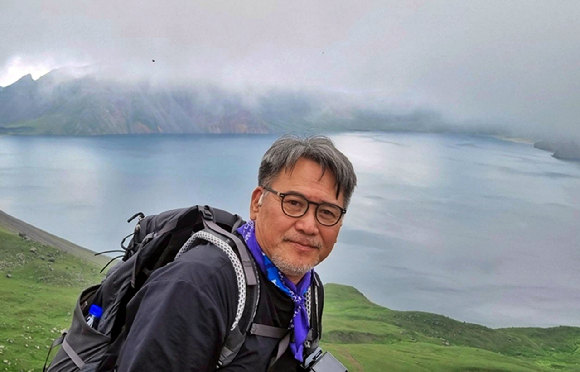
◇ Park Seong-gi is a free (walking) traveler. After the road caught his eye amid the routines of daily life, he slung on a backpack and began walking South Korea’s paths. The scenes he met on the road spoke to him, and the personal stories he encountered made him pause. While walking, he has re-seen nature and chronicled the joy of slowing life’s pace. He gathers the solace the road offers and the warm looks of fellow walkers, then shares them with others. His books include The Joy of Walking and The Joy of Walking — The Second Story.










Most Commented