
Overtourism Crisis: How Korean Dramas are Transforming Kamakura into a Tourist Hotspot
Daniel Kim Views
Translation result
Kamakura—the iconic Japanese town immortalized by the anime ‘Slam Dunk’—is once again buckling under a wave of tourists.
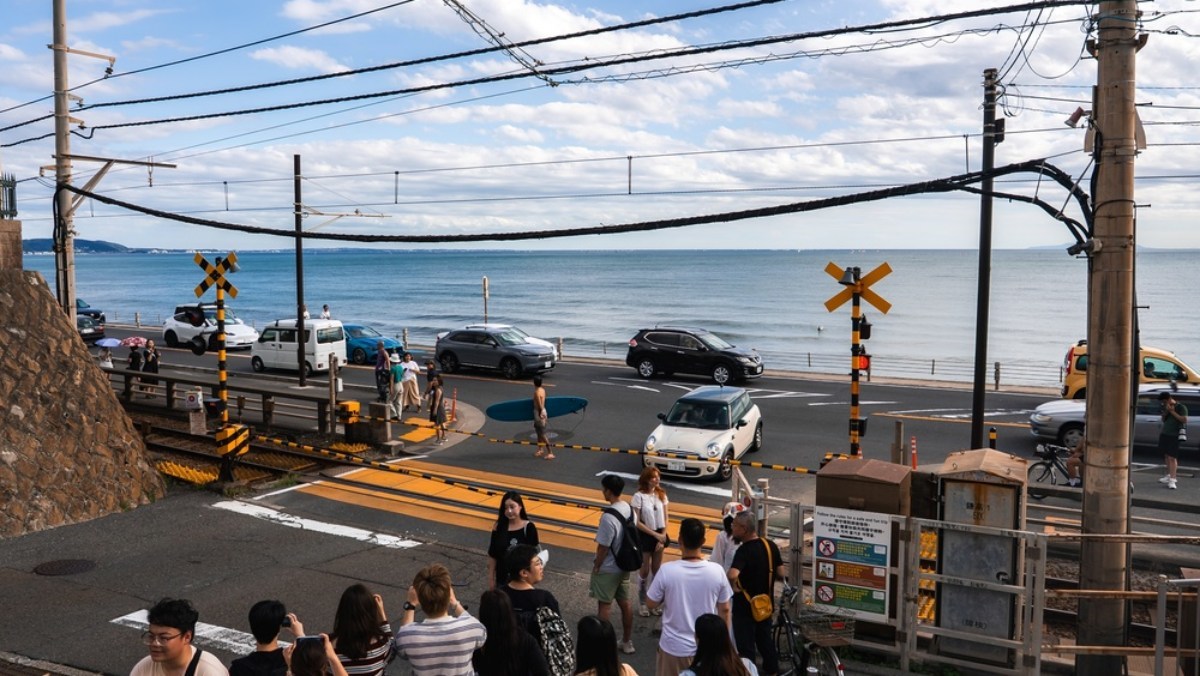
This time, a smash-hit Korean drama has sent fans flocking to its filming spots. Locals, already strained by years of overtourism, say they’ve finally had enough.
◇ Kamakura buzzes again after ‘Slam Dunk’ — Korean drama fuels fresh surge
On the 31st of last month, The Asahi Shimbun reported a new wave of overtourism in Kamakura. \”Kamakura already struggles with too many visitors,\” the paper wrote, \”but a recent Korean drama has turned another site into an overcrowded attraction.\”
The Netflix series that kicked off this latest influx, ‘Can This Love Be Translated?,’ premiered globally in January. It follows interpreter Joo Hojin (Kim Seon-ho) and international star Cha Mu-hee (Ko Yoon-jung) through a cross-cultural romance, showcasing stunning locations from Japan to Italy and Canada.
Kamakura, in Kanagawa Prefecture, plays a prominent role in the show. Quiet spots such as Gokurakuji Station and Goryo Shrine are featured as key filming locations. Immediately after the series debuted, fans from South Korea and across Asia — including Indonesia and Myanmar — began making pilgrimages. The railroad crossing known as the place where the leads first met now overflows daily with people posing for photos to post on social media.
◇ \”Our quiet street is a tourist spot?\” — Residents reach a breaking point
The trouble is that the new hotspot sits inside an ordinary residential neighborhood with none of the infrastructure to handle tourists. Visitors reenacting scenes swarm the narrow alleys and the area around the tracks, disrupting everyday life for people who live there.
What used to be a tucked-away, locals-only corner now hums with tourist noise from early morning until late at night. The paper reports that foreign visitors crowd the railroad crossing right next to homes, stoking rising complaints. Tourists routinely trespass onto private property for photos and stand in the road, blocking residents’ vehicles.
◇ Overtourism repeats itself — the ‘Slam Dunk’ precedent
Kamakura residents are painfully familiar with this pattern. For decades, the tracks in front of Kamakurakokomae Station—made famous by the anime ‘Slam Dunk’ opening—have been treated as a must-see spot by fans worldwide, and the area has long suffered from overcrowding.
Safety is the biggest concern. People have run into the street or edged dangerously close to the tracks to snap photos with passing trains. The crush of visitors, combined with a shortage of public restrooms, has led to public urination and serious hygiene issues. Litter, unauthorized filming and persistent noise have become an accepted, unwanted part of daily life for residents.
Because of that history, Kamakura city officials moved quickly to put measures in place near the Korean drama’s filming spots. They’ve installed multilingual signs and appealed to visitors to observe basic etiquette, but those efforts have so far been unable to stem the surge of people.
◇ The phrase ‘tourist pollution’ takes hold — urgent solutions needed

As the situation has worsened, locals have adopted the term ‘kanko kogai,’ a harsher take on overtourism that translates roughly as \”tourist pollution.\” The term suggests visitors are behaving like pollutants—damaging residents’ lives and the environment rather than bringing benefit.
The Financial Times reported last year that disorderly behavior by some tourists has provoked strong backlash across Japanese society. Residents say they can’t even relax in front of their homes anymore and are exhausted from confronting strangers’ camera lenses day after day.
Kamakura city began implementing serious tourism policies in 2017. Since 2023, officials have increased larger signs prohibiting filming around residential areas and deployed security personnel to enforce order. But the Korean drama’s runaway popularity keeps creating new hotspots, leaving gaps that local administration struggles to cover.
Check your daily fortune report — how will your day go?












Most Commented