
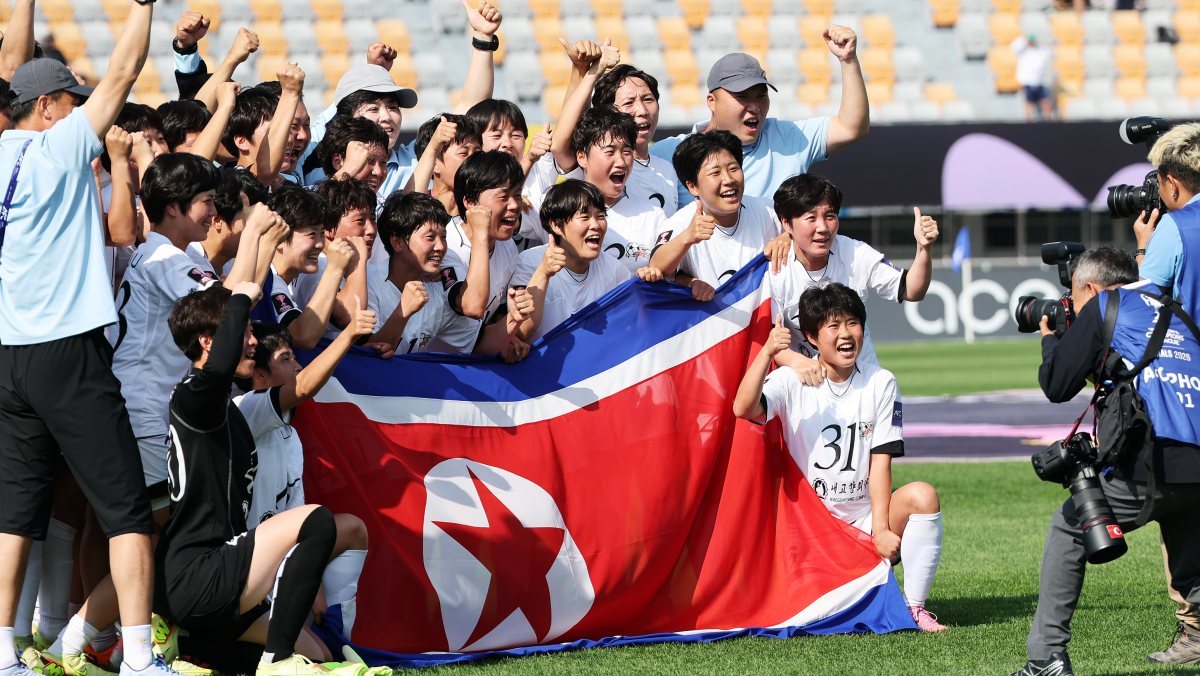
A North Korean flag flew over the Suwon pitch. As the final whistle sounded, players from North Korea’s Naegohyang Women’s Football Club flooded the field and embraced. In Suwon, a new chapter in Asian women’s club soccer was written: Naegohyang toppled Japanese powerhouse Tokyo Verdy Beleza to become the first North Korean club to win the AFC Women’s Champions League.
On May 23 at Suwon Sports Complex in Gyeonggi Province, Naegohyang beat Japan’s Tokyo Verdy Beleza 1-0 in the 2025-2026 AFC Women’s Champions League final to claim the title. The victory made Naegohyang the first North Korean club to lift the trophy in the competition’s history.
Ironclad defense and a captain’s decisive strike
Naegohyang set up a compact defensive block and relied on quick counters. They absorbed Tokyo Verdy’s high-powered attack with a five-player back line and looked for openings. In the 43rd minute, captain Kim Kyong-yeong finished a counter: she collected a pass from deep, beat the goalkeeper in a one-on-one and drilled a precise shot into the net. The opening goal, scored while Naegohyang had been under sustained pressure, sent the crowd into a roar. Naegohyang stood firm through continued second-half pressure and held the one-goal lead until the final whistle.
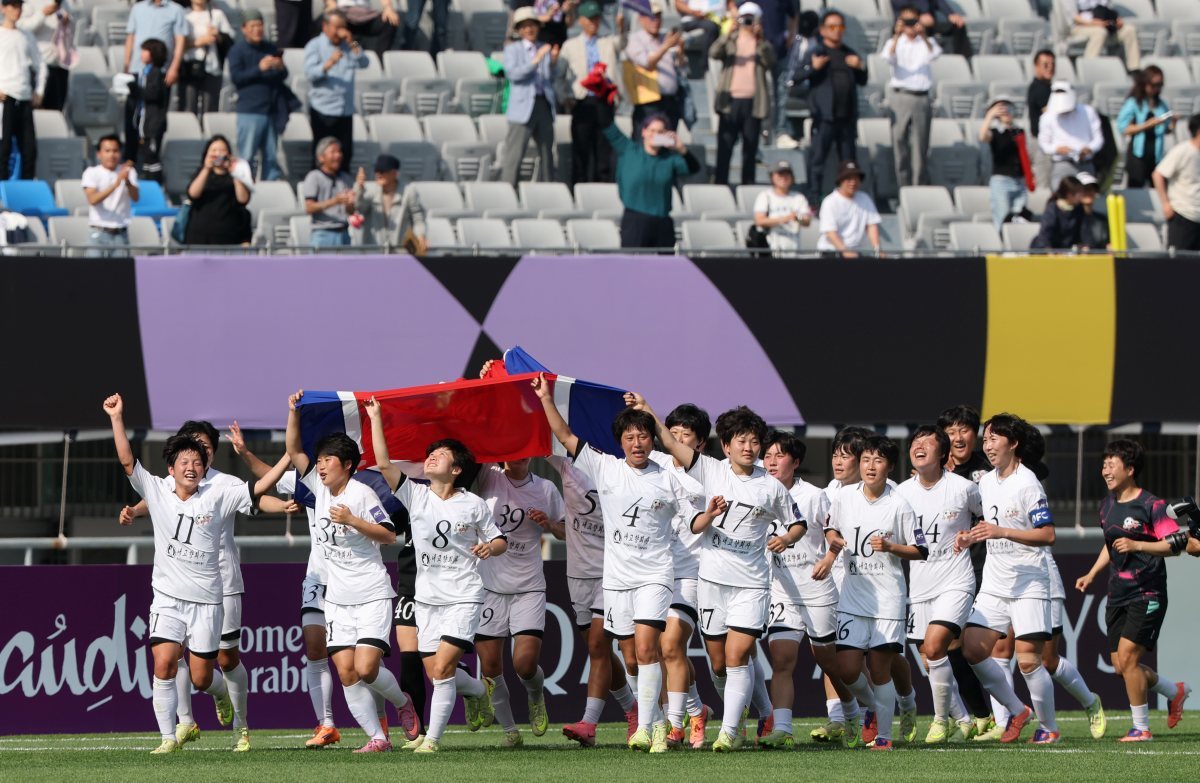
When the victory was confirmed, coach Ri Yu-il sank to his knees on the pitch and wept. Players hoisted him in celebration and, after returning to the bench, carried their joy into the stands, running with a large North Korean flag. Supporters from both the North and South cheered as the team paraded the flag overhead. Attendance for the final was recorded at 2,670, down from roughly 5,700 at the semifinals. Banners from civic groups welcoming the team were visible around the stadium.
MVP Kim Kyong-yeong and a $1 million prize
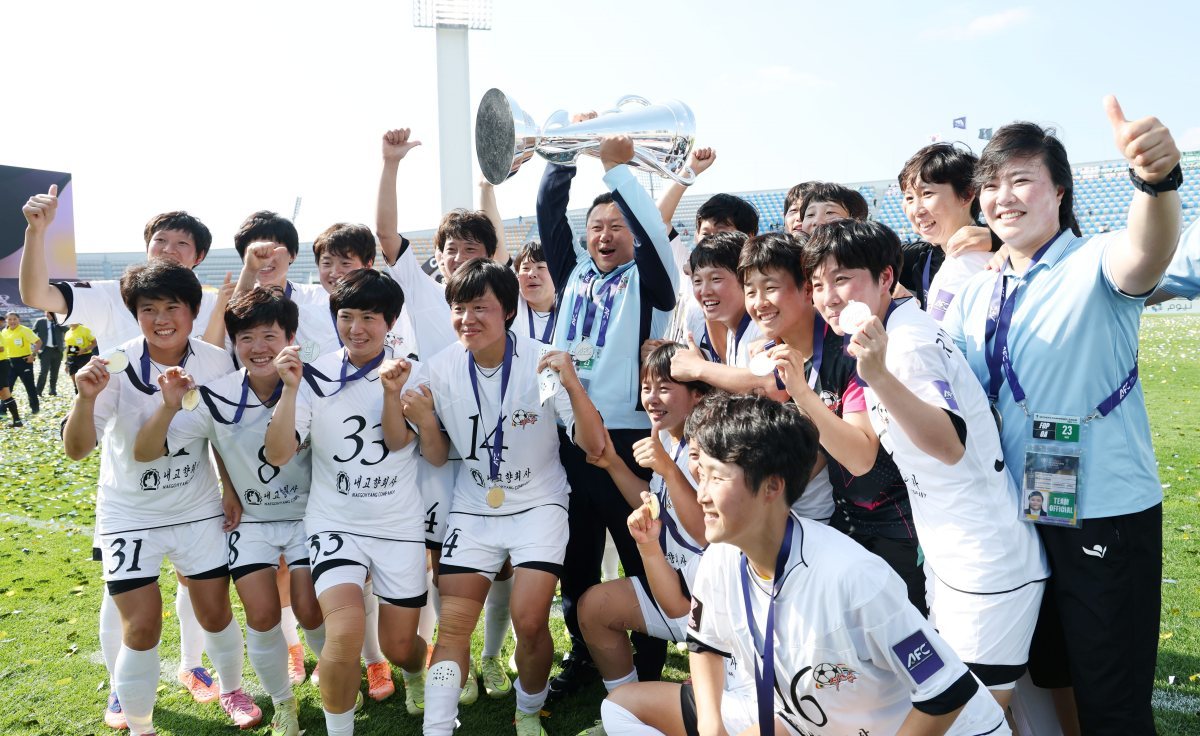
Naegohyang, which reached the final by beating South Korea’s Suwon FC Women 2-1 in the semifinals on May 20, earned the tournament’s top prize of $1 million (about 1.52 billion KRW). Tournament MVP honors went to captain Kim Kyong-yeong, who delivered winning goals in both the semifinal and the final. After the awards ceremony, Kim said months of hard training made those key goals possible and called the goal that beat a strong Japanese side the highlight of the tournament. The team paused for commemorative photos before leaving the field.
An eight-year return to the South and the complicated reality of inter-Korean sports exchange
The match carried added significance as North Korea’s first official club visit to South Korea in eight years. Sports exchanges had been suspended after North Korea declared inter-Korean relations hostile in 2023. Kim Bo-mi, director of the North Korea Research Office at the National Security Strategy Institute, said the tournament offered a limited channel for contact after the break but warned that, without structural changes, sports alone are unlikely to produce diplomatic breakthroughs or broader cooperation.
The actual disbursement of the $1 million prize to Naegohyang has become a key question. With UN Security Council and U.S. sanctions on North Korea still in effect, officials must determine whether tournament prize money falls under sanction rules. In 2017, the Japan Football Association refused to pay North Korea’s prize money at the East Asian Football Federation (EAFF) tournament citing sanctions. North Korean delegations also faced restrictions at the 2018 PyeongChang Winter Olympics and the 2024 Paris Olympics, where athletes were prevented from receiving electronic devices provided by the IOC and other bodies.
Who is Naegohyang Women’s Football Club, now atop Asia?
Despite a relatively short history on the North Korean women’s soccer scene, Naegohyang has emerged as a rising power that challenged the country’s traditional sports institutions. The club developed under a distinctive corporate sponsorship model rather than as a purely state-run team.
Naegohyang officially formed around 2013. A major North Korean conglomerate, Naegohyang General Company, fully funds the club’s operations. The company, which produces cigarettes, clothing, foodstuffs and electronics, has invested heavily in sports. In a league long dominated by state-run military or police teams (like 4.25 and Amnokgang), a club that openly carries a corporate name and receives independent corporate funding is unusual. Naegohyang General Company built modern training facilities and player housing in Pyongyang early on, creating a professional environment where athletes can focus solely on their sport.
From the outset, Naegohyang invested in a long-term youth development program. The club scouted talented youngsters nationwide and developed them within its own youth system. That youth-first strategy paid off quickly: by the late 2010s Naegohyang began to stand out in domestic competitions such as the top-flight “First Class Football Federation” tournaments, rising to parity with established powers. They combined North Korea’s traditional emphasis on organization and fitness with refined tactical movement and detailed game plans to become a top team domestically.
The team’s standout player is forward Kim Kyong-yeong. She progressed through age-group national teams and has been a fixture with the senior national side, known for quick runs, composure in the box and clinical finishing. With experienced coach Ri Yu-il—who has led North Korea’s youth and senior women’s teams—at the helm, the squad’s tactical execution reached a new level. Ri’s meticulous opponent analysis and pragmatic game plans ultimately propelled Naegohyang to the continent’s top club title.












Most Commented