
Translation result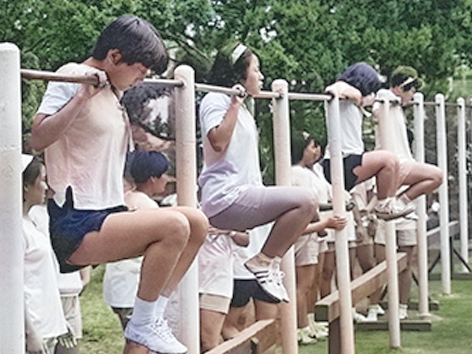 President Donald Trump issued a proclamation naming May National Physical Fitness and Sports Month and reviving the President’s Fitness Award in schools. The move builds on last year’s executive order that reestablished the Presidential Council on Sports, Fitness, and Nutrition. The U.S. school fitness test, introduced in 1956, was effectively phased out in 2013 during the Obama administration, when policymakers shifted emphasis from competitive testing to recreational and lifelong fitness. South Korea followed a similar trajectory. Introduced in 1971, its national Physical Fitness Test involved students from fifth grade through 12th grade and was factored into college admissions starting in 1972. Officials maintained it as the national fitness assessment until abolishing it in 1993 amid safety and fairness concerns.
National fitness tests have been created and reshaped to serve political and social purposes. In the industrialization era they helped maintain a productive workforce; during the Cold War they supported efforts to strengthen military readiness. After the Cold War, fitness testing was promoted as a public-health strategy to lower obesity rates and increase physical activity. But as public interest moved from institution-driven athletics to individual exercise and a wider variety of sports, uniform, one-size-fits-all assessments lost relevance. That shift helps explain why critics characterize President Trump’s effort to revive the fitness award as nationalistic.
Still, there is another pressing concern about today’s children. Nationwide, 312 elementary schools ban students from using the playground at lunchtime. In Busan that figure reaches 34.7%, and in Seoul it is 16.7%. Some schools have closed their fields entirely in response to safety fears and complaints about student exclusion. Residents who prefer apartment complexes centered on elementary schools nevertheless file noise complaints about school field-day events. Even if the state no longer manages children’s fitness as it once did, we must not neglect their physical activity. We should ask what is gained by shutting playgrounds and steering students into private academies. Even if we do not restore a formal national fitness test, we ought to preserve at least minimal space and time for children to run and play.
- [Exclusive] Prosecutors assigned to Samsung semiconductor lines to strengthen expertise in investigating technology leaks
- “Eat pizza, then go to church” — Packed New York cathedral: Gen Z is reshaping American churches [Park Si-jin’s Global Pick]
- Owners left frustrated: “If I report it, the loss is just 2,000 KRW (approximately $1.50)”
- Will July’s special housing allocations and assessed market values be adjusted? “Additional listings could appear in Seoul’s Gangnam three districts” [KoJubu]
- Korea’s version of SpaceX moves toward reality…Hanwha to acquire additional KAI shares by year-end [Biz-Plus]
- Home-price outlook weakens under regulation…but Greater Seoul still anticipates gains
- No drugs, no vaccine — respiratory failure and organ damage reported; suspected human-to-human transmission raises global alarm
- [Exclusive] Science talent awards budget cut from 2.1 billion KRW (approximately $1.58 million) to 1.6 billion KRW (approximately $1.20 million)…“We can’t even cover judges’ travel expenses”
- 2028? 2029? When will wartime operational control transfer? Lee: “We must be ready to operate independently” [Lee Hyun-ho’s Military! Talk]
- The fifth-generation indemnity plan reduces coverage for mild cases and lowers premiums; insurers plan to launch it on the 6th












Most Commented