
Translation result
When I first met Shin Geun-young, CEO of Chon, I expected a blockchain entrepreneur; instead I felt I was speaking with a humanities professor. During a roughly one-hour interview, he ranged freely across eras and continents while discussing his business — beginning with Sewall Wright’s 1922 paper on coefficients of kinship, then the 1977 ABC miniseries Roots that drew 100 million viewers, Joseon-era funeral rites that required mourning dress up to the eighth degree of kinship, the 2012 acquisition of Icelandic genomics firm deCODE by Amgen for about $415 million, and even the human–AI romance depicted in the film Her — all without consulting a single search.
His answers carried the calm authority of long experience. The paradox is striking: the more someone knows, the harder it often is to act, because they see both opportunity and limitation. A richer mental database tends to generate more reasons why something might fail. Yet this first-generation IT entrepreneur launched his twentieth company around a distinctly Korean relational concept called Chon. It was an impressive choice.
Shin began working in software in 1988 and has been present at nearly every inflection point in Korea’s IT industry for almost four decades. He took a company he founded public on KOSDAQ in 2000 and benefited from the IT bubble. In 2018 he served as the founding chairman of the Korea Blockchain Startup Association (formerly the ICO Firms Council). Now, as if returning to his roots, he arrived at TokenPost’s headquarters with a single app.
\”Chon is my twentieth company. To be precise: twenty ventures — two draws, five wins, thirteen losses. Thirteen failed, and my money went with them. Still, I felt I would regret not doing this one before I die,\” he said.
As he launched this company, Shin held a simple but consequential core idea: my identity should be proven by the people who know me — not by the state. He describes it as a human-trust-network–based decentralized identifier (DID). In an era when a single hack can compromise government-issued IDs, his plan is to put the ancient practice of family and friends verifying one another onto the blockchain.
■ An idea born from clan records — genealogy proved the best fit for blockchain
Shin’s decisive encounter with blockchain came from an unexpected source. While handling matters related to traditional Korean clan associations, he studied genealogical records and felt an epiphany.
\”Blockchain is ultimately a culture of record,\” he said. \”But I couldn’t find any project anywhere using it to preserve proper records. Most efforts went toward currency — Bitcoin, Ethereum — and the technology hadn’t migrated to areas that could preserve human history indefinitely. That made me think: isn’t genealogy the best fit for blockchain?\”
Shin argues that physical monuments such as pyramids may erode over millennia, but if you record construction techniques and material compositions digitally, you can recreate them later. Just as fictional starships combine elements to produce tools or food, blockchain — which assigns verifiable value to digital records — can become a permanent repository for human heritage. He pointed to 3D printing as an early example of that potential becoming reality.
The practical challenge was that most people who gather at clan meetings are elderly. Asking people in their 60s to 80s to download an app, register, and create passwords would collapse the project. So Shin rejected complex onboarding and instead designed mutual verification.
If people install the same app and confirm one another — \”this is my father,\” \”this is my son,\” \”this is my uncle,\” \”this is my nephew\” — the ID completes itself automatically. \”I patented the idea, and the more I studied it, the more I realized it reaches back to primitive social structures. In old times, the people around you — your family — affirmed who you were,\” he said.
Today, governments unilaterally issue IDs that read, \”You are Shin Geun-young\” or \”You are Hong Gil-dong.\” Once that centralized data is breached, everything becomes vulnerable. Korea has seen repeated leaks from government agencies. Shin argues we must invert that model: nothing is safer or more reliable than parents and siblings confirming your identity. When family members mutually verify one another, a family tree forms automatically; link those trees and you build a genealogy. Genealogies are records of trust networks validated over centuries.
■ Why name it \”Chon\”? — The math aligns precisely with DNA proportions
Shin selected the name Chon after careful calculation. The Korean concept of chon-su — the degree of kinship — is not just a label; it closely aligns with the mathematical proportion of shared DNA.
All organisms inherit roughly 50% of their DNA from each parent. Thus a father and son are one chon, sharing about 50% of their DNA. With a grandson the share drops to roughly 25%, making grandfather and grandson two chon; a great-grandson shares about 12.5%, so three chon. Each generation halves the share.
The first person to formalize this mathematically was American geneticist Sewall Wright. In his 1922 paper in American Naturalist, \”Coefficients of Inbreeding and Relationship,\” Wright provided formulas to calculate the proportion of genes two people share. Today, global genomics firms such as 23andMe and AncestryDNA use Wright’s coefficients to estimate kinship. Shin admitted the scholar’s name didn’t come to him instantly, but he emphasized without hesitation that Korea’s chon-su aligns precisely with a Western genetics formula developed nearly a century ago.
One example Shin often cites is the expression \”an in-law at the eighth degree.\” Why eight and not seven or nine?
Up to seven chon, the DNA share is about 1.45 percent. At eight chon it falls to roughly 0.78 percent. That threshold, he says, marks a shift in social distance. Traditional funeral customs reflect this: mourners up to the eighth degree wore full mourning attire; beyond that, they might only don a head covering. Without knowledge of DNA, people in the past intuitively and wisely distinguished kinship distance.
Centuries before Sewall Wright, Joseon-era scholars had arrived at similar conclusions. Shin saw global potential in that single syllable, Chon.
It also makes for effective storytelling to foreigners. English groups all cousins under \”cousin,\” but Korean encodes kinship distance numerically. That clarity, Shin thinks, makes for a powerful brand — the \”chon\” as a node or joint, like a bamboo node.
His claim that one term can encompass kinship, DNA, Korean tradition, a global brand, and a blockchain identifier felt like a semester-long lecture compressed into five minutes.
■ From a 2000 KOSDAQ listing to the 2018 ICO association — always attracted to industrial shifts
Asked why a software veteran of more than 30 years was drawn to blockchain, Shin answered simply: he felt the trend. He benefited from the IT bubble when he listed his company on KOSDAQ in 2000, and he sensed another major transformation when blockchain emerged in 2017–2018.
\”Blockchain assigns verifiable value to the digital,\” he said. \”Before blockchain, copies made it hard to know what was original. Blockchain solved that. I thought it was a new world and that it would open major opportunities for startups.\”
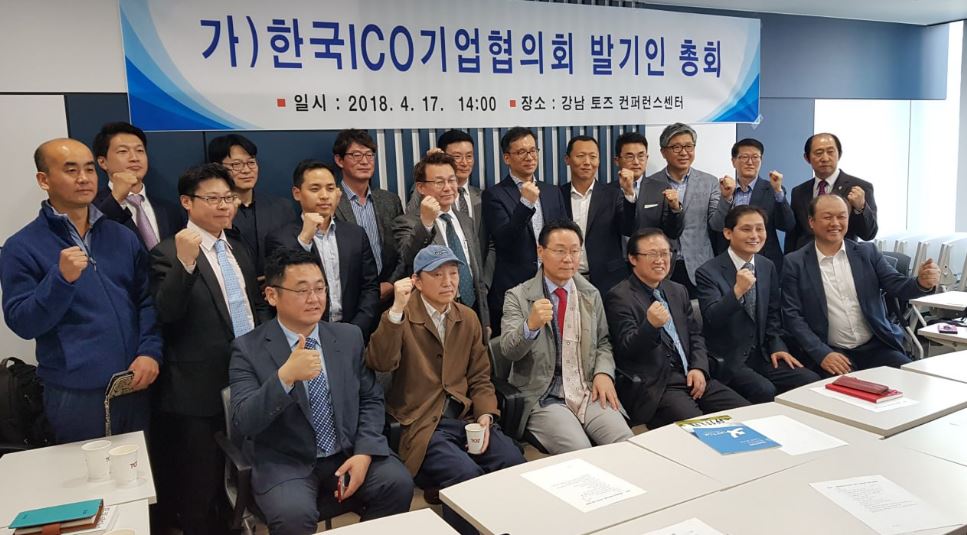
He was, however, deeply disappointed by the ICO craze. \”I watched unscrupulous people raise several tens of billions of KRW (several tens of millions USD) and create waves of victims. I thought, ‘I’ll try an ICO myself,’\” he said. His idea at the time was a crowd-guarantee model: when a startup or small business needed 100 million KRW (75,000 USD) or 200 million KRW (150,000 USD), guarantees would be split into small units — 1 million KRW (750 USD) or 5 million KRW (3,750 USD) — and neighbors would pool guarantees in modest amounts. He said he drew inspiration from India’s microfinance models, such as Mela Bank.
\”The project received the most applause, but then a friend came and told me, ‘Chairman, you can raise 20 billion KRW (15 million USD), but you must give me 10 billion KRW (7.5 million USD).’ When I asked who would take responsibility, he said, ‘You will.’ So I shut the company down,\” he recalled.
His willingness to cut losses swiftly — to close a company the moment it fails to deliver — explains how he survived 13 failures across 20 ventures. \”If a venture doesn’t produce what I want, I shut it down without mercy,\” he said. The funds from his KOSDAQ sale made such decisive action possible. The crowd-guarantee patent he filed and shelved during the COVID years has resurfaced; he plans to commercialize it within Chon.
Perhaps his most valuable asset is not technology or capital but the courage to start over. He keeps a running tally of 13 failures and calls this twentieth challenge his final one.
■ Humans do not exist alone — the philosophy of relationship-centered DID
The identity verification market is crowded: government mobile IDs, telecom PASS systems, OAuth from global tech firms, and numerous DID projects. Shin’s reason for launching Chon is clear: while most DIDs are individual-centered, Chon is relationship-centered.
Most DID projects focus on the individual, but humans are social beings: family, relatives, friends, colleagues — we are always connected. Chon makes the human relationship itself the verifying ID, he said.
Government-issued IDs have value, but once those centralized systems are breached, everything collapses. In contrast, a decentralized identity constructed through mutual verification is difficult to hack; attackers would struggle even to locate the relevant nodes. Above all, human relationships are nearly impossible to replicate or forge. Even if quantum computers break RSA encryption, faking a web of relationships accumulated over decades is a different and far more complex challenge.
There has been no ID that proves human relationships. That is Chon’s differentiator. It does not seek to supplant existing DIDs; it complements them. Government IDs retain their value, and Chon adds a layer of human verification on top.
Korea’s specific social context gives Chon an edge, one Shin insists global projects cannot match.
Korea has one of the world’s richest genealogy cultures: records spanning more than a thousand years, over 50,000 clan associations, and mathematically precise trust networks — four chon, eight chon — already embedded in society. Real-world community data is generated there every day. In Web3, few markets offer such a rare and valuable foundation.
In the U.S. and Europe, distant relatives often get lumped together as \”cousin,\” but Korea distinguishes kinship degrees precisely. That is why Shin sees potential for a Universal Digital Genealogy. Sewall Wright’s 1922 kinship formula has found new life a century later as an algorithm for blockchain identity in the hands of a Korean first-generation IT founder.
(Part 2 will continue with Chon’s core technical applications and business strategy, including voice-phishing prevention, distributed storage of private keys, and human authentication in the AI era.)










Most Commented