Quick access to main page (top) Direct access to main contents Quick access to main page (bottom)

Samsung’s Bonus Dispute: Why a Single Payout Is Fueling Social Unrest

Daniel Kim Views  

Translation result.

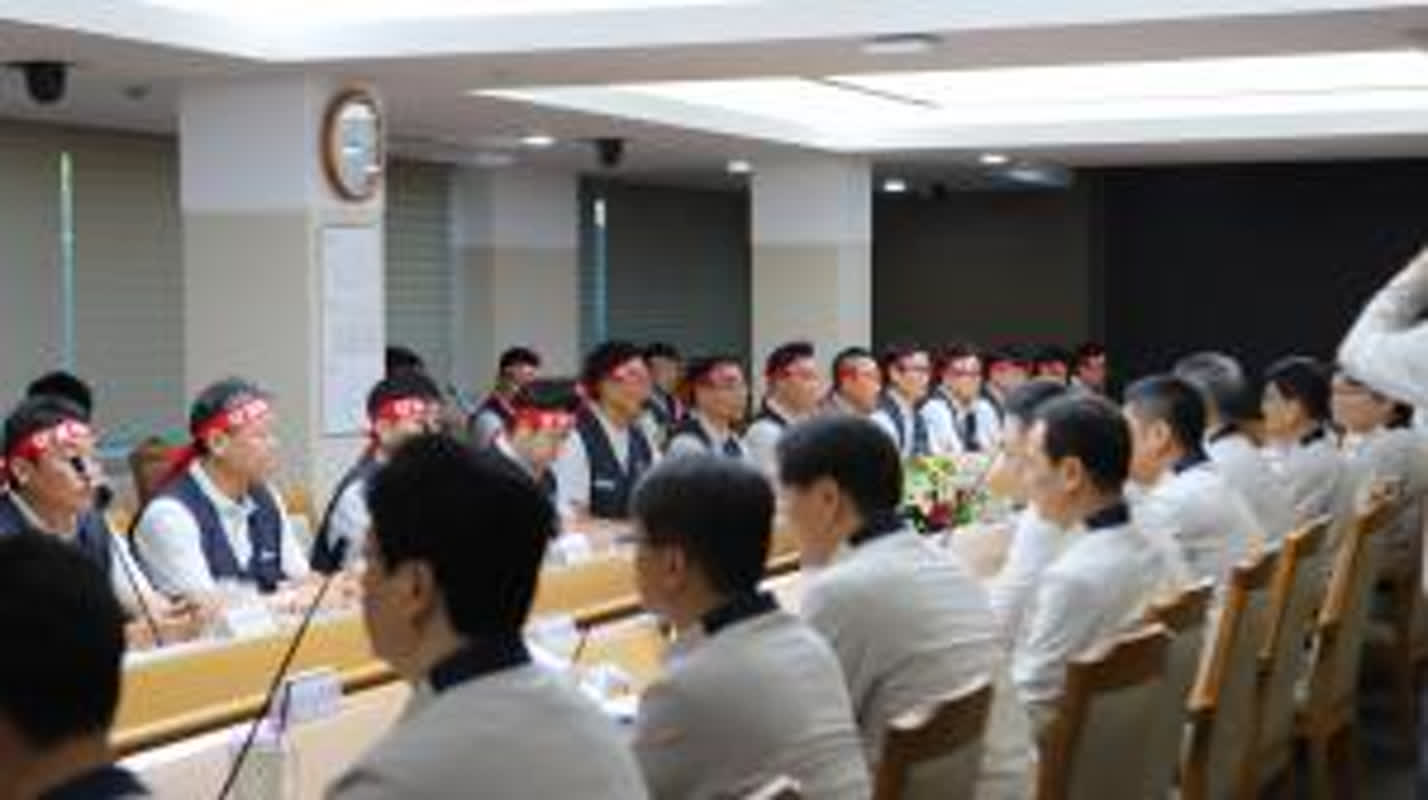
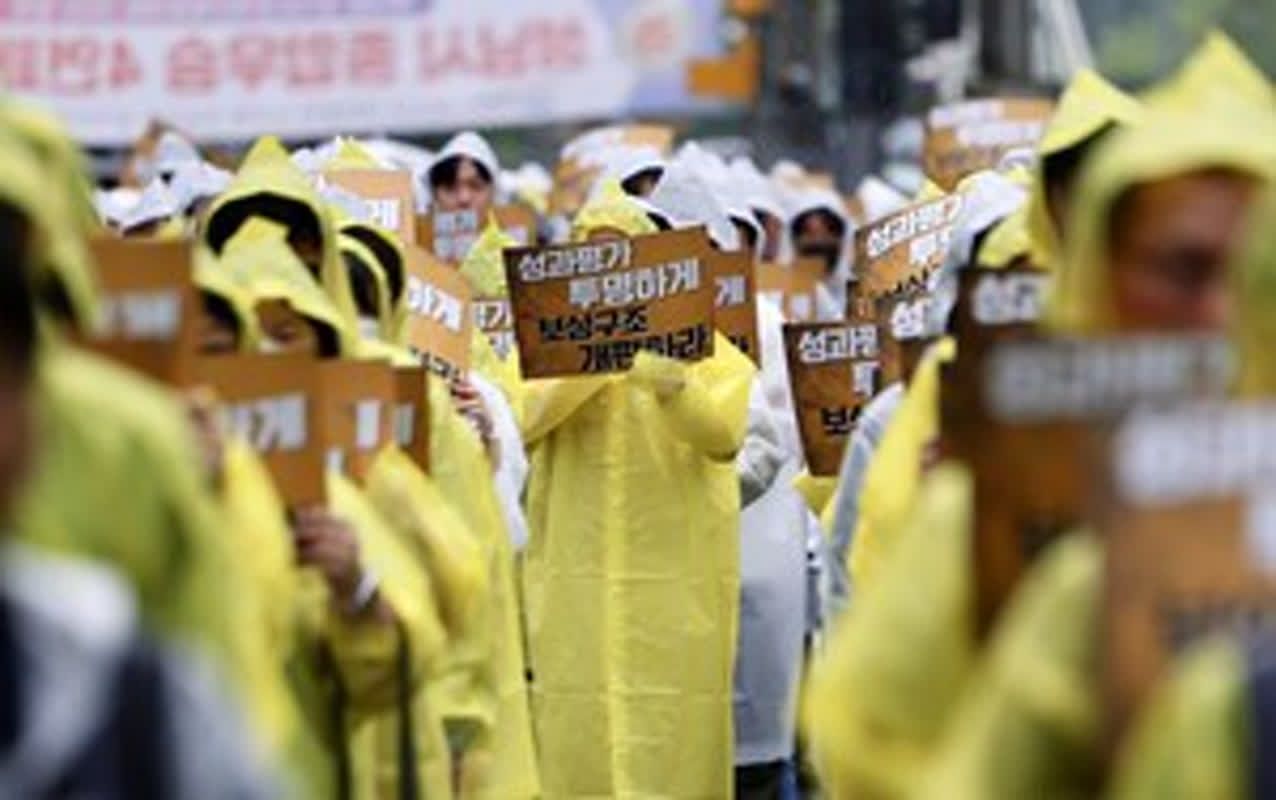
A tentative deal between Samsung Electronics and its union over performance bonuses has reignited debate across South Korea about compensation and fairness. While an all-out strike was averted, public feelings of deprivation and cynicism have deepened as the labor market’s stark polarization became more visible.

Analysts say this dispute differs from the traditional labor movement led by the country’s two major federations. Where past campaigns focused on survival issues—opposing mass layoffs, blocking restructurings, and ending discrimination against nonregular workers—the Samsung union’s fight centered narrowly on a pragmatic demand: institutionalizing performance bonuses tied to operating profit.

◆’My 10 years’ salary’ — Online outcry over a sense of deprivation

When news broke on the 20th that Samsung’s semiconductor division had reached a tentative performance-bonus agreement, online forums filled with posts expressing a sense of relative deprivation.

On workplace community Blind and other forums and social media, users wrote things like, They got my 10 years’ salary in one payout; It feels like people who chose the right industry are the winners now; and Holding on for a few percent salary increases suddenly seems meaningless.

Employees at supplier firms reacted coldly as well. A worker at a semiconductor supplier wrote, Honestly, it’s deflating to think they’re receiving what amounts to several years of our company’s pay in one go.

Analysts argue these reactions reflect more than envy. They say the responses expose concentrated effects of extreme polarization in South Korea’s labor market.

Many workers lack union representation. The situation is worse in regions such as Daegu and North Gyeongsang, which depend heavily on small and medium-sized firms. According to the Ministry of Employment and Labor’s 2024 National Trade Union Organization Status, the nationwide unionization rate was just 13.0%. While workplaces with 300 or more employees had a unionization rate of 35.1%, tiny firms with fewer than 30 employees had a rate of only 0.1%.

Choi, 35, who works at an auto parts maker in the Daegu area, said, When I hear about Samsung’s bonuses, it feels like news from another country. I don’t know if I could ever save that much in a lifetime. He added that in a structure where prime contractors squeeze subcontractors and subcontractors squeeze workers, people with no unions and no bargaining power lose motivation. Big-company unions only protect their own interests, so other workers don’t empathize. In reality, workers like us always get pushed to the back.

◆Is the labor movement in crisis—or is this the labor market’s raw reality?

Experts caution against dismissing the issue as simply a debate over “elite” unions. They point to structural gaps between regular employees at large firms and workers at small firms or in precarious jobs as the deeper problem.

Im Woon-taek, a sociology professor at Keimyung University, said that even as disparities between large-firm regulars and small-firm or precarious workers have deepened, Korean society has failed to put these issues on the public agenda. Regional labor problems face the same neglect, he added.

Im warned that a company-by-company union model will keep bargaining focused on wages and bonuses, producing recurring controversies.

Critics also say some large-company unions have undercut the labor movement’s persuasive capacity by focusing narrowly on member benefits. Heo Chang-deok, a sociology professor at Yeungnam University, noted that in the 1970s and ’80s the labor movement fought for survival amid long hours, low pay, and the threat of dismissal—and citizens viewed those struggles as resistance by the socially vulnerable. But some large-company unions have become organized and powerful in ways that make them difficult for the public to sympathize with.

Heo said today’s labor movement often appears to prioritize maximizing member benefits over advancing the rights of workers as a whole. If it seeks to regain public support, he argued, it must restore moral clarity and demonstrate genuine intent.

Cho Dong-geun, professor emeritus of economics at Myongji University, added that portraying all gains from the semiconductor boom and global market trends as the product of labor is unlikely to win broad public sympathy. He warned that if the demand to fix a share of operating profit as performance pay spreads across industries, it could create substantial burdens for corporate management. Once excess profits driven by external conditions begin to be treated like wages, other large-company unions are likely to press similar claims, he said.

Daniel Kim
content@tenbizt.com

Comments0

300

Comments0

[Social] Latest Stories

  • Starbucks Korea CEO Fired Over Controversial ‘Tank Day’ Promotion
    Starbucks Korea CEO Fired Over Controversial 'Tank Day' Promotion
  • 25,000 Robots vs. Human Workers: The High-Stakes Battle at Hyundai
    25,000 Robots vs. Human Workers: The High-Stakes Battle at Hyundai
  • Hotel Hygiene Scandal: Cleaner Caught Using Guest Towels to Wipe Toilets
    Hotel Hygiene Scandal: Cleaner Caught Using Guest Towels to Wipe Toilets
  • South Korea’s Tech Giant Kakao Faces First Major Strike in 20 Years
    South Korea's Tech Giant Kakao Faces First Major Strike in 20 Years
  • South Korea’s Aging Crisis: How One Leader Is Redefining ‘Well-Dying’
    South Korea’s Aging Crisis: How One Leader Is Redefining 'Well-Dying'
  • Stop Calling Them ‘Hey You’: South Korea’s New Push for Worker Respect
    Stop Calling Them 'Hey You': South Korea's New Push for Worker Respect

Weekly Best Articles

  • Choi Dong-seok’s Family Bond: How a Simple Engraving Reveals Deep Love for His Children
  • Kwak Sun-hee’s Stunning Wedding Photos: A Celebration of Love and Courage
  • Is ‘I Am a Natural Person’ Just a Big Lie? Comedian Yoon-taek Reveals Shocking Secrets!
  • Health Scare: Why Fans Are Worried About Go Ji Yong’s Dramatic Weight Loss
  • Discover the Winter Gongju Chestnut Festival: A Taste of Korea at H-Mart in the USA!
  • 2026 Spring Wildfire Prevention: How Gyeryong City is Cutting Response Time to 30 Minutes!

You May Also Like

  • 1
    Ukraine’s EU Bid Surges as Hungary Drops Opposition Amid Russian Attacks

    Politics 

    Ukraine’s EU Bid Surges as Hungary Drops Opposition Amid Russian Attacks
  • 2
    Trump Backs Colombia's 'El Tigre' — What It Means for U.S. Relations

    Politics 

    Trump Backs Colombia’s ‘El Tigre’ — What It Means for U.S. Relations
  • 3
    Trump Backs Colombia's Far-Right Outsider—What's at Stake?

    Politics 

    Trump Backs Colombia’s Far-Right Outsider—What’s at Stake?
  • 4
    12.5% Tariff Hit: South Korea Faces New U.S. Trade Penalties

    Politics 

    12.5% Tariff Hit: South Korea Faces New U.S. Trade Penalties
  • 5
    12.5% Tariff Alert: Why the U.S. Is Targeting South Korean Imports

    Politics 

    12.5% Tariff Alert: Why the U.S. Is Targeting South Korean Imports

Popular Now

  • 1
    Marta Kostyuk Makes History at French Open Amid Ukraine Crisis

    Politics 

  • 2
    37 Years in Exile: The Tiananmen Leader Who Just Wants to Go Home

    Politics 

  • 3
    South Korea's Cheongju Airport Faces Crisis as Passenger Numbers Explode

    Politics 

  • 4
    Nuclear Submarine Race: South Korea's High-Stakes Bid for U.S. Fuel

    Politics 

  • 5
    France Finally Admits Complicity in the 1994 Rwandan Genocide

    Politics 

Weekly Best Articles

  • Choi Dong-seok’s Family Bond: How a Simple Engraving Reveals Deep Love for His Children
  • Kwak Sun-hee’s Stunning Wedding Photos: A Celebration of Love and Courage
  • Is ‘I Am a Natural Person’ Just a Big Lie? Comedian Yoon-taek Reveals Shocking Secrets!
  • Health Scare: Why Fans Are Worried About Go Ji Yong’s Dramatic Weight Loss
  • Discover the Winter Gongju Chestnut Festival: A Taste of Korea at H-Mart in the USA!
  • 2026 Spring Wildfire Prevention: How Gyeryong City is Cutting Response Time to 30 Minutes!

Must-Reads

  • 1
    Ukraine’s EU Bid Surges as Hungary Drops Opposition Amid Russian Attacks

    Politics 

    Ukraine’s EU Bid Surges as Hungary Drops Opposition Amid Russian Attacks
  • 2
    Trump Backs Colombia's 'El Tigre' — What It Means for U.S. Relations

    Politics 

    Trump Backs Colombia’s ‘El Tigre’ — What It Means for U.S. Relations
  • 3
    Trump Backs Colombia's Far-Right Outsider—What's at Stake?

    Politics 

    Trump Backs Colombia’s Far-Right Outsider—What’s at Stake?
  • 4
    12.5% Tariff Hit: South Korea Faces New U.S. Trade Penalties

    Politics 

    12.5% Tariff Hit: South Korea Faces New U.S. Trade Penalties
  • 5
    12.5% Tariff Alert: Why the U.S. Is Targeting South Korean Imports

    Politics 

    12.5% Tariff Alert: Why the U.S. Is Targeting South Korean Imports

Popular Now

  • 1
    Marta Kostyuk Makes History at French Open Amid Ukraine Crisis

    Politics 

  • 2
    37 Years in Exile: The Tiananmen Leader Who Just Wants to Go Home

    Politics 

  • 3
    South Korea's Cheongju Airport Faces Crisis as Passenger Numbers Explode

    Politics 

  • 4
    Nuclear Submarine Race: South Korea's High-Stakes Bid for U.S. Fuel

    Politics 

  • 5
    France Finally Admits Complicity in the 1994 Rwandan Genocide

    Politics 

Share it on...