
Translation result
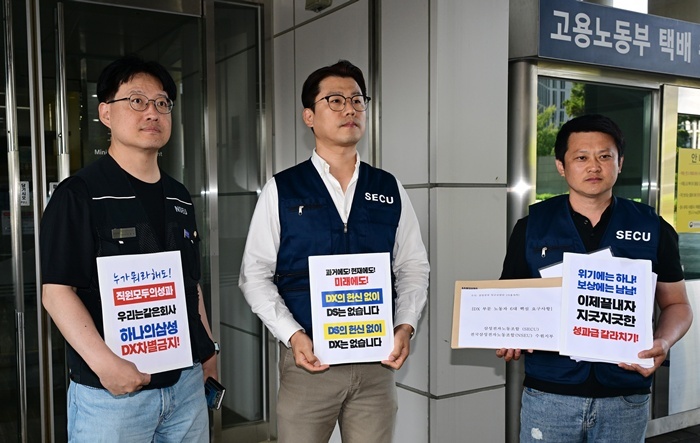
The union representing Samsung Electronics’ DX (Device eXperience) division pushed back sharply, saying wage negotiators have failed to adequately reflect its demands.
Workers in finished-goods businesses say a semiconductor-focused pay system and performance-bonus structure leave them relatively shortchanged, and labor-management tensions are beginning to spread across the group.
On the morning of May 18, the Central Labor Relations Commission held the second post-adjustment meeting between Samsung Electronics and its unions at the Sejong Government Complex. The session was intended to hammer out last-minute adjustments ahead of a strike scheduled for May 21.
Before the meeting began, members of the Samsung Electronics Union’s Donghaeng branch and the Suwon branch of the National Samsung Electronics Union picketed at the complex entrance. They carried signs reading “No DS without DX’s dedication” and “One Samsung — end DX discrimination,” demanding better treatment for DX division workers.
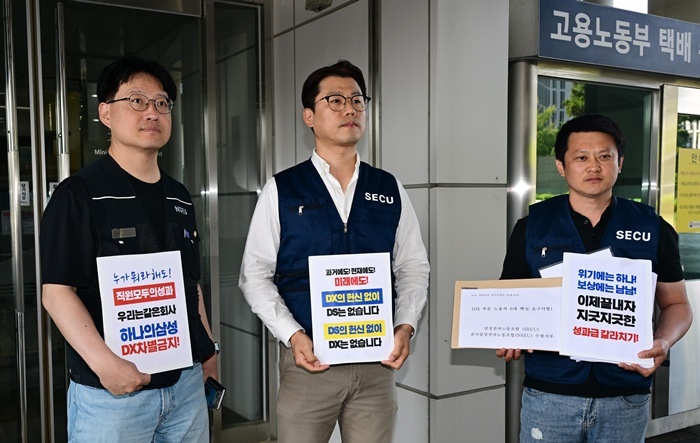
The DX division handles finished products such as TVs, consumer appliances, mobile devices and home electronics. The DS (Device Solutions) division oversees the semiconductor business. Within Samsung, DS bonuses have long swung with semiconductor performance, and DX employees have repeatedly complained that their compensation lags behind.
Union members intercepted Choi Seung-ho, chair of the Samsung Electronics branch of the conglomerate-wide Samsung Group union, as he entered the complex and lodged a protest. They said formal requests had been ignored and demanded that DX issues be clearly reflected in negotiations.
Chairman Choi replied that the matter was already part of ongoing negotiations and that it would be difficult to change course at this stage.
DX union representatives countered that “Samsung is not simply a semiconductor company; it is a full-line electronics firm,” and argued that finished-goods workers’ contributions deserve fair recognition. They handed over a document listing the “Six Core Demands of DX Workers.”
The most contentious issue is the performance-bonus system. The unions argue the bonus-calculation criteria are opaque and that management discretion plays too large a role. They are demanding the removal of bonus caps, disclosure of payout criteria and formal institutionalization of the system.

Samsung’s bonus system is divided mainly into TAI (Target Achievement Incentive) and OPI (Over-Profit Incentive). TAI is paid based on semiannual achievement of business targets, while OPI is calculated from annual operating-profit surpluses above set goals.
The core problem is the stark variance in results across business units. During semiconductor booms, DS employees have sometimes received bonuses worth more than half of their annual pay, while finished-goods divisions have often seen much smaller payouts. With renewed expectations for DS performance driven by AI semiconductors and rising demand for high-bandwidth memory (HBM), dissatisfaction in DX is rising again.
The unions say the company must reform the bonus structure itself, not just increase base pay. They argue Samsung’s overall brand value and global competitiveness are products of its finished products—smartphones, TVs and appliances—and that a semiconductor-centered compensation model has become entrenched.

Inside Samsung, some employees say bluntly, “Without DX, the Samsung brand itself would struggle to survive.” The Galaxy smartphone line and the TV and appliance businesses serve as the company’s primary consumer touchpoints and account for a significant share of revenue.
The company, however, insists it must factor in global economic uncertainty and earnings volatility. Even amid a semiconductor recovery, it points to persistent external risks such as supply-chain instability, currency fluctuations and U.S.-China technology tensions.
Observers say the dispute exposes deeper rifts in Samsung’s business structure and corporate culture beyond a simple pay disagreement. Samsung long maintained a no-union management stance, but unionization has risen sharply in recent years and business-unit interests have become more distinct.

Young employees, in particular, are driving a stronger demand for fairness and transparency in performance rewards, and many no longer accept unilateral bonus decisions.
The union and the company continued informal, working-level talks over the weekend to explore compromise proposals, but they remain far apart on bonus reform and the removal of payout caps.
If the Central Labor Relations Commission’s mediation fails, Samsung Electronics’ unions could proceed with the planned strike. Analysts warn that a strike would likely disrupt finished-goods production, logistics and services.
Labor-management tensions at Samsung Electronics have sparked a broader debate about performance compensation and labor structures at Korea’s major corporations. With an AI-driven semiconductor boom, widening performance gaps between business units could become a broader labor issue across the domestic industry.
As the DX division union publicly demanded separate consideration of its wage demands, attention shifted to the company’s internal union landscape. Observers noted that the DX union differs in composition and interests from the semiconductor union that drew national attention during last year’s strike.















Most Commented