
Why a 60,000-Pyeong Play Space is Essential for Families in Yeonggwang: Exploring the Maple Land Model
Daniel Kim Views
Translation result
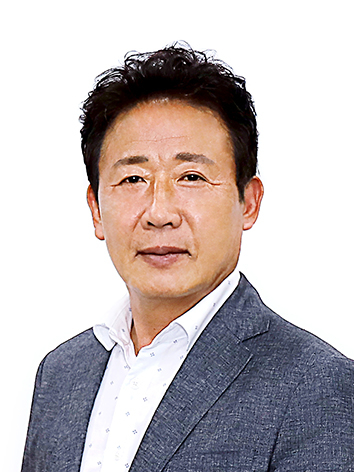
On the 11th, I visited Mapleland in Jeongeup with an official from Yeonggwang County’s Family Happiness Department and a parent. Because it was a scheduled day off, there were almost no visitors, which allowed me to calmly inspect every corner of the facility. Walking through the indoor kids’ café Angel Heroes and the outdoor complex Miracle Playground, I was struck again by a long-held conviction: children don’t need a single, well-equipped facility as much as they need a large space that lets them move freely between indoors and outdoors.
I made addressing population decline and youth outmigration my top priority when I entered public office in 2007. Since then, I’ve consistently pushed to expand support for young residents and for childbirth and childrearing. Above all, I’ve focused on creating broad spaces where children can run and play—because a few small, isolated facilities cannot anchor young families.
Such spaces become truly effective only when a variety of child-focused amenities are clustered together. Mapleland is a clear example. On roughly 60,000 pyeong (about 49 acres), it combines Angel Heroes kids’ café, the Miracle Playground, a national leisure camping ground, extreme-sports facilities, a fairy-tale village, a digital media art center, water-leisure and aquatic-ecology experience zones, and a local-harvest experience complex—everything aimed at children and families. Kids play indoors, run straight onto the lawn, and parents stay for half a day or more to watch them. People gather and remain not because of a single facility but because of the space as a whole.
So does Yeonggwang—proudly first in the national total fertility rate for seven consecutive years—offer such spaces? Parents tell me they often have to travel to nearby cities like Gwangju because Yeonggwang lacks comparable venues. Behind our proud ranking lies an embarrassing reality: we do not even have one adequate place where these children can play freely. If our region produces the most children, it should also be the place where they grow up happiest.
Of course, Yeonggwang cannot build a 60,000-pyeong site overnight. But securing 10,000 pyeong (about 8.2 acres)—or, at minimum, 5,000 pyeong (about 4.1 acres)—would permit the creation of a meaningful destination. The key is not size alone but concentrating scattered child-focused facilities on a single site to generate synergy. When indoor play areas, outdoor playgrounds, family-rest spaces, and hands-on experience facilities sit together, the site becomes a true destination where families stay for half a day or a full day.
We have already seen the consequences of the opposite approach. The Yeonggwang County Youth Childcare Sharing Center was intended primarily for childcare, but officials added youth-support functions to qualify for extra national subsidies for a mixed-use complex. The result: the facility became too cramped to serve childcare well, and neither the childcare nor the youth functions thrive. We have already learned what happens when you cram multiple roles into a small plot.
We must not repeat that mistake. Rather than squeezing facilities onto tight downtown lots, we need a long-term master plan to secure sufficient land—even if that means building on the outskirts—and to phase in consolidated child-related facilities. How we fit the first button now will shape Yeonggwang five and ten years from today.
With roughly a month left in the ninth Yeonggwang County Council, I want to reiterate the conviction I have held since 2007 to residents and the administration: Yeonggwang’s children need “one space,” not merely “one facility.” I earnestly hope we build that space on wide fields instead of cramped town plots—so people will say, “When you go to Yeonggwang, there’s a place where you can play with your kids all day,” and that word-of-mouth will draw young families back.









Most Commented