
The Yellow Envelope Law: How 400 Companies Face Labor Negotiations in Just 50 Days!
Daniel Kim Views
Translation result

About 50 days after the controversial Yellow Envelope Law (an amendment to the Trade Union Act) took effect, the industrial sector has been upended.
The law allows subcontractor unions to demand collective bargaining from primary contractors when those contractors exercise substantial, specific control over subcontractors’ terms of employment. In just over 50 days, subcontractor unions have submitted bargaining requests to roughly 400 primary contractors.
Why “Samsung HQ CEO, Come Out!” Is Now Legal
What is the Yellow Envelope Law, and why has it put even major corporations on edge? The core shift is a significant expansion of the so-called employer designation, broadening the circumstances under which a primary contractor can be held legally responsible.
Under the previous framework, when subcontracted workers struck for higher pay or improved conditions, their dispute was effectively limited to the subcontractor that held their employment contracts. The primary contractor—the big-company headquarters—could argue that those workers were not its employees and avoid legal responsibility.
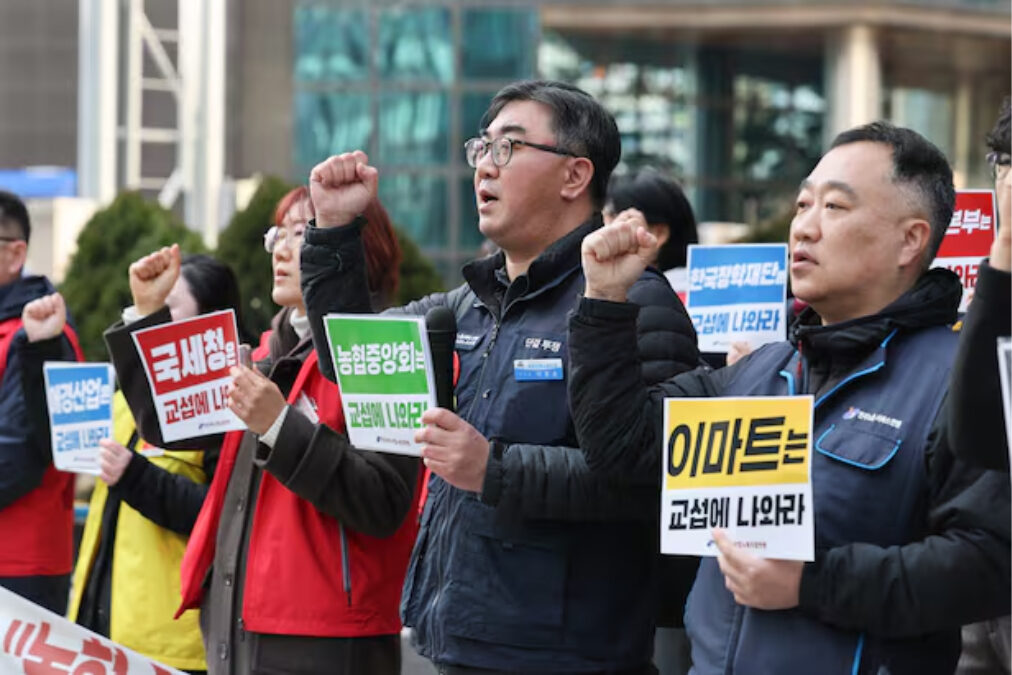
Since the law took effect, the landscape has changed dramatically. If a primary contractor exerts substantial, concrete control over a subcontractor’s working conditions or tasks, courts or labor authorities may recognize that contractor as the legal employer—even in the absence of a formal employment contract.
Applied to Samsung, a company that has recently faced labor tensions, the implications are far-reaching.
If unions at subcontractors responsible for Samsung’s cafeterias, facilities management or after‑sales services argue that Samsung effectively determines wages and working conditions and demand direct bargaining, Samsung’s headquarters could be required to negotiate in cases where employer status is established.
Refusing to bargain without a legitimate reason could be treated as an unfair labor practice. In short, a labor dispute at a subcontractor can quickly become a legal and reputational risk for the primary corporation.
About 50 Days In, 400 Firms Hit — Government Scrambles to Calm Subcontractors

The law’s impact is already evident in the numbers. According to data published by the Ministry of Employment and Labor on the 30th, roughly 400 primary contractors received direct bargaining requests from subcontractor unions immediately after the amendment took effect.
Private companies accounted for 223 of those firms—well over half—while the public sector, including central government bodies, local authorities and public agencies, saw 177 entities affected.
Thirteen public-sector organizations, including Busan Transportation Corporation and Hwaseong City, formally announced they had received bargaining requests; 11 of those have issued final public notices.
With the potential for industry-wide disruption, the government has moved quickly to contain the fallout. It plans to activate the Economic, Social and Labor Council (ESLC) in May to mediate through tripartite dialogue among labor, management and government.
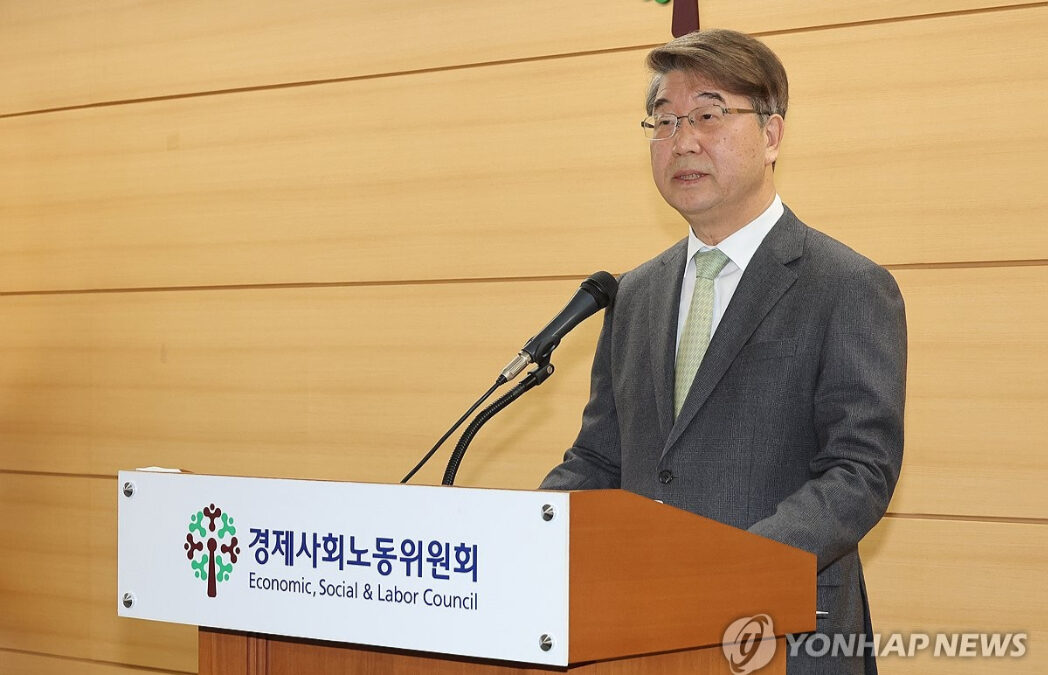
The government says it will set rules to prevent recurring clashes between primary contractors and subcontractor unions from paralyzing industry.
At the same time, officials are preparing incentives aimed at addressing grievances among subcontracted and nonregular workers. To set an example in the public sector, the government will introduce a “fair allowance” next year: fixed payments equal to between 10% and 8.5% of a reference amount, depending on the length of fixed-term contracts under one year.
Officials have also proposed raising the minimum bid threshold and restricting subcontracting to curb low‑price competition in procurement that drives down subcontractors’ wages.
With an unprecedented wave of summonses that could compel CEOs to face subcontractor unions, industry watchers will be watching May’s bargaining tables closely to see whether the government’s conflict‑management measures and conciliatory steps will be effective.












Most Commented