
How a Gym Trainer’s Braille Labels Are Transforming Accessibility for Visually Impaired Members
Daniel Kim Views
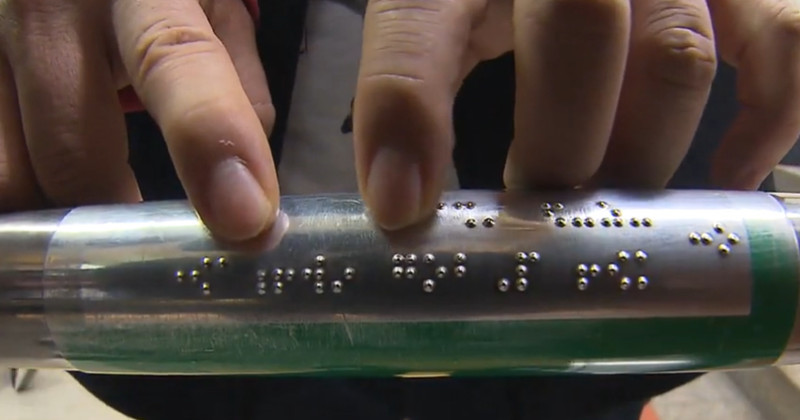
A trainer who personally affixed Braille labels to gym equipment is demonstrating how small, everyday accessibility improvements can make a real difference.
Observers say the effort matters because it goes beyond simple kindness; it is a practical step that protects the safety and independence of people with disabilities.
On the 20th, a person who identified himself as a fitness trainer posted a video on social media describing the effort. He said a visually impaired member had recently signed up at the gym, and because there were no instructions on the machines, he worried the member would struggle to use them. That concern prompted him to start making Braille labels. Most gym machines rely on visual cues, so people with visual impairments often cannot use them without assistance.
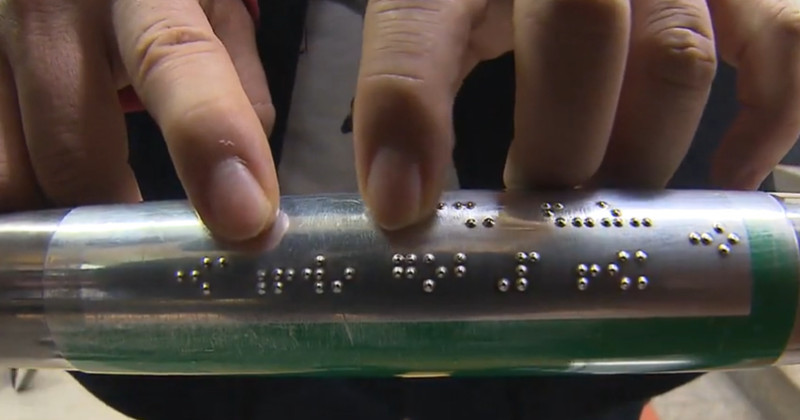
After recognizing the problem, he sought a solution himself. He bought a portable Braille embosser and began labeling each machine with its name and instructions in Braille. Because it was his first time, the production process was challenging. “I followed the manual, but I wasn’t familiar with it, so making a single ‘shoulder press’ label took about five to ten minutes,” he said. Still, he has kept at the work and gradually expanded the scope of the Braille guidance.
The effort matters not only for convenience but for safety. Gym equipment is often metal and can be large and heavy; if users cannot accurately sense a machine’s position or structure, they risk bumping into it or getting hurt. People with visual impairments are especially vulnerable. “If you handle equipment incorrectly, you can bruise or injure yourself,” he said. “I thought it was important to create an environment where everyone can exercise safely.”
So far, Braille labels cover only some machines, but he plans to extend them to all equipment. He also intends to get direct feedback when the visually impaired member returns, then address any issues to improve the labels’ usability. His approach is not just to check the box but to refine the system based on real users’ experiences.
The story drew positive reactions online. The video received tens of thousands of likes within a day, and commenters wrote, “This is real consideration for something no one thought about” and “A small action but the start of social change.” Some users suggested expanding Braille guidance beyond gyms to other public facilities.
His actions also appear rooted in personal experience. He works as a physical education instructor at a welfare center for deaf elderly people in Gyeonggi Province, South Korea, where he encountered individuals with various disabilities and developed a heightened awareness of accessibility needs. “When I first visited, I learned there was no instructor who uses sign language,” he said. “I thought someone had to do it.”
“Sign language and Braille aren’t easy to learn,” he added, “but if we want to live together, we need to make the effort for one another.” That, he said, reflects not mere goodwill but a basic civic attitude necessary for inclusive communities.
Experts have praised the example. Accessibility for people with disabilities often improves through small, everyday changes rather than only through sweeping policies or large budgets. Voluntary initiatives in the private sector can also prompt institutional changes.
Indeed, abroad more fitness centers and public sports facilities are introducing Braille and audio guidance systems. South Korea has policies aimed at expanding sports participation for people with disabilities, but many observers say facility accessibility still falls short. In this context, the trainer’s effort stands out as a practical model that can be implemented immediately at the local level.
Importantly, accommodations made for one group often improve conditions for everyone. Braille labels can help not only visually impaired users but also beginners who are unfamiliar with the equipment. In other words, changes targeted at a specific group can broaden into benefits for all users.
This case shows that individual awareness and action can produce positive social change even without sweeping policy shifts. One trainer’s decision to address a small inconvenience has prompted broader reflection on creating spaces that everyone can use.















Most Commented