
Limits to redevelopment amid population decline
Strengthening management of aging apartments increasingly important
Bring residential officetels into ‘mandatory management’
Need to recalibrate building manager liability and immunity standards
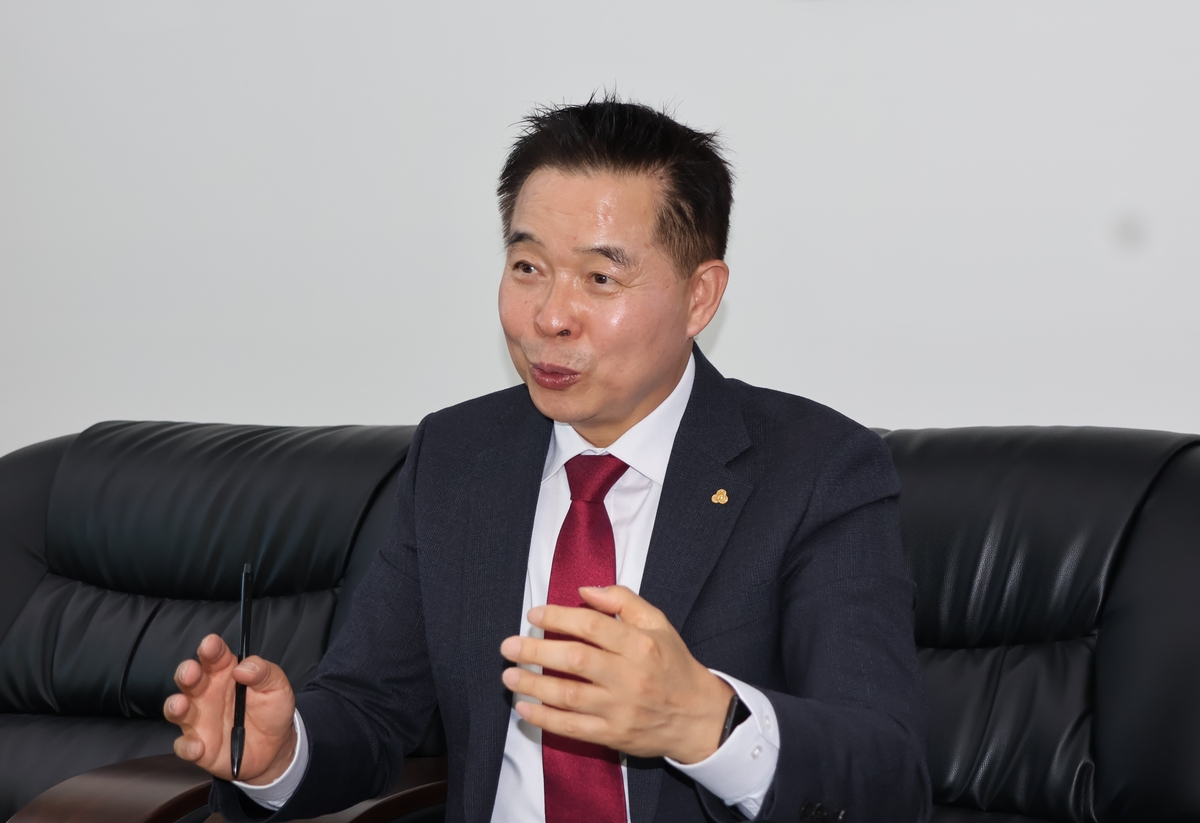 “Although 70% of the public already lives in apartments, housing policy remains overly focused on ‘supply’ and ‘construction.’ We must broaden our attention to ‘management’—how people actually live in those buildings.”
Ha Won‑seon, president of the Korea Association of Housing Managers, told Seoul Economic Daily on the 15th at the association headquarters in Gasan‑dong, Geumcheon‑gu, Seoul, that policymakers need to change direction. With population decline and worsening project feasibility making reconstruction and redevelopment increasingly difficult, he argued that the practical path is to strengthen capacity to maintain and manage existing housing stock. “If we’re not going to tear down the high‑rise apartments we build today and rebuild them decades later, policy must change,” he said. “In places like Seoul, where new construction is constrained, stronger management that raises living standards in aging apartments can perform a role comparable to increasing supply.”
The association also sees incorporating residential officetels and knowledge‑industry centers into a mandatory management system as one supply‑side alternative. Ha said, “Residential officetels don’t differ much from apartments or mixed‑use residential towers in living quality, but opaque management fee practices have eroded trust. Introducing transparent, efficient professional management would raise the housing quality of officetels.”
 Ha stressed that as daily life increasingly revolves around apartment living, the importance of housing management is growing. A housing manager’s core duties include overseeing electricity and water, cleaning, security, and maintaining shared facilities such as elevators and playgrounds. But in practice, management offices are routinely asked to handle everything from holding packages to mediating disputes over noise and indoor smoking, and even coordinating disaster responses to fires and typhoons. With electric vehicle chargers rapidly expanding in multiunit housing, lawmakers have even proposed revisions that would require management entities—not charger operators—to provide operational information.
“Building managers have become the first point of contact for almost every incident in an apartment complex, but they are not omnipotent legal troubleshooters who can shoulder responsibility for everything,” Ha said. “We need to realign the roles and legal responsibilities of management entities so they reflect reality.”
In that context, the association’s main priority is designating housing managers as essential workers. Essential workers remain on site during emergencies to maintain critical social functions; given their public role, they may receive compensation or reduced liability under certain conditions. Health and medical personnel, sanitation workers, and drivers and delivery workers are among those already classified as essential.
Ha pointed out that management offices increasingly face criminal charges after disasters like typhoons and fires. For example, when Typhoon Hinnamnor flooded an apartment’s underground parking in Pohang in 2022, a building manager who advised residents to drive out of the garage to avoid property damage was later charged with professional negligence resulting in death and is currently defending the case in court. “Was advising residents to exit the garage the wrong call? It’s a confusing situation,” Ha said. “If no choice lets staff avoid liability, on‑site personnel will inevitably act cautiously. While intentional wrongdoing and gross negligence should be punished, treating ordinary negligence the same way discourages active responses. We need reasonable immunity standards.”
 Ha said improving pay and working conditions for housing management personnel is essential to ushering in a “management era.” Making housing management a stable, attractive career will draw talented professionals and ultimately improve living standards, but the reality falls short. He said that launching a nationwide “Housing Managers’ Day” for the first time this year is intended to boost pride among housing managers. Housing Managers’ Day is observed annually on April 28 to commemorate the announcement date of the first successful candidates after the housing manager system was introduced in 1990. “More than 4,000 housing managers will gather nationwide for the first time,” Ha said. “We’ll use the day to reflect on 36 years of multiunit housing management and chart a path forward.”
- “What a bull‑market jackpot” retail investors swept up 23 trillion KRW (approximately 17.25 billion USD) with margin trades…which KOSPI stocks did they buy?
- Even after transferring 76km, it costs no more than two cups of coffee…K‑transfer draws “sugoi” “wonderful”
- “Dad, I’ll run the relay and finish first”…Why a seemingly healthy man in his 30s suffered a sudden acute brain hemorrhage [Healthy Time]
- “If I hide my college degree on the application, will they find out?”…With the prospect of a 700 million KRW (approximately 525,000 USD) bonus, even high school grads are calling to ask
- Samsung Electronics union says even 40 trillion KRW (approximately 30 billion USD) in bonuses wouldn’t be enough
- “No wonder my digestion felt off” — the betrayal of trusted ‘zero’ drinks [Workplace Critique]
- “They said the Strait of Hormuz would finally open” — Iran re‑seals it and warns, “We will attack any approach”
- “Fired 30,000 employees and the stock surged?”…Shareholders cheered while workers suffered — what happened?
- North Korea launches multiple ballistic missiles for the first time in 11 days…seventh such launch this year
- Defense reform under the Lee Jae‑myung administration…military to adopt a ‘large‑branch system’ [Lee Hyun‑ho’s Military! Talk]













Most Commented