
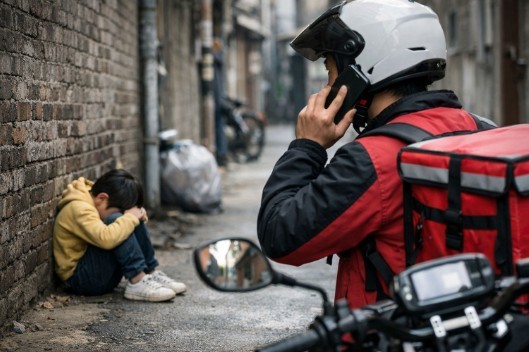
In February 2023, a delivery worker’s quick thinking turned what could have become a dangerous incident in a dark alley in Jinju, South Gyeongsang Province, into a touching rescue.
At about 6:45 p.m., the worker found a frightened 7-year-old crying alone without a guardian and immediately stopped his motorcycle. When he asked why the child was upset, the child said, “I can’t find my home.”
Despite being on a busy shift, the delivery worker remained composed. He soothed the child and calmly asked about nearby landmarks. When the child recalled the name of the apartment building and some distinctive features, the worker offered to help find the home by riding on his motorcycle together.
While they rode, the worker kept the child reassured by speaking kindly and sharing stories about his own children. He ultimately escorted the child safely home. The child waved and called out, “Goodbye, and thank you.” This incident closely mirrors the standard initial response protocol for encountering a lost child.
We reviewed the delivery worker’s actions against the Ministry of Health and Welfare and the Korea Child Rights Promotion Agency’s guide, “Missing Child Prevention: What to Do When You Find a Lost Child.”
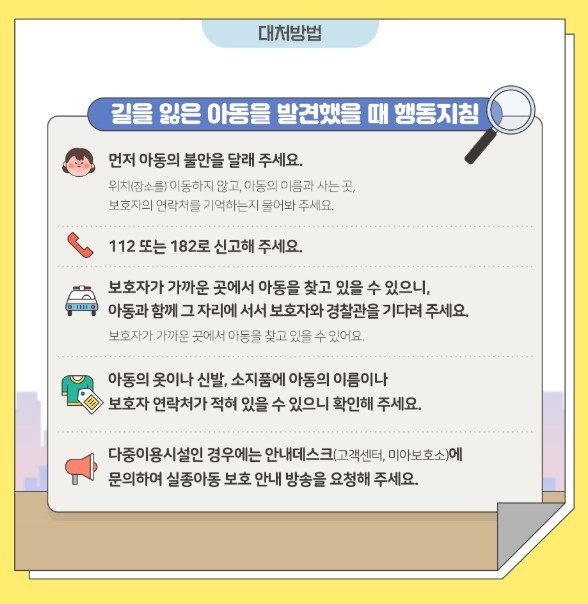
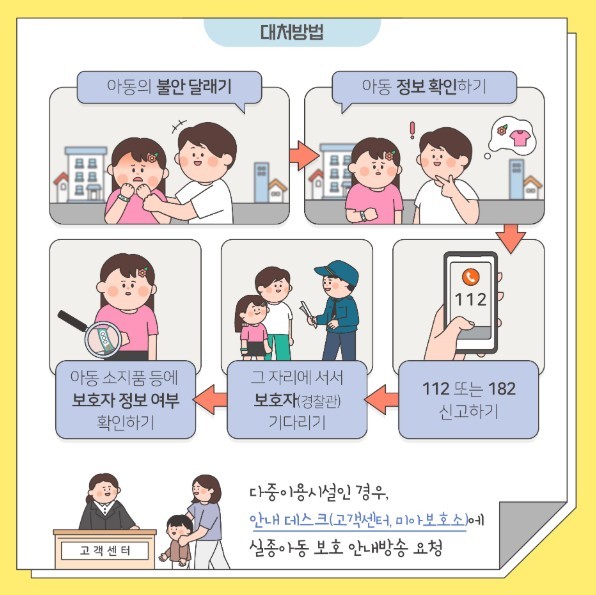
First, calm the child and confirm information. By engaging the child in light conversation and asking about the building name and nearby features, the delivery worker prevented panic and gathered accurate details—an essential first step.
Second, report safely and stay on the scene. Along with what the delivery worker did, you should take these steps:
• Call 112 or 182: Notify the police (112) or the missing-children hotline (182) immediately.
• Stay with the child: The guardian may be nearby, so remain with the child until the police arrive.
• Check belongings: Look for a name or guardian contact information on the child’s clothing, shoes, or personal items.
The Korea Child Rights Promotion Agency urges people not to think, “That’s not my child,” but to adopt a “this is every child’s safety” mindset and assist until the child is secure.
Wikitree goes beyond sharing information. The outlet seeks to raise public awareness about missing children and to promote practical actions anyone can take in everyday life.
It emphasizes repeatedly sharing missing children’s names, faces, and distinguishing features so more people will recognize and remember them. Wikitree also provides clear guidance on how to respond and report when a child is found, aiming to turn information into concrete help.
Wikitree believes small acts of attention add up to significant change. By encouraging people to take a second look and not to ignore concerning situations, the campaign aims to return more children safely to their families.
















Most Commented