
Translation result.
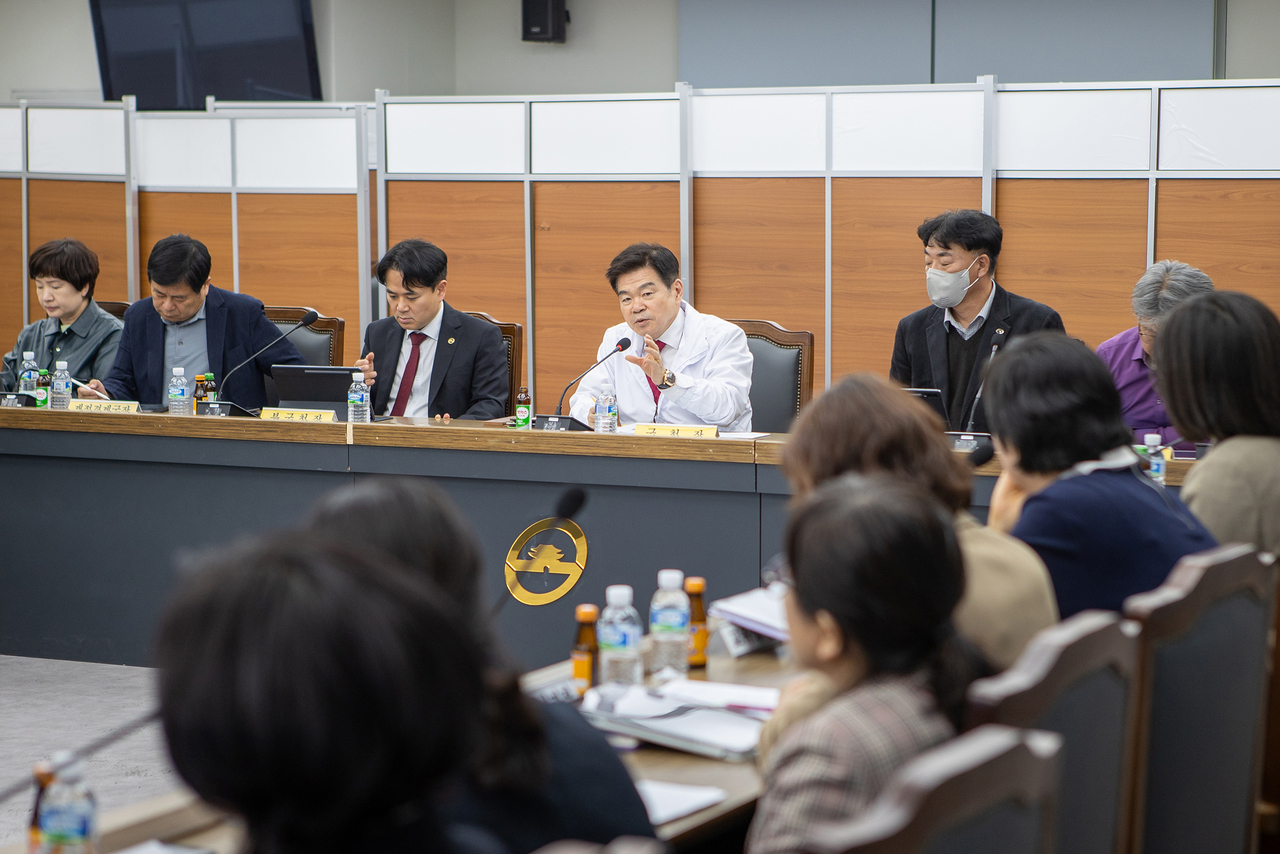
[Herald Economy = Senior Reporter Park Jong-il] Seoul’s Dongdaemun District, led by Mayor Lee Pil-hyung, held an AI and smart-city project briefing on the 30th to review progress on core initiatives and the tasks required to implement them under the banner “Better Lives, Better Administration.”
The briefing convened at 2:30 p.m. on the 30th in the planning operations room on the fifth floor of the district office. Mayor Lee, Deputy Mayor Kim Ki-hyun, bureau and office heads, department leaders responsible for the projects, and representatives from the Facilities Management Corporation attended.
At the session, officials highlighted 42 of the 75 AI and smart-city projects being carried out by the district office and the Facilities Management Corporation, outlining each project’s current status and future plans while exploring ways to improve residents’ quality of life and increase administrative efficiency.
Presentations were organized into five areas—administration and data; education and the economy; welfare and health; disaster and safety; and transportation and urban infrastructure—with a focus on integrating AI and data throughout municipal administration to improve policy accuracy and response times and to expand smart services that residents can directly experience.
This year’s AI and smart-city portfolio comprises 75 projects in total: 61 projects across 26 district departments and 14 projects led by the Facilities Management Corporation.
Of those projects, 14 are new and 18 involve AI applications, with a total budget of approximately 9.5 billion KRW (about $7.125 million). Beyond the in-person briefing, the district plans to maintain momentum through staged project-plan submissions, progress reviews, and performance evaluations to strengthen execution.
The briefing was significant not only for reviewing individual projects but also for articulating the district’s broader approach to AI-driven city operations. Based on the session’s findings, the district plans to increase the use of technology across its administration and pursue tangible policy outcomes.
Mayor Lee Pil-hyung said, “More important than adopting technology itself are the changes residents actually feel and the real improvements in how government works. Using AI and data, we will build a safer, more convenient city and deliver faster, more accurate administration.”
The district received new smart-city certification from the Ministry of Land, Infrastructure and Transport in November 2024 and in February unveiled a vision for an “AI Coexistence City,” signaling a stepped-up effort to establish an AI-based urban governance system.













Most Commented