
Translation result.
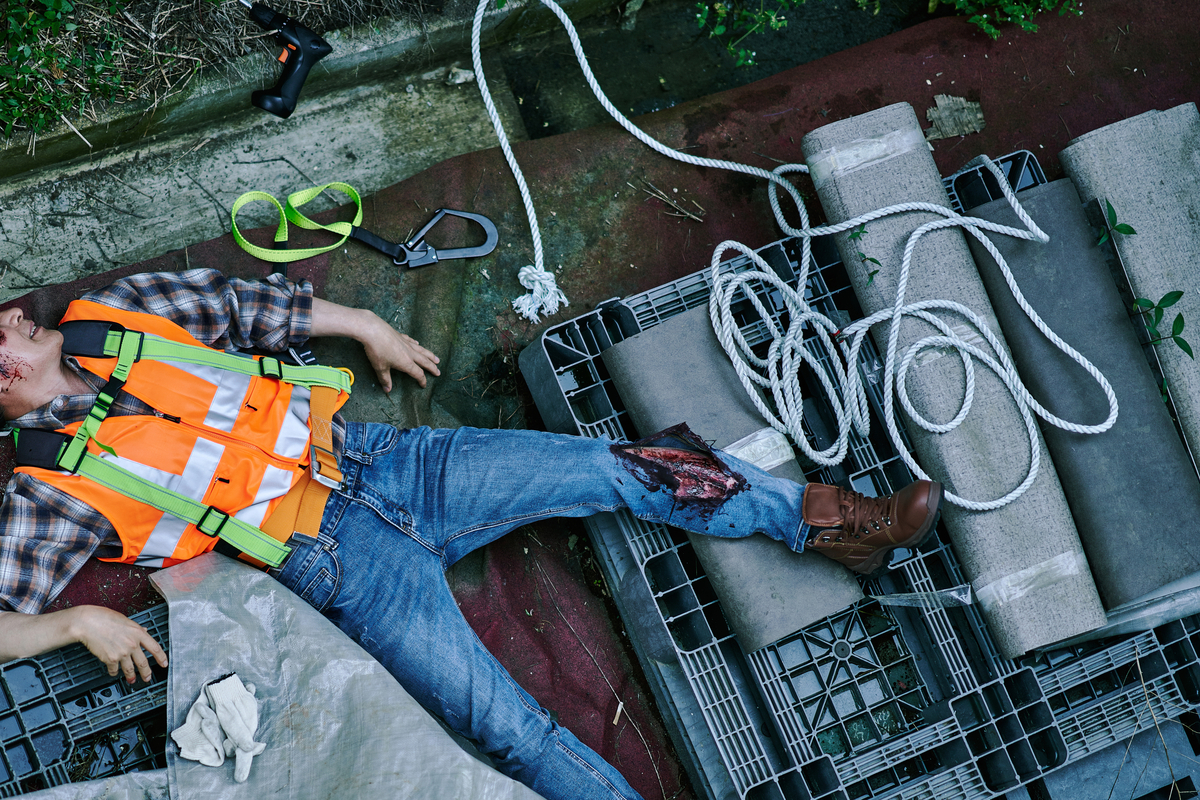
President Lee: “Why are so many people falling from barns?”
Labor Ministry to Concentrate Resources on Reducing Fall Accidents
President Lee Jae-myung said at a Cabinet meeting that more than 200 workers die each year from falls on the job.
Falls accounted for roughly four in ten workplace fatalities. The three conventional accident types—falls, being struck, and getting caught or crushed—made up more than half of all occupational deaths.
The Ministry of Employment and Labor plans to concentrate its efforts on cutting fall-related accidents by subsidizing fall-prevention equipment for very small businesses and tightening qualifications so registered construction firms handle roofing work.
On the 29th, the Industrial Safety Portal reported that of 457 cumulative occupational deaths through the third quarter last year, 199 (43.5%) were due to falls. That figure is expected to rise once fourth-quarter data are added.
By full-year totals, fall-related workplace deaths numbered 272 (43.7%) in 2022, 251 (42.0%) in 2023, and 227 (38.3%) in 2024.
Roughly 30 deaths a year have been linked specifically to roofing work. Many of these incidents occurred when roofs failed during maintenance on factory or livestock-shed roofs, or during solar-panel installations, causing workers to fall.
In September last year, a worker assembling rebar at a construction site in Namdong District, Incheon, fell from the third floor and died. In March 2024, a worker replacing a barn roof in Imsil County, North Jeolla Province, fell to his death after roofing material broke.

At the Cabinet meeting on the 24th, the president asked, “Why are so many people falling from barns?”
Labor Minister Kim Young-hoon said accidents are common during barn roof upgrades and solar-panel installations. He noted that many workers are older, which raises the likelihood of fatal outcomes, and that contractors often fail to file required work notices in advance, making it difficult for authorities to take preventive measures.
The three conventional fatal accident types—falls, being struck, and getting caught or crushed—accounted for more than half of workplace deaths each year: 404 (64.8%) in 2022, 384 (64.3%) in 2023, and 338 (57.1%) in 2024.
Even as factories introduce AI and robots, workers remain exposed to these traditional hazards.
These accidents were most frequent at small construction sites and tended to peak in spring and fall.
The ministry pointed to persistent risks at small businesses—limited staff and budgets, aging equipment—and constrained administrative capacity as factors that undermine safety measures.
To address this, the ministry will build regional interagency networks to provide closer oversight of small businesses.
During the spring and fall periods, when incidents rise, it will issue a “roofing-work fall alert” and spend 95 hundred million KRW (about $7,125,000) this year to install fall-prevention systems tailored for roofing work at small businesses.
Currently, unregistered firms may perform roofing work when the contract is under 15,000,000 KRW (about $11,250). The ministry plans to revise the law so that registered construction companies perform roofing work regardless of project value.
The ministry also intends to expand inspections and oversight to 30,000 small businesses by 2028 and deploy 1,000 safety monitors to strengthen its prevention system.














Most Commented