
Translation result
|
 >
>Officials have established an institutional foundation to secure self-reliance and stable supply chains for Korean defense semiconductors.
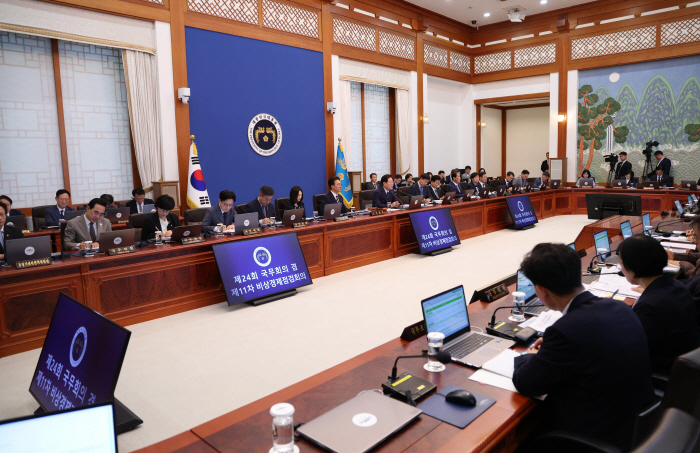
On June 2, the Ministry of National Defense said the Cabinet approved the Act on the Promotion and Support of Defense Semiconductors, designed to rapidly strengthen development and manufacturing capacity and to build a systematic industrial ecosystem. The law is expected to be promulgated later this month.
Until now, defense semiconductors — critical components of advanced weapons systems — had no dedicated legislation. That gap made it difficult to account for the sector’s unique defense requirements or to create a comprehensive support framework distinct from the civilian semiconductor industry. With the rise of artificial intelligence, these chips have emerged as strategic assets, prompting calls for greater self-sufficiency and more resilient supply chains.
Beginning in October 2025, the Blue House and the Defense Acquisition Program Administration established a cross-government “Defense Semiconductor Development Task Force” to support drafting the law.
The Cabinet-approved law includes provisions to establish basic and implementation plans for defense semiconductor development; support specialized R&D projects and set up reliability testing and certification systems; grant priority purchasing rights to defense semiconductors developed through R&D; reduce liquidated damages to ease the burden of applying defense semiconductors in weapons systems; and designate defense semiconductor operators to promote domestic industry and onshoring.
Lee Yong-chul, head of the Defense Acquisition Program Administration, said the law marks an important turning point, moving the defense industry beyond simply manufacturing weapons systems toward securing core semiconductor capabilities. He said strengthening the competitiveness of defense semiconductors will solidify the foundation for autonomous defense and, through linkages with the civilian sector, contribute to national economic revitalization.
The law will be followed by subordinate regulations, including enforcement ordinances and rules, and could take effect as early as the fourth quarter of this year.














Most Commented