
Translation result.
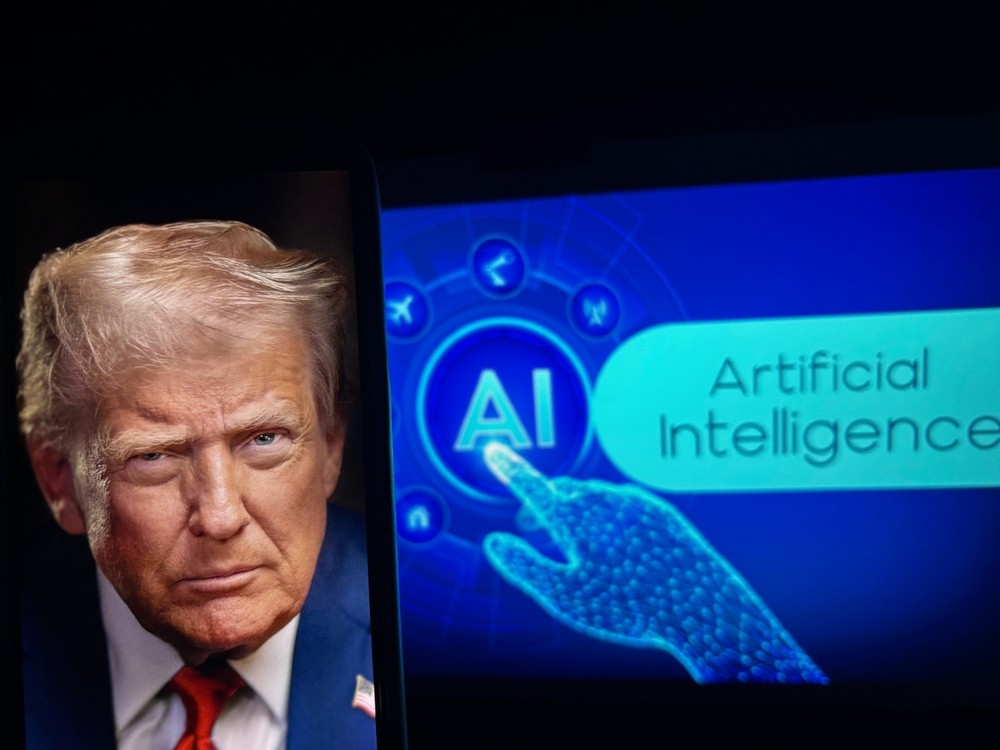
The White House is reportedly preparing an executive order to establish a government review process before advanced AI models are released. Officials say the administration seeks a pre-notification system with AI companies on national security and cybersecurity grounds, and President Donald Trump could sign the order as soon as this week.
According to The Information, on May 19 (local time) the White House Office of the National Cyber Director held a closed-door briefing for major AI firms including OpenAI, Anthropic and Reflection AI.
Representatives from cloud providers, chipmakers, cybersecurity firms and financial institutions also attended.
The core of the proposed order is a pre-release review regime for so-called frontier AI models. Under a draft version, AI developers would be required to provide the government with information up to 90 days before unveiling a new advanced model.
Industry sources say companies view that notification window as excessively long and are pushing to reduce it to 14 days before a model’s release.
If enacted, agencies such as the National Security Agency (NSA), the Office of the National Cyber Director, the Office of Science and Technology Policy (OSTP) and the Cybersecurity and Infrastructure Security Agency (CISA) would define which models qualify as frontier models subject to review.
Multiple agencies, including the Department of Defense, would then establish confidential evaluation procedures for those models. Officials expect the reviews to prioritize models with strong capabilities to detect cybersecurity vulnerabilities or that pose significant national security risks.
The catalyst for the move was Anthropic’s recent model called “Misos.” Anthropic held back a full public release, saying the model demonstrated powerful capabilities to detect cybersecurity vulnerabilities.
Lobbyists and policy experts say national security voices inside the White House have pushed hard for pre-release government review. The discussion of pre-release model assessments—once effectively taboo under the administration’s deregulatory posture—has surged to the forefront.
Observers also point to a leadership gap in the administration’s AI policy. They say coordination weakened after the special government post held by former AI policy lead David Sacks expired in March.
Officials inside the White House reportedly disagree over how to regulate AI. The Commerce Department and OSTP favor lighter-touch rules, while the Office of the National Cyber Director and security agencies are pushing for stronger pre-release controls.
Early drafts reportedly even included a licensing system that would effectively require AI developers to obtain government approval — a significant departure from the administration’s previous stance.
Earlier this month, National Economic Council Chairman Kevin Harnett suggested AI models could be subject to an evaluation process similar to the FDA’s approval procedures, raising industry concerns.
Afterward, White House Chief of Staff Susie Wiles wrote on X, “The Trump administration is not a government that picks winners and losers,” signaling an effort to push back against heavy-handed intervention.
Congress has also stepped up AI policy discussions. A bipartisan group of 35 lawmakers, including Republican Bob Latta and Democrat Doris Matsui, recently sent a letter to the Office of the National Cyber Director urging the agency to develop plans to address security vulnerabilities that frontier AI models might create.
Vice President JD Vance told attendees at the briefing, “The government is working with tech companies to balance safety and innovation,” but added, “we don’t want to pre-release the contents of the executive order.”
Chan Park cpark@aitimes.com














Most Commented