
Translation result
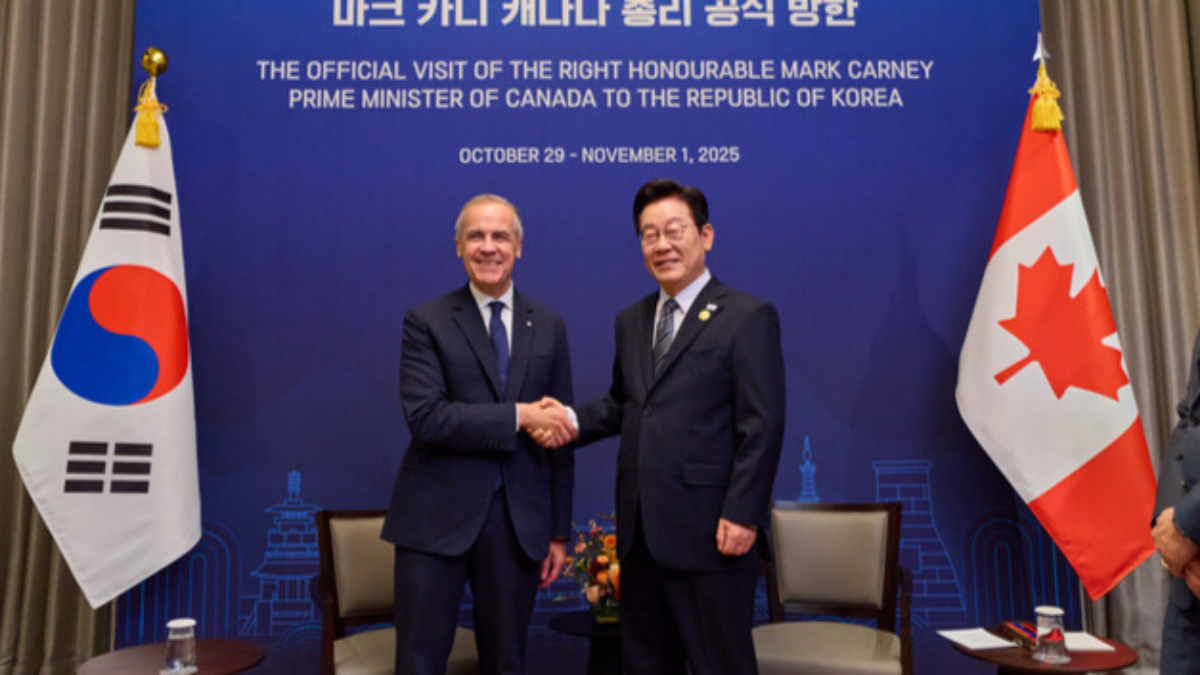
Canada isn’t just looking for ‘submarines’—it’s looking for ‘industrial partners’
Canada’s next-generation submarine program (CPSP) appears, on the surface, to be a conventional weapons procurement. In practice, however, it functions more like an industrial-reconstruction effort aimed at rebuilding domestic shipbuilding, manufacturing and technology ecosystems. Ottawa is putting greater weight on economic and industrial contributions—how extensive technology transfer will be, whether bidders will establish local shipyards, prospects for long-term employment, and the strengthening of supply chains—than on pure operational performance. Few bidders can satisfy all these conditions, and Korea is widely regarded as the only candidate that can credibly check every box. The program is reportedly valued at about 60 trillion KRW (approximately 45 billion USD).
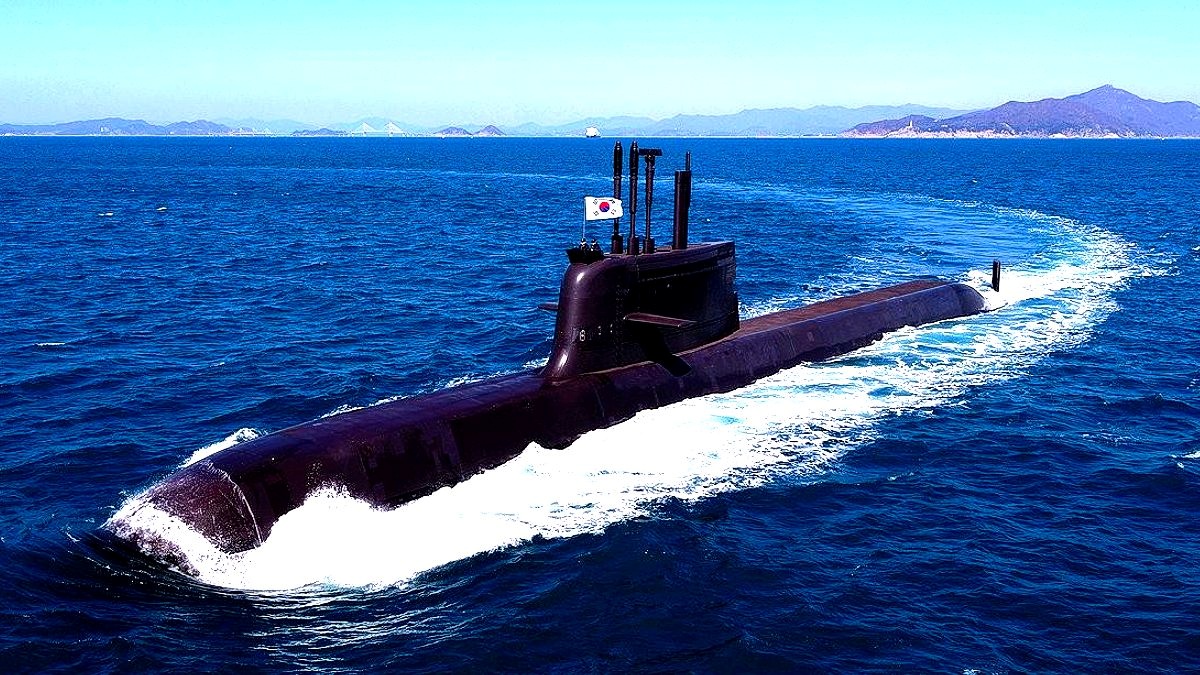
Why Korea, not Germany or Japan?
Germany and Japan are world leaders in submarine and naval technology, but their export models often resemble finished-platform sales with tightly limited technical cooperation. They tend to retain control over sensitive core designs, software and system architectures, and they are cautious about allowing full local shipbuilding capability. Korea, by contrast, has precedent for deeper industrial partnership. The Indonesian submarine deal, for example, involved shared designs, joint shipyard establishment, technician training, initial construction in Korea, and a planned transition of later production to local yards. That hands-on model is precisely what Canada says it wants when it seeks to be treated as an industrial partner rather than merely a customer.
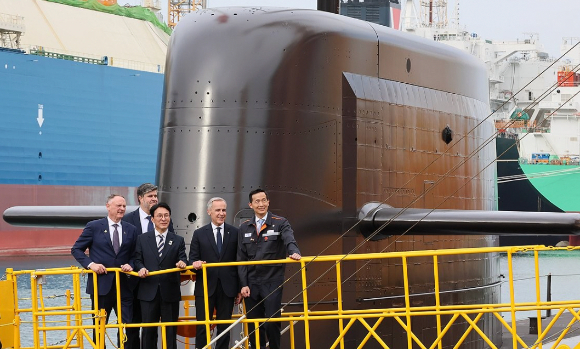
Why the Jangbogo‑III platform matches Canada’s needs
Canada has specified long-endurance submarines of at least the 3,000-ton class capable of operating between the Arctic and the Atlantic. Korea’s Jangbogo‑III Batch‑II is reported to have a submerged displacement approaching the 4,000-ton class and incorporates strategic features—an enlarged air-independent propulsion (AIP) option and multi-launch-tube arrangements—that suit extended patrols. The Korean navy has iteratively upgraded this platform based on long-term operational experience in the East China Sea and blue-water missions, so evaluators view it as a field-proven design rather than a purely theoretical one. Compared with many European submarines optimized for operations in the Mediterranean or Baltic, the Jangbogo‑III better aligns with the requirements of polar and oceanic environments.
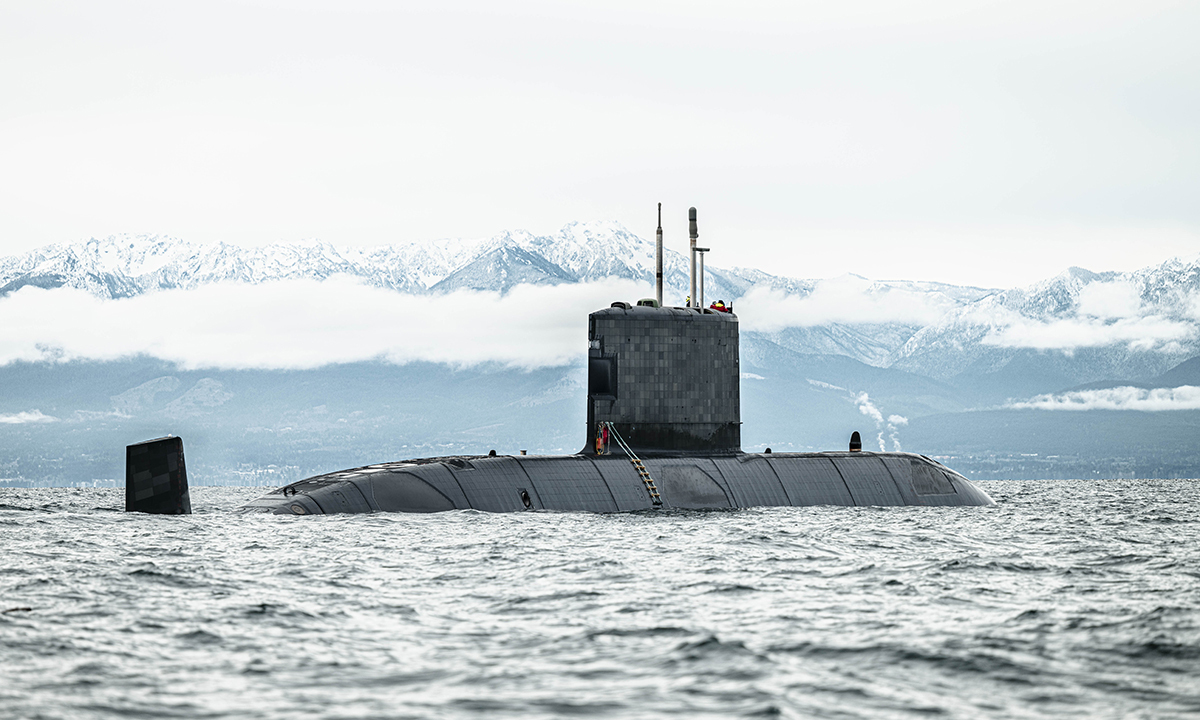
Geoje shipyard demonstrated the production pace Canada needs
Observers note that visits by Canada’s industry minister and prime minister to Korean shipyards—particularly Hanwha Ocean’s Geoje facility—were unlikely to have been purely ceremonial. Canadian advisers and naval officials have repeatedly warned that domestic capacity alone would struggle to sustain the production rate required to build multiple 3,000‑ton‑class submarines concurrently. Seeing three or more hulls under construction at Geoje provided tangible evidence that Korea’s serial-production capability is real, not theoretical. For Canada, where maintaining and overhauling aging Victoria‑class boats imposes heavy annual costs, schedule reliability and build speed are decisive factors.
A structure capable of delivering Canada’s desired ‘full package’
Ottawa intends to make offsets and industrial contribution the dominant criteria in this competition. The evaluation centers on three questions: how extensive the technology transfer will be; how fully a bidder can help establish a domestic ecosystem for shipbuilding, maintenance and parts production; and how significantly the deal will create long-term Canadian jobs and skills. Many European and U.S. firms draw security-driven lines around core technologies and offer only limited local construction. Korea has already validated a model—start production in Korea, then shift subsequent units to partner yards—that closely matches the package Canada is seeking.
Why some say, ‘Remove politics, and the answer is Korea’
Canada tends to select partners based on economic and industrial returns rather than subordination to a single security bloc. It neither pursues the overt alliance-driven postures of some countries nor is it constrained by security frameworks like the Quad or AUKUS in the way Australia sometimes is. That has fostered a view in Canada that, if political and Eurocentric biases are set aside and the choice is made solely on industry, technology transfer, delivery timelines and ocean-operational suitability, Korea remains the most complete option. Online communities and local broadcasts reflecting comments such as “Fast‑track to Korea” or “the only choice that can transfer technology” capture that sentiment.
Ultimately, the decision will turn on a single political sentence
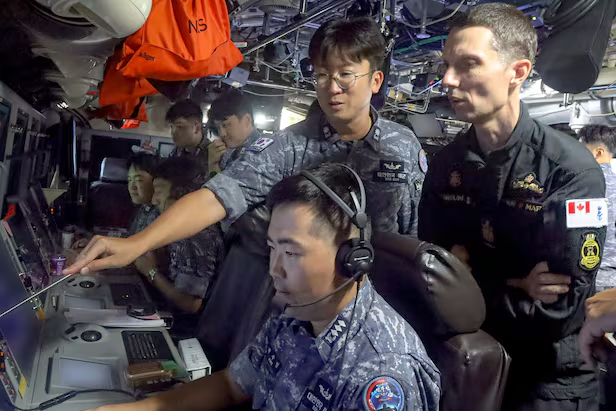
Defense analysts broadly converge on a similar conclusion: on the technical and industrial criteria—delivery schedules, technology transfer, shipyard establishment, industrial contribution and blue‑water capability—Korea appears to be the only bidder that satisfies all requirements simultaneously. Yet the final choice will be shaped by a single political judgment about Canada’s strategic direction over the next 30 to 40 years. Industrial logic favors Korea, but considerations such as relations with Europe, coordination with the United States and Canada’s role in NATO could influence the outcome. Many analysts summarize the stakes this way: the technical and economic answer is clear; what remains is whether Canadian politics will accept it candidly.














Most Commented