
Translation result
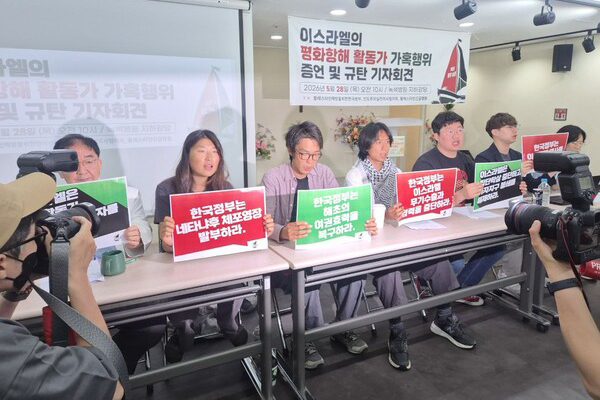
The three South Koreans released from Israeli detention returned in far worse condition than authorities had anticipated. Haecho suffered a ruptured eardrum. Seung-joon was struck with a Taser and sustained a broken rib. Dong-hyun, beaten while dehydrated, experienced severe muscle breakdown.
Activists from other countries reported equally brutal treatment. Israeli forces seized 422 civilians in international waters, confined them inside containers and subjected them to sustained beatings. Dozens suffered fractures; some returned with broken shoulders and spinal injuries.
The most harrowing accounts came from people who had been aboard the vessel dubbed the “torture ship.” In a statement, the Global Sumud Fleet (GSF) said abuses there included naked searches, sexual harassment and multiple rapes. The group reported at least 12 sexual assaults, including anal rape and forced insertion with a handgun. An Australian activist publicly disclosed her assault.
The activists — from roughly 40 countries — had done nothing more than deliver humanitarian supplies to Gaza. Even after returning battered, they repeatedly voiced concern for Palestinians who are enduring far greater suffering.
Airports around the world became scenes of relief and tearful reunions. In some countries, government officials personally welcomed the returning activists. Indonesia’s foreign minister greeted nine activists at the airport. Turkey’s deputy foreign minister met them with bouquets; Turkey had dispatched three planes to bring activists home.
At Barcelona Airport, where about 20 activists arrived, Spain’s culture minister and members of parliament received them with warm smiles. Senior foreign ministry officials and staff in South Africa patted their shoulders, and officials in Mexico City greeted them courteously. In those countries, the activists’ humanitarian mission and sacrifice were publicly honored.
By contrast, chaos erupted at Bilbao Airport in the Basque Country when activists attempting to reunite with family were confronted by the Basque regional police, the Ertzaintza. Officers brutally beat and detained four people.
That response did not arise in a vacuum. The Basque police have purchased Israeli weapons and equipment for years and received training from a security firm run by a former Mossad operative. Basque institutions have reportedly forged financial ties worth several million EUR (approximately several million USD) with Israeli companies. Israel’s government even mocked the Bilbao incident, asking what the activists had done to deserve such treatment—an attitude enabled by those institutional ties.
The episode exposes a broader European hypocrisy: public denunciations of the slaughter in Gaza coexist with close military, economic and cultural relations with Israel. Governments may issue principled statements about human rights, but they continue to trade in weapons and maintain business ties that sustain and legitimize Israeli violence while suppressing anti-Israel protest at home.
In practice, countries such as Mexico and South Africa that welcomed the activists have long advocated cutting ties with or sanctioning Israel. By contrast, states aligned with Israel denounced the activists and treated them as inconveniences.
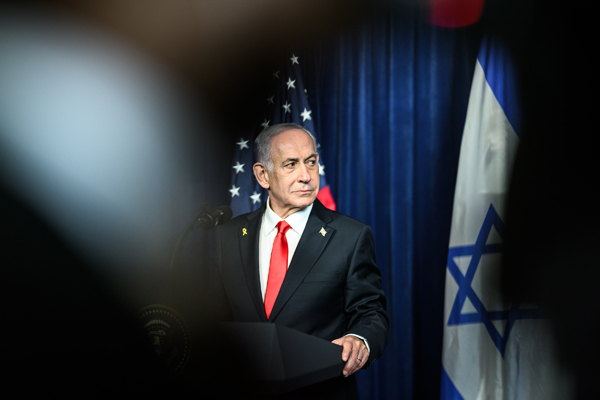
The Netanyahu government reads that hypocrisy as complicity. Those double standards have afforded Israel near-impunity to detain and abuse third‑country civilians. Israeli leaders calculate that mass killings in Gaza, ruptured eardrums and crushed spines will go unpunished, that the international community will stay silent—and that critics will even rebuke those who try to help. That calculation enables brazen acts of violence.
While several foreign governments publicly welcomed the activists, South Korea’s foreign ministry reportedly invalidated Haecho’s passport. The Korean consul in Israel is said to have barred family contact and provided no medical care or food prior to the activists’ return. Such a response aligns with a country that profits from arms sales to Israel. Unless President Lee Jae‑myung severs those back‑channel deals that help shield mass violence, his public criticism of Israel will ring hollow.
Perhaps most painful has been the torrent of online abuse aimed at the returnees—accusations that they ignored government warnings. Those are precisely the reactions Israel anticipated and welcomed: comments that Zionists will applaud and that shred any claim to common humanity. In those responses, knowingly or not, we find ourselves complicit with the very forces that enable this violence.














Most Commented