
The future of South Korea is written in its cities. Some are on the brink of disappearing, while others are sickened by overcrowding. Industries are unstable, care systems are inadequate, and development often collides with daily life. Ahead of the June 3 local elections, SisaWeek is publishing a special series, Dopamine (Reading South Korea’s Future Through Its Cities), examining the country through two trends—cities that are disappearing and cities that are emerging. We analyze the realities cities face today alongside the pledges of local election candidates, searching for the ‘dopamine’ that signals South Korea’s future. [Editor’s note]
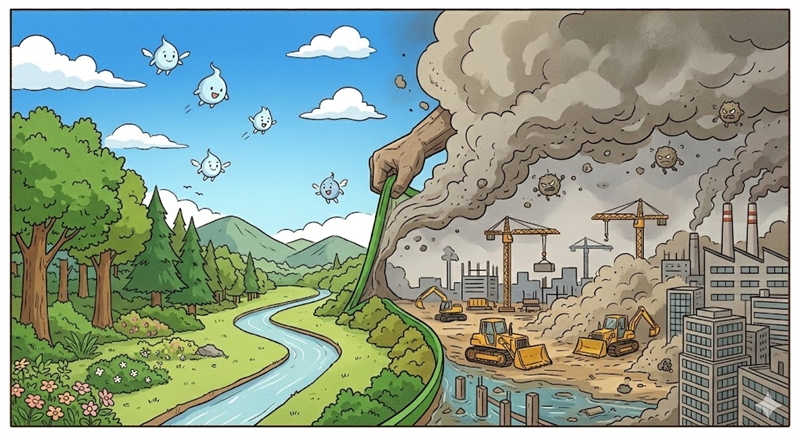
SisaWeek reporter Kwon Shin-gu Presidential, parliamentary and local elections all follow a familiar script: development. Candidates present development as an obvious local benefit, but it carries a steep price. That price is not only economic; it also includes social and environmental costs that accumulate even when they aren’t immediately visible.
Candidates’ development platforms collide at this point. The recurring pledge to relax or lift Green Belt protections is a prime example. Voters face a clear choice between the immediate, tangible gains promised by development and the argument that we must interrupt the chain of climate risks before they worsen.
Green Belt removals are a central issue in the June 3 local elections because many candidates are promoting them. The debate ranges across the Seoul metropolitan fringe—areas with concentrated Green Belts such as Hwaseong, Goyang and Hanam—to regions like South Jeolla that are searching for new economic engines. Kim Han-jong, the Democratic Party candidate for Jangseong County, has argued that the county should lift Green Belt protections to attract businesses, citing its proximity to Gwangju’s Advanced 3 District.
Formally, decisions to remove Green Belt protections lie with the national government, but local governments hold authority to lift zones within certain limits, which is why the issue frequently surfaces in local races. Because opening Green Belts is framed as a development strategy—to attract companies and improve living conditions—candidates often present it as a measurable “achievement.”
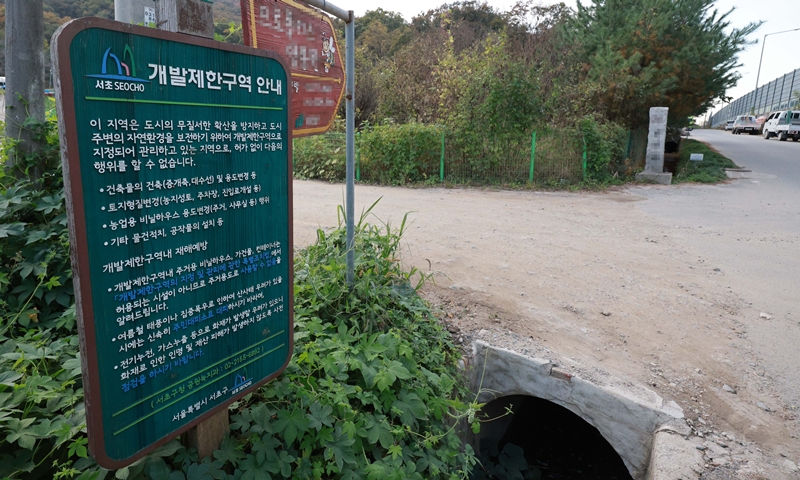
◇ Green Belt removals as a metric of a local leader’s performance
In practice, incumbents seeking re-election use Green Belt openings as proof of performance. On the 28th, Kim Doo-gyeom, the People Power Party candidate for mayor of Ulsan, told a televised debate, “I opened Green Belts and attracted 36 trillion KRW (27 billion USD) in corporate investment.” He cast his 2022 pledge to lift Green Belts as an accomplishment and is leveraging it in this campaign.
Local leaders naturally pursue development to advance their regions, but that push often mortgages future costs. In a 2015 paper in the journal Land Use Planning, KEI researcher Song Seul-gi and teams from Pusan National University and Dong-Eui University analyzed the environmental impacts of lifting development-restricted zones and found that water and air quality worsened compared with conditions before the removals. Their findings indicate that development-restricted zones play an important role in preserving air and water quality.
With climate change bearing down, the stakes are higher. Environmental groups have stepped up calls for climate-focused pledges from candidates. The debate now centers on how to balance development needs with reducing burdens on future generations. In 2022, the National Assembly Research Service reviewed issues and reform directions related to lifting development-restricted zones and recommended limiting removal projects to those with clear public benefits and implementing multiple measures to minimize unplanned development and environmental damage.













Most Commented