
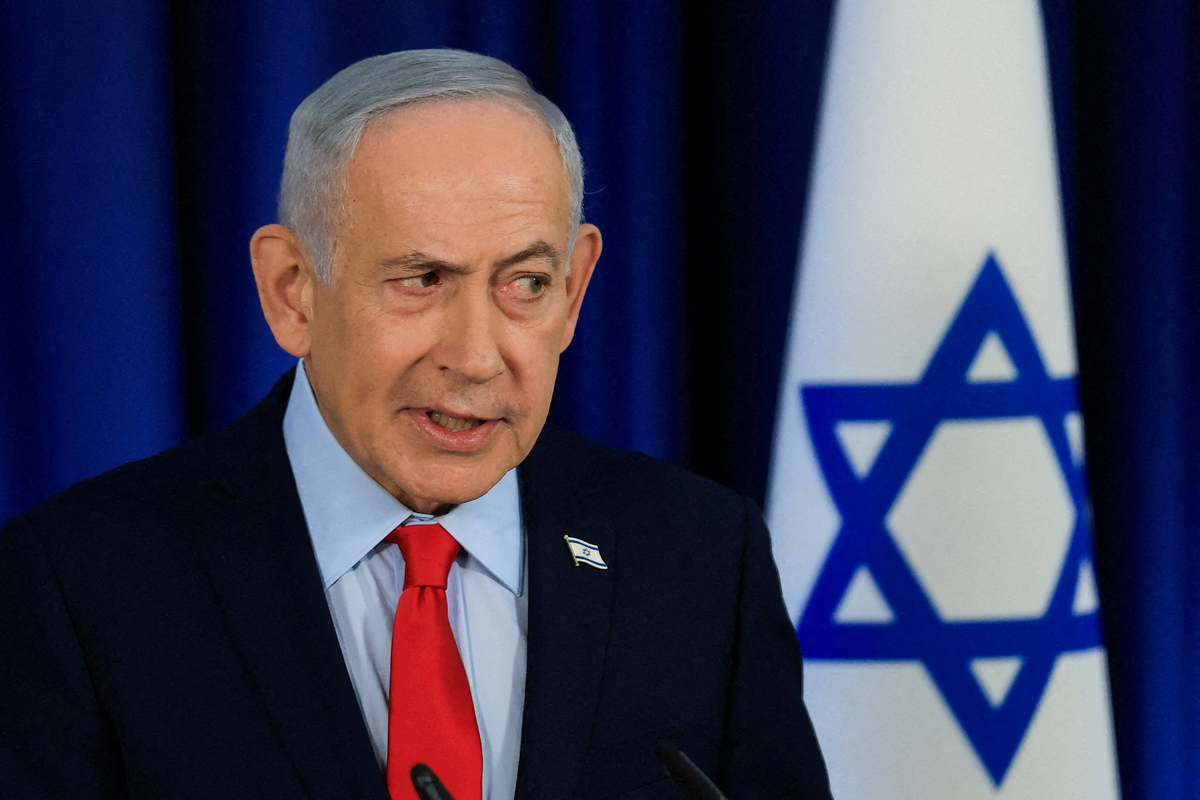
 Israeli Prime Minister Benjamin Netanyahu’s public call to expand Israel’s control in the Gaza Strip has pushed the region into a new phase. With U.S.-Iran talks on a cease-fire ongoing, observers worry Israel may be trying to consolidate as much military control in Gaza as possible before any agreement is finalized.
In a conference video released on the 28th (local time) by Israel’s Channel 12, Netanyahu said, “We currently fully control 60% of Gaza’s territory,” adding, “My directive is to push that to 70%.” When an attendee shouted, “We must take 100% of Gaza,” Netanyahu replied, “We’re proceeding in order — start with 70%,” signaling the possibility of seizing the entire strip.
That exceeds the level of control envisioned under the truce with Hamas brokered by the U.S. last October. Under that agreement, the Israeli military was expected to manage roughly half of Gaza, focusing on major buffer zones and key control areas.
Since then, Israel has continued to widen its control. A new map released in March identified restricted areas beyond the previous control line; analysts estimate those areas account for roughly 11% of Gaza’s total area. Including those zones, analysts say Israel effectively controls nearly two-thirds of the territory.
Israel frames these measures as necessary to eliminate Hamas and restore security, but the international community has raised growing concerns about an expanded occupation and the prospect of a long-term presence. As discussions over Gaza’s postwar governance intensify, analysts warn Israel’s continued expansion of military control could shape future truce negotiations and the broader reshaping of the Middle East order.
Meanwhile, Israel has tightened buffer zones and movement restrictions, especially in southern and central Gaza. International organizations say humanitarian access is becoming increasingly difficult and warn that prolonged displacement of Palestinian civilians could become entrenched.















Most Commented