
Translation result
Higher oil prices linked to the U.S.-Iran conflict pushed the U.S. personal consumption expenditures (PCE) price index in April to its strongest reading in nearly three years.
On the 28th, Yonhap reported that the U.S. Commerce Department said the April PCE price index rose 3.8% from a year earlier.
That is the biggest increase since May 2023 (4.0%), a span of 2 years and 11 months. Month‑over‑month, the index climbed 0.4%.
The core PCE price index, which excludes energy and food, rose 3.3% year‑over‑year — the strongest pace since October 2023 — and increased 0.2% from the prior month.
The year‑over‑year gains for both the headline and core measures matched economist forecasts compiled by Dow Jones. However, the month‑over‑month advances were each 0.1 percentage point below expectations.
PCE inflation has accelerated since February amid an oil‑price shock tied to the Iran conflict.
The PCE price index measures prices of goods and services purchased by households, and the Federal Reserve uses it as its preferred gauge to assess progress toward its 2% inflation target.
Seoul announced on the 28th that it will begin emergency removal of the remaining Seosomun overpass structures at midnight on the 29th. The decision follows the Ministry of Employment and Labor’s approval of the city’s plan to remove the overpass’s upper girders.
City officials expect the operation to take a total of 29 hours, including preparatory safety work, 15 hours of demolition, and 14 hours for final procedures.
If the demolition proceeds as planned and removal plus test runs finish by 5:00 a.m. on the 30th, the city aims to reopen Seosomun‑ro to traffic and restore the first service on the Gyeongui Line. Actual structure removal is expected to take about seven hours.
Roads near the site will be fully closed from midnight to 3:00 p.m. on the 29th while protection work and demolition are under way.
Officials say the emergency demolition aims to remove the remaining structure quickly to secure public safety and normalize vehicle traffic on Seosomun‑ro and train service on the Gyeongui‑Jungang Line, which are currently suspended.
The city plans to use a crushing method to fully remove the remaining Seosomun overpass structures to ensure a rapid and safe demolition.
The National Pension Service will raise its target weight for domestic equities this year from 14.9% to 20.8%. The change follows a sharp rise in the KOSPI that pushed the fund’s actual domestic‑equity share well above its previous target.
According to Yonhap, the National Pension Fund Management Committee held its fifth meeting on the 28th and reviewed and approved an agenda to adjust target weights by asset class for this year and a 2027–2031 medium‑term asset allocation plan.
The medium‑term allocation sets target weights and management directions for equities, bonds, alternative investments and other asset classes over the next five years. It serves as the fund’s mid‑ to long‑term guideline to improve returns and stability.
The domestic‑equity target for this year was originally set at 14.4% under the 2026 fund management plan approved last May. As the domestic market climbed, the committee raised the target by 0.5 percentage point to 14.9% in January; the upper limit including the allowable range was 19.9%.
But the KOSPI’s continued surge pushed the actual domestic‑equity share to 24.5% as of the end of February. Considering market conditions, the fund’s profitability and stability, and potential effects on financial markets, the committee decided to increase the domestic‑equity target to 20.8%.
The committee said the move is intended to boost long‑term returns and stability given possible structural changes in the domestic equity market and the current increase in equity weighting, and to mitigate market shocks from rebalancing.
The adjusted target will take effect at the end of next month when the rebalancing suspension ends. The rise in the domestic‑equity weight will also trigger adjustments to target weights for other asset classes.
NVIDIA founder and CEO Jensen Huang is scheduled to visit Korea next week.
The trip comes about seven months after his appearance at the APEC CEO Summit in Gyeongju last October.
Industry sources said on the 28th that Huang plans to visit Korea after wrapping up major events in Taipei next week — NVIDIA’s annual AI conference GTC Taipei 2026 and the IT show Computex 2026.
GTC Taipei runs from June 1 to 4. Huang will deliver the keynote on opening day to unveil NVIDIA’s next‑generation AI chips and outline its AI infrastructure strategy.
Industry observers expect Huang to use the visit to discuss high‑bandwidth memory (HBM), next‑generation AI accelerators, and foundry cooperation with domestic chipmakers such as Samsung Electronics and SK hynix.
His agenda is also expected to include talks with major IT firms like LG and Naver on cloud services, physical AI, and broader industry‑wide AI collaborations.
Huang previously visited Korea in late October for the APEC summit in Gyeongju, where he met Samsung Chairman Lee Jae‑yong and Hyundai Motor Group Chairman Chung Eui‑sun in a so‑called \”kkanbu\” meeting.
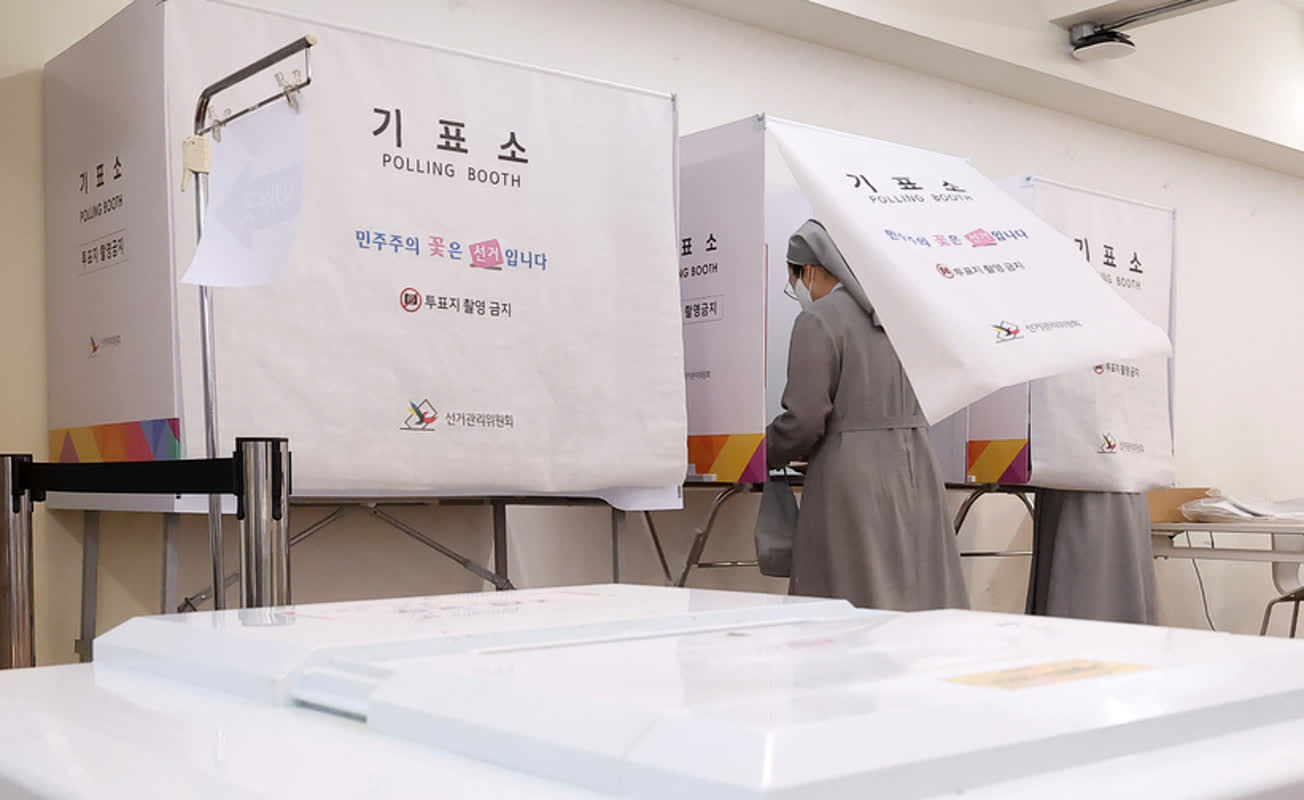
One day before early voting for the June 3 Ulsan mayoral election, the Democratic Party and the Progressive Party on the 28th agreed to unite behind Democratic candidate Kim Sang‑wook.
Kim Sang‑wook and Progressive Party candidate Kim Jong‑hoon held a joint press conference in front of the Ulsan Election Commission at about 5:50 p.m. to announce the primary poll results that determined the joint candidate.
Polls conducted that day by each campaign’s selected survey firm using secure phone numbers produced a result naming Kim Sang‑wook as the unified candidate for both parties.
The losing candidate, Kim Jong‑hoon, accepted the result and submitted his withdrawal to the Ulsan election commission just before the announcement.
Kim Sang‑wook said he would carry the hopes and aspirations of Progressive Party supporters and deliver a citizen‑led Ulsan and meaningful democratization, and he expressed respect and gratitude to Kim Jong‑hoon for making a difficult and courageous decision.
The initial unification poll took place on May 23–24. On the morning of the 24th, Kim Sang‑wook’s team raised concerns about an omitted anti‑reverse‑voting clause and suspended the primary, putting the process at risk. Sang‑wook’s camp then proposed a rerun conditional on safety measures to block organized intervention by specific groups, and on the 27th Kim Jong‑hoon accepted those conditions, allowing the primary to proceed again.









Most Commented